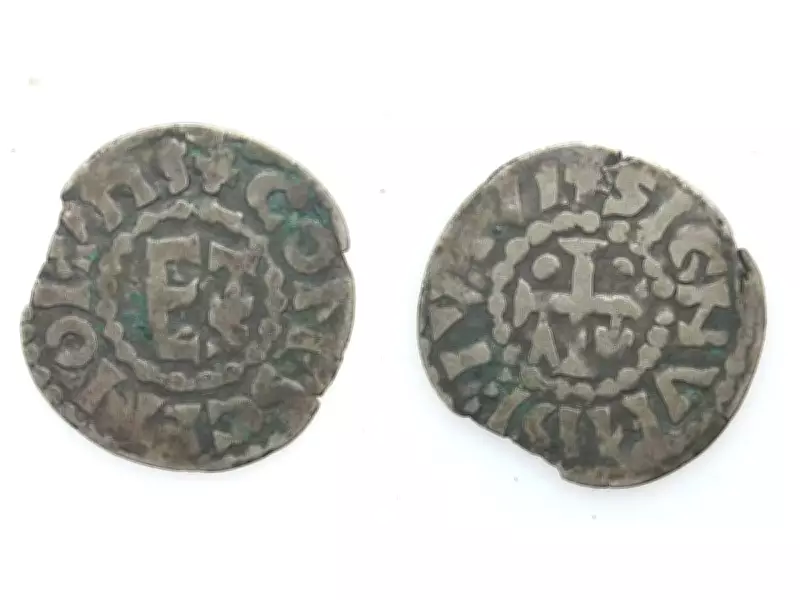
In 1957, a local resident on the coast of Maine made a small discovery that sparked big questions. While digging at a nearby shell midden, they found an odd-looking coin. Initially dismissed as a scrap of metal, it was later identified as an eleventh-century Norwegian coin. Now called the Maine Penny, this artifact has fueled widespread discussion about its history and implications.
How Did a Medieval Norwegian Coin End Up in Maine?
The question of how a coin from medieval Norway came to rest among the remains of coastal Native Americans in New England is complex and unresolved. The Maine Penny was found in a shell midden—an archaeological site containing layers of shells, garbage, and other waste from ancient indigenous cultures. These middens are common along Maine's coast and reflect centuries of use by Native American peoples. According to the Maine Historic Preservation Commission, such sites date back millennia and include evidence of fishing, hunting, and seasonal residency, illustrating a pre-existing indigenous landscape. One extensively studied site is the Whaleback Shell Midden, which preserves long-term human activity. Any foreign artifact found in such deposits gains significance but is difficult to analyze.
Identification of the Maine Penny
The Maine Penny was officially classified as the "Eleventh Century Norwegian Penny Found on the Coast of Maine" by the Maine Historic Preservation Commission, confirming its authenticity. Coins from this era originated in the Norse world, encompassing Scandinavia and the North Atlantic. In the eleventh century, Norse explorers had reached Greenland and Newfoundland. Evidence from the Norse settlement at L'Anse aux Meadows in Canada proves Viking presence in North America, but the Maine Penny does not definitively indicate a Viking colony in Maine. It remains an artifact whose journey is unknown.

Possible Explanations for the Coin's Presence
Several theories explain the coin's discovery. First, it could have reached Maine through indirect trade, as objects often travel vast distances before reaching their final owners. Second, it might have come into contact with native populations via Viking expeditions. Third, the coin's movement could be due to disturbance of the burial site, especially since the artifact was not excavated under controlled conditions. Archaeologists emphasize that interpretations depend heavily on context, and single findings require careful study.
Challenges of Shell Middens
Shell middens are complex sites that preserve artifacts but can complicate dating. While they protect items for decades, the layered material makes it difficult to determine when and how artifacts appeared. The University of Maine notes that these sites are endangered and need proper archaeological investigation. The lack of controlled excavations further complicates the Maine Penny's history. Nevertheless, its link to a midden is crucial for establishing its origin.
Connecting Two Worlds
The Maine Penny connects two worlds: the ancient history of Indigenous people in Maine and the broader history of North America shaped by Norse discoveries. Although the coin does not confirm Viking settlements in Maine, it highlights the complexity of transatlantic relations at the time. A single item can reveal much about transportation, trade, and communication across vast regions.
Enduring Significance
The Maine Penny's significance lies in its dual role as a historical item and an enigma. It is a legitimate artifact with a known history, yet its journey to the United States remains mysterious. This duality makes the discovery interesting, showing how historical evidence provides pieces for theories and further research. For American audiences, it opens new possibilities regarding the timeline of transatlantic contact, broadening the topic without being presumptuous. Ultimately, the Maine Penny does not represent a major Viking discovery but exemplifies how a small item can hold a wealth of unanswered questions.