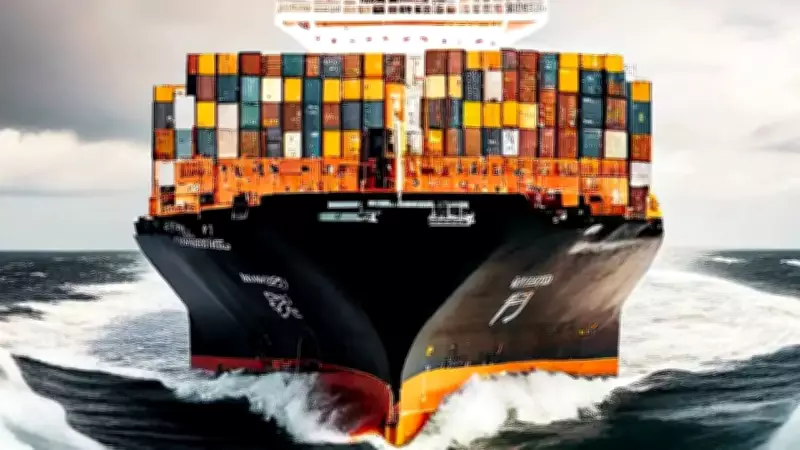
The global crisis resulting from the blockade of the Strait of Hormuz has not dampened the growth prospects of the maritime sector, which is expanding beyond traditional sailing jobs, according to industry experts. The Times of India explores why a maritime career remains a rewarding choice.
Maritime Sector: A Growing Employment Hub
As one of the oldest industries and the backbone of global trade, the maritime sector is generating a wide range of employment opportunities daily. Despite the Strait of Hormuz blockade, which is expected to resolve soon, the sector offers lucrative and diverse roles. To help students tap into these opportunities, the Telangana Council for Higher Education (TGCHE) has introduced a new BBA programme in Maritime Technology, Commerce and Management.
This programme aims to prepare students for careers in shipping, logistics, port operations, and global trade. Unlike traditional marine engineering courses that typically require a science and mathematics background, this new programme is open to students from commerce and other streams through the state's Degree Online Services Telangana (DOST) admission platform.

Addressing Student Demand for Specialised Courses
The move comes at a time when students are increasingly exploring specialised, industry-oriented courses instead of limiting themselves to popular choices like computer science or management. Industry experts predict that the maritime and logistics sectors will create significant employment over the next decade due to rising global trade, infrastructure expansion, and digital transformation.
Course Structure and Vision
TGCHE chairman Balakista Reddy explained that the course is designed as a multidisciplinary programme blending maritime studies with business and technology. It spans three years across six semesters and includes 36 papers focused on logistics, global trade, port management, digital systems, sustainability, and governance.
Rising Demand in the Maritime Sector
Industry experts highlight the timing of the course as significant, given the rapid expansion of logistics and shipping industries in India and globally. According to Pushpank Kaushik, CEO and head of business development (Subcontinent, Middle East, and Southeast Asia) at Jassper Shipping, India's logistics market is projected to grow from US$228 billion in 2024 to US$429 billion by 2033, driven by infrastructure expansion and new trade corridors.
Fresh graduates entering the maritime logistics sector can expect starting salaries between ₹3 lakh and ₹6 lakh annually, depending on their institution and skill set. As supply chains become technology-driven and globally interconnected, companies need professionals who can manage cargo movement, shipping operations, and international logistics efficiently.
Costs and Preparation for Maritime Careers
Marine engineer Sandeep Patil noted that course fees across institutes vary widely, generally ranging between ₹2 lakh and ₹15 lakh. Many institutes offer scholarships, education loans, and assistance.
Sea-Based and Shore-Based Job Roles
Career opportunities in the maritime industry extend far beyond sailing jobs. Graduates can move into ship management, port operations, offshore energy, cruise operations, marine equipment companies, ship repair, technical consultancy, and logistics management. There are also opportunities in ship design and naval architecture for students who develop software skills in tools like AutoCAD, SolidWorks, Rhino, or ANSYS.
Marine surveying—including cargo inspections, damage surveys, and insurance-linked assessments—is another growing career option for maritime graduates. Apart from commercial shipping and logistics, graduates can explore opportunities in the Indian Navy, Indian Coast Guard, defence-related engineering services, shipbuilding firms, offshore industries, classification societies, and maritime research organisations.
International Exposure and Stability
Experts say the sector attracts students not only for job stability and salaries but also for the international exposure it offers. Professionals often get opportunities to travel globally, work with advanced technologies, and earn in foreign currencies while contributing to industries that drive global trade and commerce.

TGCHE chairman Reddy added that students pursuing higher education or specialised training abroad may gain exposure to emerging areas such as offshore structures, marine renewable energy, autonomous vessels, ocean engineering, and ship design. The sector is vast and constantly evolving, and students who combine formal education with practical exposure, communication skills, and continuous learning are likely to find the best opportunities.
Skills Beyond Academics
Patil stressed that students entering the maritime field must focus on physical fitness, discipline, and communication skills in addition to academics. They should be prepared for demanding work environments and long sea voyages. Choosing institutes approved by the Directorate General of Shipping is crucial, and practical training and safety awareness are equally essential.
Many graduates begin their careers in the merchant navy, undergoing onboard training under senior officers. This stage allows students to learn machinery operations, ship maintenance, safety systems, and operational procedures while completing mandatory sea-time training and certification requirements, said Priyatham Ramidi, marine engineering expert.