

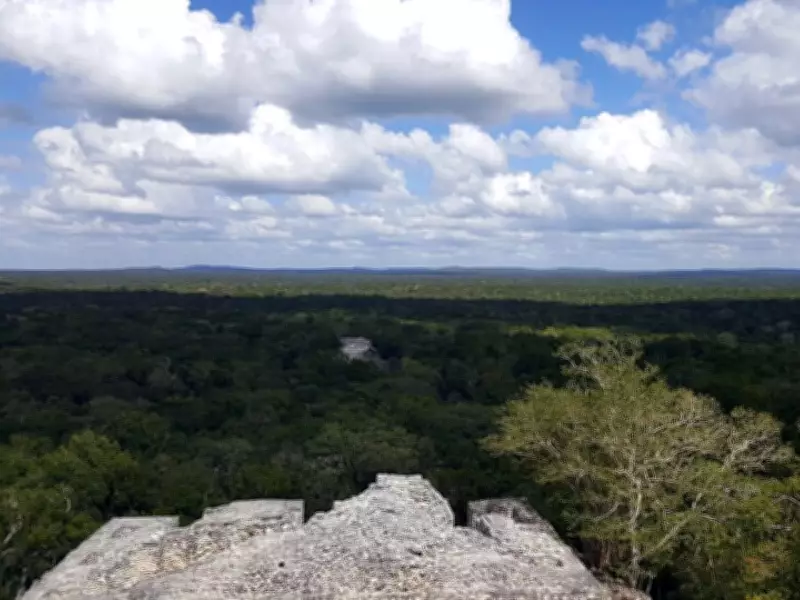
An archived environmental LiDAR data set from Campeche, Mexico, accomplished far more than mapping trees in 2024. It unveiled Valeriana, a colossal ancient Maya city that had remained hidden in an archaeological blind spot for decades. What makes this discovery remarkable is that it did not stem from an expensive expedition into untouched wilderness. Instead, it was extracted from an environmental data set already stored in an online archive, awaiting the right question to be posed.
How the Discovery Unfolded
The data was stumbled upon by a researcher who encountered environmental LiDAR data originally collected for forest monitoring, as detailed in a study published in the journal Antiquity. The research team examined approximately 50 square miles of this existing survey data and identified a large urban center featuring more than 6,000 pre-Hispanic structures. The breakthrough came from a digital reinterpretation of the landscape, adding to evidence that the central Maya Lowlands were more densely populated than previously assumed about empty spaces on historical maps. This discovery underscores that even major historical sites can remain relatively invisible when the raw data to find them already exists on our computers.
Why LiDAR Sees What Eyes Cannot
The technology enabling this discovery is airborne LiDAR, or Light Detection and Ranging. LiDAR performs exceptionally well in dense tropical forests by firing thousands of laser pulses from an aircraft. Some of these pulses hit the trees, but others penetrate small gaps in the canopy, reach the ground, and bounce back. This data is then used to digitally remove vegetation, creating highly accurate 3D models of the terrain beneath.

A report in Nature highlights that laser technology is radically transforming our perception of tropical lowlands, rendering entire settlement networks visible. Traditional field archaeology in the jungle was, for decades, painstakingly slow. Researchers hacked through thick vines with machetes just to see a few meters ahead. Ancient features like building platforms, roads, and walls blend seamlessly into the rocky jungle floor from ground level, but LiDAR offers a bird's-eye view, making them easy to identify.
Valeriana’s Place in Maya History
The sheer scale of Valeriana challenges long-held beliefs about how the Maya lived. In the past, scholars tended to view the ancient Maya lowlands as a quiet rural backwater with only a few famous monument centers standing in isolation. The discovery of Valeriana strongly supports a very different historical picture.
The city shows signs of being a major political capital from the Classic period between 250 and 900 AD, according to Tulane University. Laser data revealed temple pyramids, enclosed public plazas, a sports ball court, and an engineered reservoir created by damming a seasonal stream. The fact that an urban center of this size was sitting undetected right next to a modern regional highway attests to the reality that archaeologists are far from discovering all the major ancient cities of the region.
A Thick Landscape, Not a Vacant One
Beyond the grand pyramids, the find provides important data on ancient population densities. The scans revealed that Valeriana was enmeshed in a dense, complex network of houses, elevated causeways, and sophisticated agricultural terraces. This implies that the Maya engineered their environment to sustain a large, interconnected web of communities.
The site suggests that life in the ancient lowlands was more continuous and populous than older ground surveys had indicated. Modern archaeology is now mapping entire corridors of ancient suburban sprawl instead of hunting for lonely monuments in an empty forest. Valeriana demonstrates that what appears to be a quiet, empty forest on current maps may be a gap in research coverage, not a true absence of ancient people.

About the Author
The TOI Science Desk is an inquisitive team of journalists, ceaselessly delving into the realms of discovery to curate a captivating collection of news, features, and articles from the vast and ever-evolving world of science for the readers of The Times of India. Consider us your scientific companion, delivering a daily dose of wonder and enlightenment. Whether it is the intricacies of genetic engineering, the marvels of space exploration, or the latest in artificial intelligence, the TOI Science Desk ensures you stay connected to the pulse of the scientific world. At the TOI Science Desk, we are not just reporters; we are storytellers of scientific narratives. We are committed to demystifying the intricacies of science, making it accessible and engaging for readers of all backgrounds. Join us as we craft knowledge with precision and passion, bringing you on a journey where the mysteries of the universe unfold with every word.





