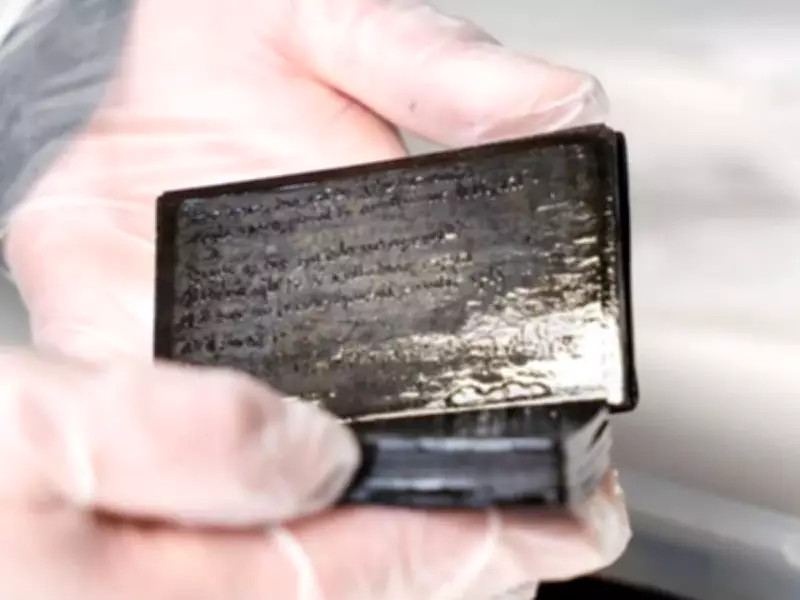
In Paderborn, Germany, history has become remarkably tangible. Archaeologists unearthed a wax notebook from a 13th-century latrine, preserved in pristine condition. This discovery offers a rare glimpse into the lives of the medieval elite, akin to a 'Stars, They're Like Us' moment for the Middle Ages. The leather-bound notebook, often dubbed the 'iPad of the Middle Ages,' was not the only find; scraps of silk used as toilet paper also caught researchers' attention.
Discovery by the Regional Association of Westphalia-Lippe
Announced on May 12, 2026, by the Regional Association of Westphalia-Lippe, this find is hailed as a window into the world of the 1% from 700 years ago. In the 1300s, this area was not an ordinary neighborhood but a Beverly Hills for the merchant class in Paderborn. Excavators uncovered five medieval latrines, which, despite their unsavory reputation, are treasure troves for archaeologists. These airtight, damp pits preserved organic material that would typically decay.
The Wax Notebook: A Medieval Smartphone
The muck revealed a small leather pouch containing a notebook roughly the size of a modern smartphone. This was no paper notebook but an ancient wax tablet, where notes were scratched into wax using a metal stylus. Mistakes could be erased with the flat edge of the tool, making it a reusable technology before such concepts became popular. Sveva Gai, an archaeologist in Paderborn, noted that the writing is casual Latin cursive, likely belonging to a single individual. The handwriting suggests daily use by a merchant to track deals, costs, or late-night thoughts. In an age when literacy was rare, the ability to take shorthand notes was a mark of status.

Literacy Among Medieval Merchants
The rise of 'literate traders' is a well-documented historical phenomenon. According to The Culture of the Medieval Merchant, literacy rates among merchants in the 13th and 14th centuries were exceptionally high, often rivaling that of the clergy. Writing became a vital tool for the growing commercial world. This 'iPad of the Middle Ages,' used for notes and possibly as toilet paper, highlights the surprisingly high literacy among traders and the stark contrast between luxury and sanitation.
Silk as Toilet Paper: A Medieval Luxury
The trash beside the notebook revealed further evidence of the owner's wealth. Archaeologists found fragments of silk, neatly cut into rectangles. These were likely repurposed from high-end clothing and used for personal hygiene. While most people would have used moss or leaves, this individual literally discarded the medieval equivalents of designer labels. Even today's wealthy elite might find this level of quiet luxury excessive. The use of luxury fabrics in domestic settings paints an interesting picture of lifestyle and health. Even the richest medieval districts were not immune to the realities of their time. Studies such as Parasite Infection in the Silk-Weaving District of Realejo show that those surrounded by wealth and silk often lived with parasites, highlighting the gap between high-status possessions and the grim realities of premodern sanitation.
How Did the Notebook End Up in the Latrine?
How did this valuable leather-bound notebook end up in the latrine? Gai's theory is simple and relatable: 'It could have simply fallen in.' This is a situation any modern person who has dropped a phone into a toilet can understand, except there was no 'rice trick' available. This moment of 14th-century clumsiness has given us a 21st-century treasure.
Restoration and Future Display
Scientists in Munster are now restoring the notebook using high-tech imaging techniques to look through layers of erased wax. They hope to uncover hidden 'ghost texts' that could reveal secrets of the merchant's life. The notebook will soon be displayed at the LWL Museum in Paderborn, proving that our embarrassing bathroom mistakes might one day become history.