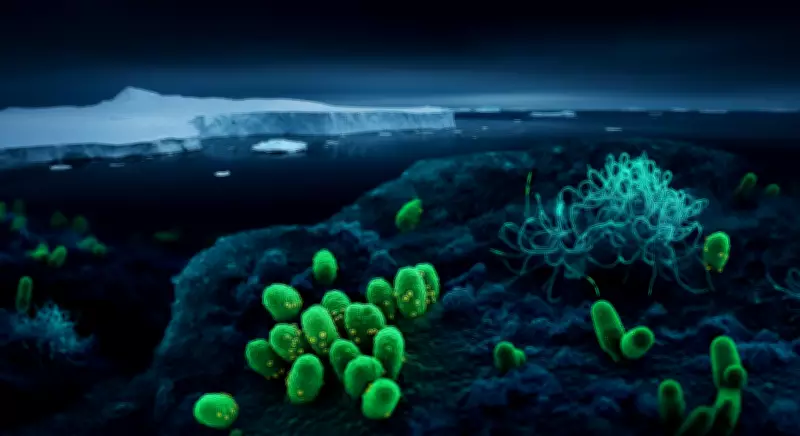
Hidden hundreds of meters beneath Antarctica's Ross Ice Shelf in complete darkness, researchers have made a surprising discovery: a community of microbes is thriving there. This finding has completely altered how scientists view marine ecosystems in one of the most remote regions of the planet.
According to a 2022 study published in Nature Communications, the dark cavity beneath the Ross Ice Shelf contains abundant and diverse microbial communities that differ from those found in nearby open ocean waters. The research shows that these microorganisms are not simply surviving in the darkness; they appear to form a functioning ecosystem adapted to extreme isolation and near-total absence of light.
The results were quite surprising compared to what scientists know about surface ocean ecosystems. The water body underneath the shelf is occupied by unique communities of microorganisms possessing their own taxonomic characteristics distinct from open ocean microcommunities. Metagenomics, metatranscriptomics, and other molecular methods were used for studying life under ice.

Life Without Sunlight
Aerobic lithoautotrophic archaea and bacteria were some of the dominating organisms in this cavity. These organisms have the ability to produce energy from chemicals such as ammonium, nitrite, and sulfur compounds. As opposed to depending on the energy generated by sunlight, the research suggests that these organisms depend on the energy generated through chemosynthesis, that is, the process of conversion of energy from chemicals into biological energy.
Heterotrophic microbes that break down organic carbon were also found in this environment. Together, these microbes constitute an ecosystem that relies on recycling and works independently of sunlight.
Viruses Are Shaping the Ecosystem, Too
As the studies show, these viruses actively infect important ammonium and sulfur-oxidizing chemolithoautotrophic microorganisms. The scientists believe that viruses may regulate nutrient cycling and the composition of microbial communities in the subglacial system. Additionally, the study reveals that many of the identified viruses appear to be endemic to the cavity.
This is significant as viruses are known for their ability to control population dynamics and recycling of nutrients among microbes in aquatic ecosystems. It means that the cavity of the Ross Ice Shelf cannot be thought of merely as a system where there are few living things. This environment can actually host a whole series of biological processes comparable to those happening in the usual oceans.
The discovery underscores the resilience of life in extreme conditions and opens new avenues for understanding microbial ecosystems in isolated environments. Further research into these subglacial communities could shed light on the limits of life on Earth and the potential for life on other icy worlds.