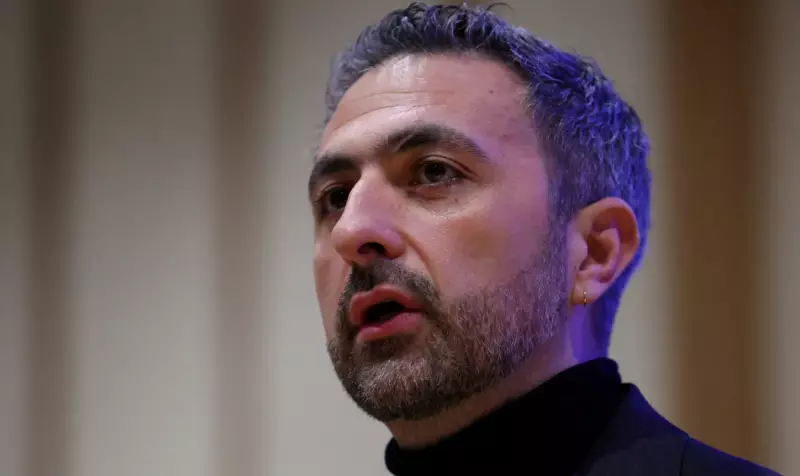
In a direct challenge to the prevailing narrative in artificial intelligence development, Mustafa Suleyman, the CEO of Microsoft AI, has called for a fundamental shift in priorities. He argues that the industry's intense focus on making AI systems 'aligned' with human values is dangerously premature without first establishing ironclad control over them.
The Critical Difference: Containment vs. Alignment
Suleyman, in a recent post on social media platform X, delivered a blunt message. He stated that the AI sector is confusing two distinct concepts: containment and alignment. Containment refers to the practical ability to limit an AI's actions and keep it within predefined boundaries. In contrast, alignment is the philosophical goal of ensuring an AI's objectives are in harmony with human welfare.
"You can't steer something you can't control," Suleyman wrote, emphasizing his core argument. He likened pursuing alignment without robust containment to "asking nicely"—a strategy with little practical power. His critique suggests that many companies, in their race toward superintelligence, are blurring this vital line, creating potential safety risks.

Positioning Microsoft as the Responsible Counterweight
This warning is not just theoretical. Suleyman is positioning Microsoft's AI division as a responsible counterbalance to what he perceives as reckless practices elsewhere. In an essay titled "Towards Humanist Superintelligence" on the Microsoft AI blog, he outlined an alternative vision. This approach prioritizes human control and domain-specific applications over the pursuit of unbounded, autonomous general intelligence.
In a December interview with Bloomberg, the former DeepMind co-founder, who joined Microsoft 18 months ago, went further. He asserted that containment and alignment should be non-negotiable "red lines" for all companies. He acknowledged that this stance is currently "a novel position in the industry."
Medical AI and Clean Energy: The Practical Path Forward
So, what does Suleyman's 'Humanist Superintelligence' look like in practice? It focuses on solving concrete human problems rather than chasing abstract general intelligence. He points to breakthroughs in fields like medical diagnostics and clean energy as the ideal path.
Microsoft AI recently developed a system that achieved 85% accuracy on the New England Journal of Medicine's difficult case challenges, a task where human doctors score roughly 20%. Suleyman believes this domain-specific model delivers superintelligence-level capability while inherently avoiding the severe control problems of a general-purpose AI.
With Microsoft's revised agreement with OpenAI now granting it more independence for in-house development, Suleyman is actively building what he calls the world's premier superintelligence research team. The explicit mission of this group is to ensure that humans remain firmly "in the driver's seat." His message is clear: before we teach AI to want the right things, we must be absolutely certain we can stop it from doing the wrong ones.