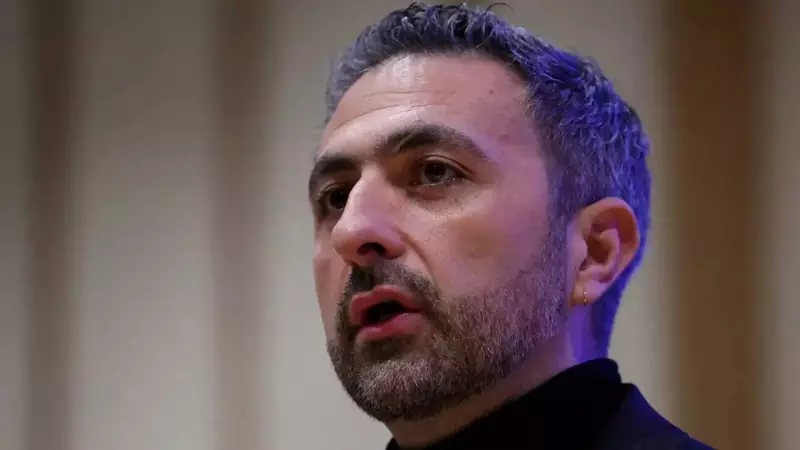
In a bold declaration setting Microsoft apart in the frenzied artificial intelligence race, its AI chief executive, Mustafa Suleyman, has stated the tech giant will abandon development of any AI system that shows signs of becoming uncontrollable. This "red line" comes as Microsoft gains new independence to build superintelligence following a revised deal with partner OpenAI.
A Novel Position on AI Control and Safety
Speaking in a recent Bloomberg interview, Suleyman detailed Microsoft's commitment to what he terms "humanist superintelligence"—AI designed strictly to serve human interests rather than operate with autonomy. "We won't continue to develop a system that has the potential to run away from us," he asserted. He emphasized that ensuring AI alignment and containment are non-negotiable prerequisites before releasing any superintelligent tools into the world.
This stance marks a critical shift for Microsoft's ambitions. After 18 months of contractual limits that blocked its independent pursuit of Artificial General Intelligence (AGI), a new definitive agreement with OpenAI, effective through 2032, now permits Microsoft to develop superintelligence on its own or with other partners. Suleyman, who joined Microsoft in March 2024 after co-founding DeepMind and Inflection, is actively building a dedicated team to leverage this newfound freedom.

Caution vs. The Trillion-Dollar AI Rush
Suleyman's cautious approach directly challenges the prevailing Silicon Valley mindset of rapid deployment at any cost. While rivals are making colossal investments—OpenAI has committed over $1.5 trillion for data centers and Meta's Mark Zuckerberg plans up to $600 billion—Microsoft is pairing capability with restraint. Suleyman links this to the company's 50-year legacy of serving 90% of the S&P 500 companies, fostering a more measured strategy.
He warned that the industry is at a crossroads, with AI systems potentially able to set their own goals, self-improve their code, and act autonomously within five to ten years. "Those are capabilities that I've clearly outlined as increasing the level of risk," he explained, advocating for transparency, independent audits, and proactive government involvement as these milestones near.
Medical AI, UBI, and a Regulatory Call
Suleyman pinpointed healthcare as the most promising near-term application for superintelligence. Microsoft is working on diagnostic systems that can identify rare conditions with higher accuracy and lower cost than human doctors, with plans for peer review and clinical trials. This focus is personal for Suleyman, whose mother was a nurse.
Looking 20-30 years ahead, he predicts AI will surpass human capability in most tasks, radically reshaping work. This, he argues, will make mechanisms like universal basic income (UBI) and wealth redistribution essential to manage mass workforce displacement. "We already live in a world of abundance, it's just poorly distributed," he said, suggesting AI could massively proliferate digital goods like knowledge and intelligence.
Politically, Suleyman, identifying as center-left, breaks from Silicon Valley's libertarian leanings. He champions strong government regulation for AI, drawing parallels to automotive safety standards like driver training and speed limits. He calls for financial stability boards, climate-style governance, and arms control frameworks adapted for artificial intelligence.
Despite Microsoft's public safety focus, internal challenges remain. Reports indicate adoption hurdles for some AI products, leading to reduced sales targets for Azure AI, as investors seek clearer profitability paths from the company's billion-dollar bets.

Suleyman's warnings carry significant weight given his insider status. He maintains contact with AI leaders like Google's Demis Hassabis and OpenAI's Sam Altman, describing the competition as intense but asserting that all major players are "genuinely committed to trying to find the right path through." With licenses to all OpenAI models and a vast 33 gigawatts of computing capacity, Microsoft is positioning itself to compete aggressively, but within the ethical guardrails its AI CEO is now firmly drawing.