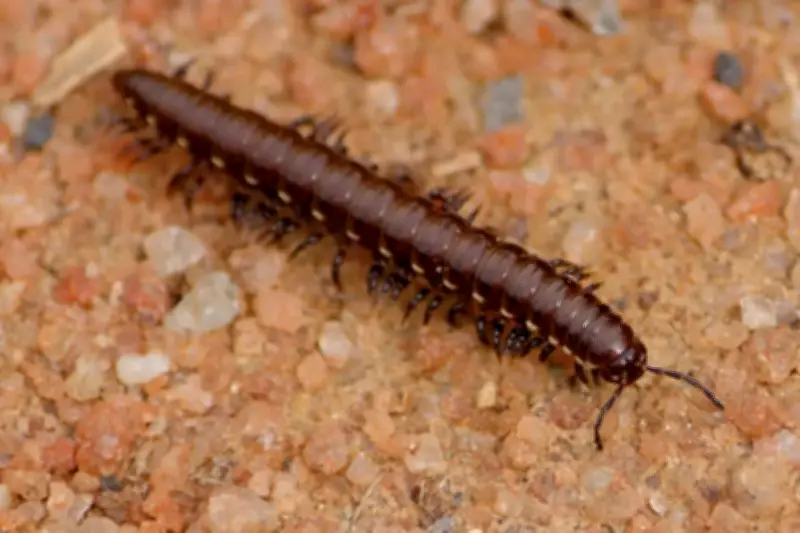
When we consider the very beginnings of life on Earth, we might envision giant dinosaurs stomping through ancient forests, or the first clumsy fish flopping out of prehistoric oceans. We tend to look at the history of land animals in terms of these great, dramatic leaps forward and assume that the familiar, verdant terrain we call home was created by and for the enormous creatures that would later dominate it. It is far too easy to assume that the soil beneath our feet has always been a static, unwavering stage waiting for complex life to appear. However, the latest shocking biological findings are showing that the basis of our modern ecosystem was built by an entirely different, much smaller type of pioneer. Long before any bone or tree came into existence, an indefatigable army of multi-legged critters was already at work.
Underground Endeavor Revealed by Genetic Sequencing
This history of underground endeavor is now being brought to light as advances in genetic sequencing begin to unravel our assumptions about animal colonization of terrestrial ecosystems. For years, scientists have struggled to date these earliest events of life moving to land due to an extreme scarcity of truly ancient fossils. We know some primitive creatures must have gone before, but the exact identities of these first environmental engineers have remained largely a mystery until now. As detailed in the ScienceDaily study "Millipedes beat vertebrates onto land by 80 million years," a new evolutionary tree has allowed scientists to catch a glimpse through deep time, revealing a familiar backyard resident as the true architects of the terrestrial landscape.
Groundbreaking Evolutionary Tree Revises Prehistoric Past
In order to uncover the identities of these first land colonists, a vast cooperative endeavor was undertaken by a large number of evolutionary biologists who set out to map the entire lineage of all existing millipede groups. According to the ScienceDaily report, a Virginia Tech research team says it has addressed a century-old puzzle. The research involved gathering and sequencing complicated DNA from 82 different species of millipede, two of which were rare and extremely ancient lineages which had resisted definitive classification for over a hundred years. Combined with the results of the new DNA mapping, the study combined analysis of 29 separate fossils, leading to the creation of the first ever millipede family tree.

This dataset suggests millipedes were on land about 460 million years ago, roughly 80 million years before vertebrates. When these minute creatures first ventured onto dry land, they were venturing into a barren and alien wasteland. No trees, no flowers, no seeds, just the slow spread of ancient moss, primordial slime, and raw organic material that coated the rock. Slowly but surely, these hardy creatures may have helped break down organic material and enrich early soils.
Ancient Defenses and Undiscovered Life on a Vast Scale
Not only has a new timeline been established, but the scientific inquiry has revealed additional details on the steps taken to ensure species survival. In the scientific paper "Reshaping the millipede tree of life by inclusion of the last two unsampled orders," published in the Current Biology journal, investigators reported the significance of the development of defenses. Data in the paper suggest that by 260 million years ago, millipedes had evolved chemical defenses that deterred predators.
The fascinating story of the millipede, however, is still far from complete; the thousands of species known to us now are just a small fraction of the number that actually exist. In the end, this study suggests that tiny, multi-legged decomposers played an early role in shaping ecosystems. Their evolution of chemical defenses also ensured survival, fundamentally shaping our terrestrial ecosystems long before larger creatures emerged.