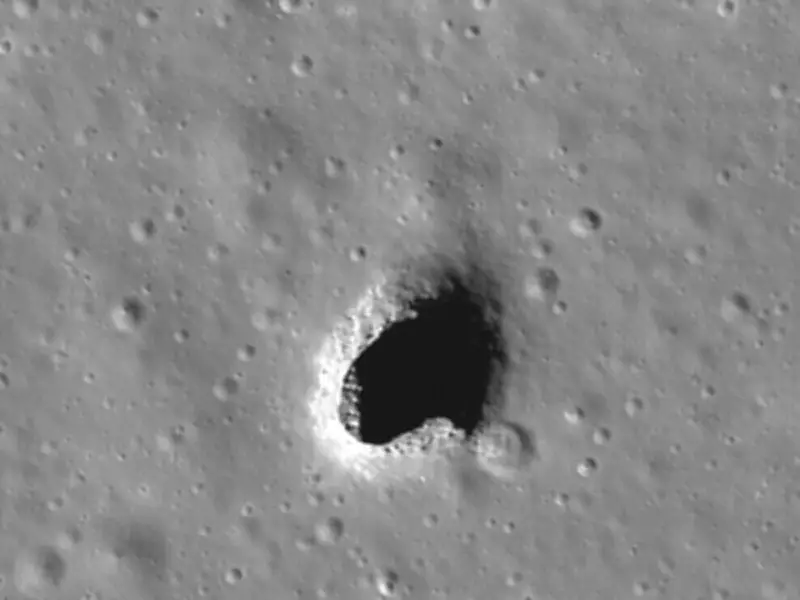
For many years, moon lava tubes have been considered more of science fiction rather than practical engineering projects. However, this has started changing lately. New findings regarding the use of radar technology, temperature analysis, and investigations by NASA and the European Space Agency have indicated that some lunar holes might provide natural underground spaces that could ensure human survival in one of the toughest places where humankind has decided to settle.
The notion is gaining consideration due to the extremely harsh environment of the moon's surface. Temperature variations between high and low extremes, radiation exposure, and continuous bombardment by micrometeorites are major concerns that future crew members will face.
A Lunar Pit That May Lead Underground
A 2026 study published in Nature Communications reported radar-based evidence of a cave conduit beneath the Mare Tranquillitatis pit on the Moon. According to the researchers, there is a link between the visible skylight and the subsurface void, making it clear that some lunar pits are openings into underground areas rather than surface features.

This is significant because the future creation of habitable zones on the Moon depends on having cavities underneath its surface. Lunar lava tubes have been hypothesized for years, but recent radar discoveries bring the conversation from hypothetical to geological in nature. The same study points out that the formation of collapse pits exposes ancient lava tunnels created when flowing lava cooled on the surface but continued to flow underground, leaving tunnels behind.
Why Scientists Are Interested in Living Underground
What makes lunar lava tubes intriguing is not just their large size, but also that these structures might afford protection against the elements. According to findings from NASA's Lunar Reconnaissance Orbiter, permanently shadowed locations within some lunar pits are around 63°F (17°C). This is considerably warmer than the moon's surface temperature, which changes drastically between lunar days and nights.
NASA says these pits and caves may also help shield astronauts from cosmic radiation, solar radiation, and micrometeorites, all of which are major risks during long-duration missions. Previous engineering evaluations by NASA had reached the same conclusions. According to a report published through NASA's scientific repository, lava tubes can protect astronauts from radiation exposure, micrometeorite impacts, meteorites, and ejecta from craters because they would have stable temperatures.
A Serious Option for Future Moon Missions
The European Space Agency has similarly made multiple references to lunar lava tubes as sites where astronauts can take shelter. According to the ESA, the tubes would provide protection against radiation and micrometeorite impacts while potentially allowing access to resources like water ice, which can be found underground. This would be important since the ice might eventually be used to generate drinking water, produce oxygen, and even create rocket fuel for future explorers.
The scientific world at large is becoming more serious about the prospect of using lava tubes as an engineering solution. For instance, a 2026 review in Space Science Reviews compares lava tubes on Earth, the Moon, and Mars, calling them valuable sites due to the naturally protected environment they provide. Three significant problems identified in the review as potential issues for any human colonies on the Moon include radiation, meteoroids, and huge temperature variations. Lava tubes would help minimize all three risks.
A study published in 2026 indicated that future colonization will need effective systems for managing heat. The authors suggested that structures within underground lava tubes could help buffer both temperature extremes and radiation protection without any other structure being built yet.
The Challenges Are Still Enormous
Even amid all the buzz, experts have been cautious about overstating the likelihood of a subterranean base on the Moon. Scientists must figure out the precise dimensions and stability of the cavities and determine how to get in and out of them safely for astronauts and equipment. They must then address life support, energy needs, communications, and safe ways of building within the caves.

Nevertheless, the trajectory of the research is beginning to become clear. One thing generating excitement is that lunar lava tubes would mean less shield material had to come from Earth, a major challenge for space travel.
For now, scientists are focused on mapping and understanding these hidden spaces. But the growing body of evidence suggests that the safest future shelter on the Moon may not stand on the surface at all. It may already exist beneath it.