

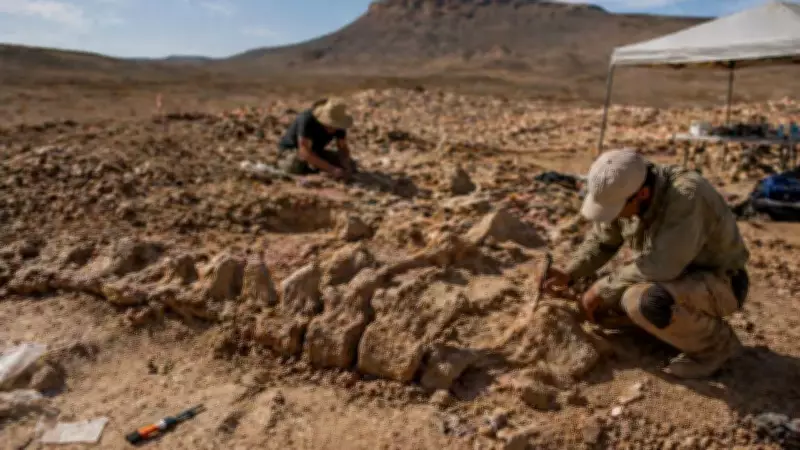
Newly discovered fossils in Morocco are reshaping current understanding of dinosaur movement and evolution. The fossils belong to a new species of titanosaur that lived approximately 70 million years ago, providing evidence that geographic isolation between dinosaur species may not have been as pronounced as previously believed.
Discovery in Phosphatic Sedimentary Rocks
The fossilized bones were unearthed within phosphatic sedimentary rocks in the Oulad Abdoun Basin, a site rich in Late Cretaceous fossils. These remains offer valuable insights into the life of dinosaurs near coastal environments and their potential migration between continents. For decades, scientists believed that Africa was completely isolated during the Late Cretaceous period. However, this discovery suggests that there were likely connection points—what researchers refer to as "dinosaur highways"—that facilitated the spread of various dinosaur species across continents.
The Titanosaur: Phosphatotitan khouribgaensis
The newly identified genus, named Phosphatotitan khouribgaensis, belongs to the titanosaur family—a group of long-necked, herbivorous dinosaurs known for being some of the largest land animals to have ever existed. The fossil material includes partial vertebrae, tail bones, and pelvic elements, which were sufficient for paleontologists to distinguish it as a new species. This discovery highlights that North Africa hosted a diverse array of dinosaur groups during the Late Cretaceous period.

Dinosaur Highways: Ancient Connections Between Continents
One of the most significant theories arising from this discovery is the concept of "dinosaur highways." Researchers speculate that dinosaurs may have migrated between continents using temporary land bridges or chains of islands. During the Late Cretaceous, continents were divided by oceans but were not always fully disconnected. Fluctuations in sea levels could have created routes for animal migration.
A study titled "A Titanosaurian Sauropod with South American Affiliations from the Late Cretaceous of Morocco and Evidence for Dinosaur Endemism in Africa," published in the journal Diversity, indicates that the Moroccan fossils share characteristics with dinosaur species from other continents, particularly South America. This evidence supports the theory of intermittent connections between continents, allowing for the movement and evolution of species.
Importance for Evolutionary Research
This discovery is crucial because it fills a significant gap in Africa's dinosaur fossil record and changes how scientists perceive dinosaur evolution and dispersal across the Earth. Researchers had long believed that dinosaur species were entirely separate on different continents. However, the evidence from this fossil suggests that some species moved across changing landmasses and temporary connections. The fossil provides important insights into Earth's history, indicating that the ancient planet was more dynamic than previously thought, and that dinosaurs were able to adapt to these changes.






