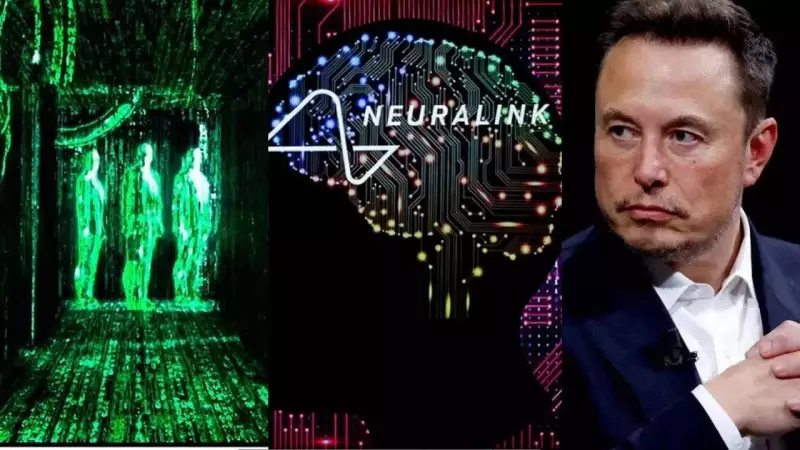
In a significant announcement that could redefine neurotechnology, Elon Musk has declared a major breakthrough for his company Neuralink. The billionaire entrepreneur stated that their brain-computer interface holds the potential to restore full body functionality for individuals with severe spinal cord injuries. This ambitious goal is set against a backdrop of rapid scaling, with Musk revealing plans for high-volume production and automated surgeries starting in 2026.
From Concept to Reality: The 2026 Roadmap
Outlining the future trajectory on his social media platform X, Musk provided concrete timelines for Neuralink's expansion. The company will initiate "high-volume production" of its brain-computer interface devices and transition to a streamlined, almost entirely automated surgical procedure by 2026. This move is aimed at making the technology more accessible. A key technical advancement highlighted by Musk involves the device's threads penetrating the protective dura mater of the brain without needing its removal, a procedure he described as "a big deal" for patient safety and recovery.
How the Neuralink Implant Works
The core of Neuralink's technology is the N1 implant, a chip that replaces a small section of skull bone. It connects to the brain through an array of ultra-thin, flexible electrodes. According to the company's specifications, the current implant features 1,024 electrodes distributed across 64 individual threads. Musk explained that the device focuses on the motor cortex, bridging communication signals from the brain past points of damage in the neck or spine. "It is possible from a physics standpoint to physically restore full body functionality," he asserted in a video post, adding that the implant could allow users to control any device operable via a computer or phone.

Blindsight: A Parallel Breakthrough for Vision Restoration
Parallel to the motor function project, Neuralink is making strides in restoring sight. On January 1 of this year, the company announced progress with its "Blindsight" project, a brain implant designed for the visually impaired. This initiative received the coveted "breakthrough device" designation from the US Food and Drug Administration (FDA) in September 2024. Musk expressed gratitude to the FDA and set realistic expectations, noting that initial vision restoration would be low resolution, comparable to early Atari graphics. However, he projected a future where the technology could surpass natural vision, potentially allowing users to see in infrared or ultraviolet wavelengths. "Blindsight will enable those who have total loss of vision... to be able to see again," Musk stated, including those blind from birth, provided their visual cortex is intact.
Funding and Traction: Neuralink's Growing Footprint
The company's momentum is backed by substantial financial and clinical progress. In 2025, Neuralink secured a massive $650 million in a Series E funding round. This investment was led by prominent firms like ARK Invest, Sequoia Capital, and Founders Fund, catapulting the company's valuation to approximately $9 billion. Furthermore, by September 2025, Neuralink had successfully implanted its device in 12 patients, marking a critical step in human trials and data collection for both its motor and vision restoration platforms.
Elon Musk's latest updates position Neuralink at the forefront of a medical revolution. With clear production targets for 2026 and ongoing trials, the promise of restoring mobility and sight through a brain-computer interface is inching closer from science fiction to tangible reality, offering new hope for millions with neurological conditions and injuries.