Elon Musk's Charitable Pledge Ahead of Historic AI Trial
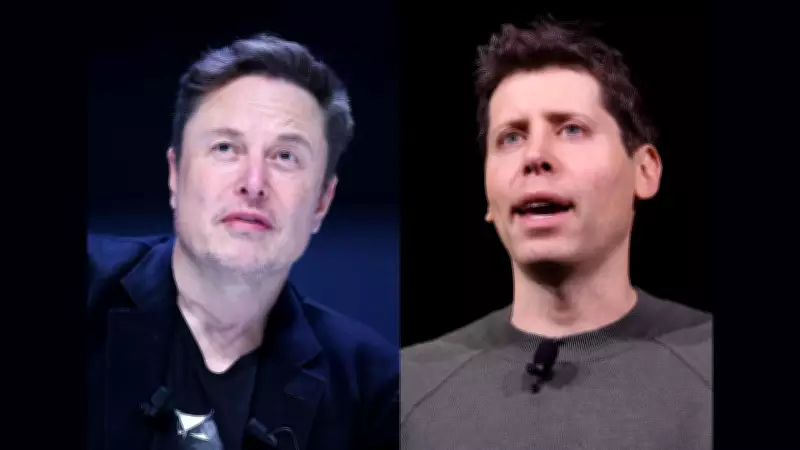
In a dramatic pre-trial declaration, Elon Musk posted a pointed message on X this Monday, vowing that if he wins his monumental $134 billion fraud lawsuit against OpenAI, every single dollar will be donated to charitable causes. "The proceeds of any legal victory in the OpenAI case will be donated to charity," Musk wrote emphatically. "I will in no way enrich myself."
A Strategic Move in High-Stakes Legal Battle
The timing of Musk's charity pledge appears calculated as courtroom strategy. The billionaire entrepreneur has faced persistent accusations that his lawsuit represents an attempt to hinder a direct competitor to his own artificial intelligence venture, xAI. By publicly committing all potential winnings to philanthropy, Musk delivers his most direct rebuttal yet to that narrative, positioning himself as motivated by principle rather than financial gain.
The $134 Billion Fraud Lawsuit Explained
Scheduled to commence on April 28 in Oakland, California, this landmark trial centers on Musk's explosive claim that OpenAI co-founder Sam Altman defrauded him by steering the company away from its original nonprofit mission. This alleged betrayal occurred after Musk contributed approximately $38-45 million to OpenAI during the mid-2010s. Musk's legal team is pursuing up to $134 billion in damages, framed as "wrongful gains" derived from his foundational early support.

The staggering damages figure originates from analysis by economist C. Paul Wazzan of the Berkeley Research Group. Wazzan concluded that Musk's early contributions—including financial donations, his co-founder role, and substantial non-monetary backing—accounted for 50-75 percent of the value of OpenAI's nonprofit arm. This nonprofit entity owns just over a quarter of OpenAI's for-profit business, which was recently valued at an astonishing $730 billion.
Under Wazzan's framework, OpenAI could potentially owe Musk around $109 billion, with Microsoft potentially liable for an additional $25 billion. However, OpenAI has vigorously contested this methodology, arguing that donors to a nonprofit organization do not hold ownership interests and cannot claim proportional shares of commercial value generated later. The company's legal team attempted to have Wazzan's testimony completely excluded during a pre-trial hearing last Friday.
Judge's Skepticism and Trial Proceedings
Despite her reservations, Judge Yvonne Gonzalez Rogers declined to exclude Wazzan's testimony, describing his calculations with the phrase "numbers out of the air" but rejecting what she termed "a five-page motion" to dismiss his evidence. The jury will hear Wazzan's testimony, and Judge Rogers has indicated she will determine the final damages figure herself following the verdict.
The trial witness list reads like a Silicon Valley who's who, featuring expected testimony from Sam Altman, Elon Musk, OpenAI president Greg Brockman, co-founder Ilya Sutskever, and former board member Shivon Zilis. Microsoft CEO Satya Nadella may also make an appearance, underscoring the trial's significance across the technology industry.
OpenAI's Counter-Narrative and Allegations
OpenAI presents a sharply contrasting narrative, claiming Musk himself agreed to a for-profit structure back in 2017. The company alleges Musk withdrew support only after executives refused to grant him complete control of the research laboratory and rejected his proposal to merge OpenAI with Tesla. OpenAI has characterized the lawsuit as Musk's "fourth attempt at these particular claims" and part of "a broader strategy of harassment" designed to slow OpenAI's progress while xAI gains competitive ground.
This legal confrontation represents one of the most significant corporate trials in artificial intelligence history, with implications extending far beyond the courtroom. The outcome could reshape relationships between nonprofit missions and commercial ventures in the rapidly evolving AI sector, while Musk's charity pledge adds an unusual philanthropic dimension to this high-stakes corporate dispute.