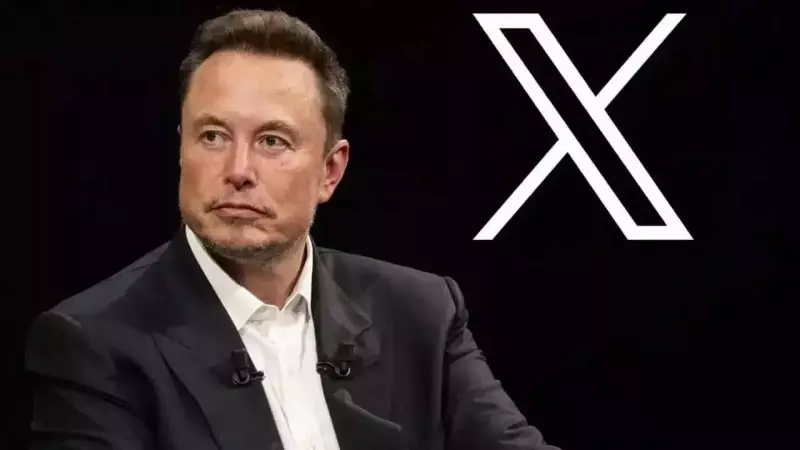
Elon Musk's artificial intelligence venture, xAI, is encountering significant challenges in selling its Grok AI tools to large corporate clients. The primary obstacle, as reported, is a lack of experience in enterprise sales, a domain where established rivals like Google and OpenAI have a considerable head start.
Why Big Companies Are Hesitant to Adopt Grok
According to a report by The Information, xAI's current engagements with major firms are largely limited to small-scale tests rather than company-wide deployments. Clients such as Morgan Stanley and Palantir are running these preliminary trials, which currently generate only a few million dollars in revenue for xAI. This is a stark contrast to the multi-million dollar deals secured by its competitors.
The report highlights that many of the interested companies already have existing ties with Musk or his other businesses, indicating difficulty in attracting clients outside this familiar network. Adam Mansfield, a practice leader at UpperEdge, noted that his clients, who are large companies, are not using or seriously considering Grok for business purposes. Enterprise executives typically prefer vendors with proven track records, opting to first evaluate results from trusted suppliers like Microsoft before exploring newer AI tools.

xAI's Strategy to Grow Its Enterprise Business
In response to these challenges, xAI is actively working to expand its business customer base. A key move was the integration of Grok into Microsoft's Azure AI Foundry in September, a cloud service that offers developers a choice of various AI models. Furthermore, xAI has started selling Grok business subscriptions for $30 per month on the Amazon Web Services (AWS) Marketplace.
However, Grok is notably absent from AWS's flagship AI service, Bedrock, which hosts models from OpenAI, Anthropic, and others. There are indications of a closer collaboration with AWS, bolstered by xAI's hiring of a salesperson from AWS who will focus on selling to AWS customers.
Like its peers, xAI is also targeting the US government as a crucial client. It was among several AI firms that signed deals worth up to $200 million each with the Department of Defence last summer. However, a generative AI platform launched by the Pentagon in December initially featured only Google's Gemini model.
Internal Adoption Within Musk's Empire and Collaboration Hurdles
Musk's other companies represent a natural, though not guaranteed, customer base for xAI. Tesla includes the Grok chatbot in its vehicles and is incorporating it into the Optimus robot. However, internal practices show a varied approach. Former employees from both xAI and Tesla revealed that the company encourages the use of various AI models internally. While some Tesla software engineers have tested Grok for coding, many prefer Anthropic's Claude, and others experiment with customized versions of open-source models like Meta's Llama.
SpaceX uses Grok to handle Starlink customer support requests, and Musk has discussed ambitious projects like building data centres in space, potentially involving both SpaceX and xAI. However, a significant obstacle to deeper collaboration exists: SpaceX, as a US military contractor, faces strict national security restrictions on hiring non-US citizens. This limits collaboration with xAI's engineering teams, which are reportedly composed mainly of Chinese nationals or non-US citizens, preventing them from working with SpaceX on more complex, sensitive matters.
As the AI race intensifies, xAI's journey underscores the critical importance of enterprise sales expertise and established credibility in winning over large, cautious business clients, a battlefield distinct from technological innovation alone.