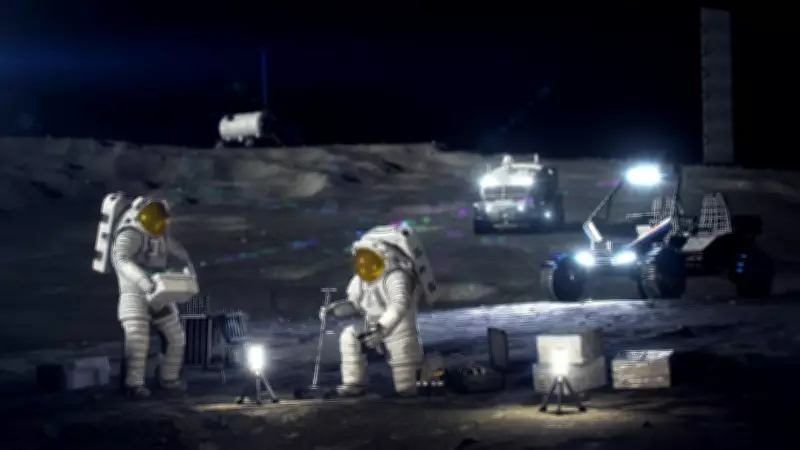
The US space agency NASA has accelerated efforts to construct the Artemis Era Moon Base, aiming to develop a permanent manned habitat at the moon's south pole. This follows NASA's unveiling of new lunar rover contracts, cargo landers, robotic missions, and facilities designed to support astronauts on future Artemis program missions. Collaborating with private companies such as Blue Origin, Astrolab, and Lunar Outpost, NASA seeks to create lasting lunar exploration technology ahead of crewed flights scheduled for 2028.
NASA's Moon Base Vision for the Lunar South Pole
This recent announcement is one of the strongest indicators that Artemis is shifting from short stays to building infrastructure. During an event titled 'Moon Base', NASA leaders shared details about future plans where upcoming missions will establish the groundwork for sustained operations at the lunar south pole. Administrator Jared Isaacman described the moon base project as "humanity's first outpost on another celestial body." He added: "Each mission, crewed and uncrewed, will provide invaluable experience as we return to the lunar surface, establish the capability to live off the land in a harsh environment, and gain experience for deeper space exploration." NASA selected the south pole due to its scientific significance and potential water ice sources.
The Three Artemis Moon Base Missions and Lunar Landers
NASA announced the first three Moon Base missions that will pave the way for surface operations on the Moon.

Moon Base I, expected no earlier than autumn 2026, will deploy scientific equipment via Blue Origin's Blue Moon Mark 1 Endurance Lander. This will allow testing of systems to minimize risks for upcoming crewed lunar landings.
Moon Base II will carry over 1,100 pounds of payload via Astrobotic's Griffin Lander, including Astrolab's FLIP rover. This mission will test mobility systems necessary for astronauts to traverse difficult terrain at the south pole.
Moon Base III will involve significant lunar science. The Lunar Vertex investigation aims to study unusual bright patches on the Moon's surface, known as lunar swirls. NASA wants to understand how surface materials behave under extreme conditions. Payloads will also come from ESA and the Korea Astronomy and Space Science Institute.
Lunar Rovers Will Power Future Moon Exploration
A key component of NASA's mission involves developing high-tech lunar terrain vehicles (LTVs) for astronauts during Artemis missions. NASA provided over $439 million in contracts to Astrolab and Lunar Outpost to develop the first crewed lunar rovers. Astrolab's CLV-1 rover is designed for transporting astronauts and cargo, while Lunar Outpost's Pegasus rover can operate autonomously, manually, or by remote control. According to NASA, these vehicles will be crucial for astronauts spending extended periods on the Moon, helping transport equipment, assess hazards, clear landing zones, and conduct studies in extreme conditions. The Pegasus rover can work independently for an entire year at speeds over 9 mph.
Moon Base Prepares NASA for Mars Missions
Beyond returning humans to the Moon, the Moon Base project involves preparations for future crewed flights to Mars. NASA stated there will be additional robotic exploration missions, cargo deliveries, flying robots, and technology tests over several years. An expedition named MoonFall will send four robots to scout rugged regions near the Moon's south pole in preparation for astronaut arrival. The program will focus on collecting operational data to reduce risks ahead of crewed Artemis surface operations, developing sustainable systems for astronauts to operate on other planets. With increasing international attention on the Moon, the Moon Base program could become NASA's flagship space project of the decade.