NASA's Artemis II Mission Marks Historic Human Return to Lunar Vicinity
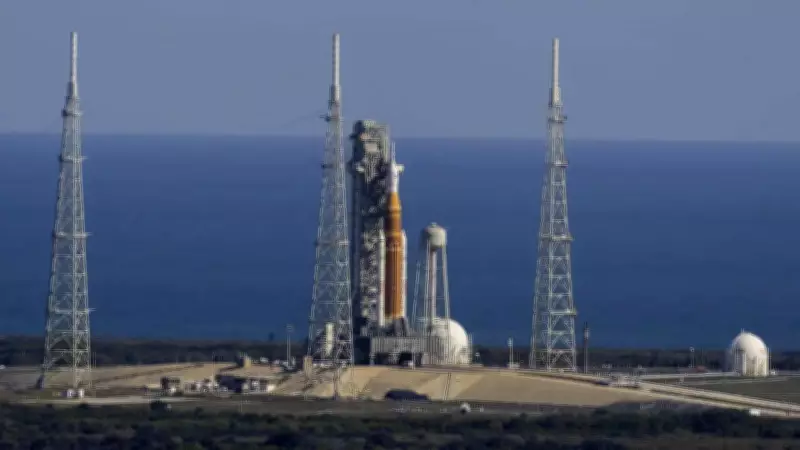
NASA's Artemis II mission has successfully launched, marking the first time in over half a century that humans will venture into the area surrounding the Moon. The historic event took place on April 1, 2026, propelled by the powerful Space Launch System (SLS) rocket that carried the Orion spacecraft into orbit. While the technological marvels of the mission captured global attention, it was a small, unassuming white stuffed animal that emerged as an unexpected focal point, earning the title of the mission's 'silent hero.'
The Unlikely Star: A Child-Designed Zero-G Indicator
Now floating freely within the Orion spacecraft, this plush mascot serves a crucial scientific purpose as an official zero-G indicator. Its primary function is to provide both the crew and mission controllers at Houston's Johnson Space Center with immediate visual confirmation that the spacecraft has entered a microgravity environment. NASA has long utilized such toys as practical visual markers to instantly demonstrate the absence of gravity, offering a clear, tangible signal that astronauts have transitioned into weightless conditions.
Through this innovative approach, NASA aims to forge meaningful connections with young people worldwide, inspiring what the agency calls the 'Artemis Generation.' By incorporating a mascot designed by an eight-year-old through the 'Moon Mascot' design challenge, the space agency hopes to encourage future generations to pursue careers in space science and engineering, ultimately supporting humanity's ambitious journey to the Moon and Mars.

Aerospace Tradition Meets Modern Inspiration
The selection of this white plush toy for Artemis II continues a longstanding aerospace tradition where small, soft objects symbolize the transition to microgravity. According to NASA documentation, once the Orion spacecraft completes its initial orbital insertion and Trans-Lunar Injection (TLI) phase, the toy will begin to float, providing the four-member crew with visual telemetry that they have passed beyond Earth's strongest gravitational influence.
NASA's Office of STEM Engagement has conducted research demonstrating that involving children in mission hardware design creates lasting interest in space-related careers. This educational initiative transforms the plush toy from mere decoration into a powerful symbol for the next generation of explorers.
Why NASA Chooses Plush Toys Over High-Tech Sensors
Zero-G indicators may appear whimsical, but they serve as functional visual telemetry tools that have been formally recorded in flight manifests by space agencies including NASA and the Canadian Space Agency (CSA). During the intense eight-minute lift-off phase, crew members experience tremendous G-forces that pin them to their seats. The moment the plush toy drifts away from its tether provides unambiguous confirmation of the transition to microgravity.
Technical documentation from the International Space Station (ISS) National Lab reveals practical advantages to using plush items: they are non-conductive, extremely lightweight, and pose minimal risk to sensitive glass equipment or cockpit instruments within the Orion capsule. These characteristics make them ideal for the confined, pressurized environment of spacecraft.
Rigorous Testing and Historical Significance
The Artemis II Moon Mascot underwent extensive quality assurance testing before earning its place aboard the mission. NASA requires that all items entering the Orion spacecraft be manufactured from specially engineered materials rated for space applications, meeting strict requirements for flammability and off-gassing within the closed, pressurized atmospheric environment.
This meticulous preparation ensures astronaut safety for crew members Reid Wiseman, Victor Glover, Christina Koch, and Jeremy Hansen, protecting the gaseous environment throughout their entire flight. According to the Smithsonian National Air and Space Museum, such artifacts contribute valuable historical records of space exploration, creating tangible connections to both the technology enabling humanity's extraterrestrial missions and the human experience on Earth.

The Artemis II mission represents not only a technological triumph but also a symbolic bridge between generations, demonstrating how even the simplest objects can carry profound meaning in humanity's quest to explore the cosmos.