Artemis II Mission Faces Unexpected Human Challenge: Toilet System Malfunction
NASA's historic Artemis II mission, marking humanity's return to lunar orbit after more than five decades, has encountered an unexpected yet revealing challenge. While the mission represents a monumental leap in space exploration technology, a minor malfunction in the spacecraft's toilet system has highlighted the fundamental human realities of living beyond Earth.
The Universal Waste Management System Glitch
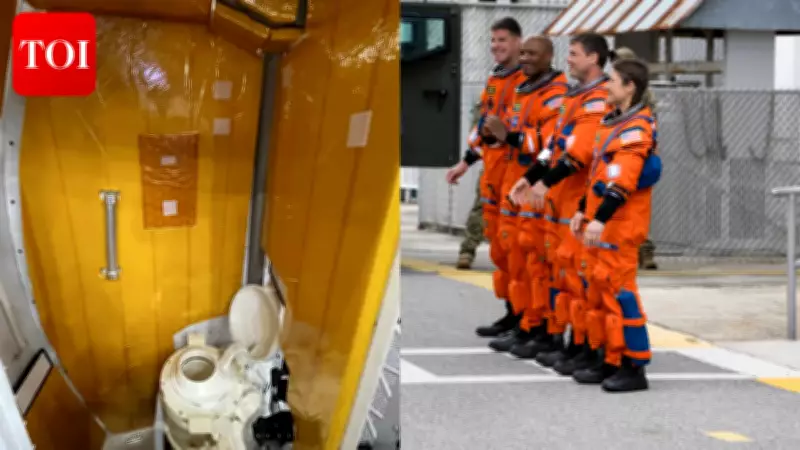
During the initial phase of the Artemis II mission, astronauts aboard the Orion spacecraft reported a minor issue with the Universal Waste Management System (UWMS), the advanced toilet system designed for microgravity environments. The problem centered around airflow irregularities within the system's waste collection mechanism.
"The toilet fan is reported to be jammed," explained NASA spokesperson Gary Jordan during live mission commentary. "Ground teams are now developing instructions for accessing the fan and clearing the affected area to restore toilet functionality for the mission."

In the absence of Earth's gravity, which naturally directs waste downward, space toilets rely entirely on sophisticated suction systems. Even minor airflow disruptions can significantly impact waste collection and storage efficiency in weightless conditions.
Why Space Toilets Are Mission-Critical Systems
While a malfunctioning toilet might seem trivial from an Earth-bound perspective, in the confined isolation of a spacecraft, such systems are essential for maintaining crew hygiene, comfort, and overall well-being. NASA's human research program emphasizes that clean, controlled environments are fundamental to preserving both physical and psychological health during space missions.
In microgravity environments, waste doesn't naturally move away from the human body. A faulty system creates contamination risks that could compromise mission safety and crew health. This becomes particularly crucial as NASA plans longer-duration missions where reliable waste management must be absolutely failure-proof.
Evolution of Space Toilet Technology
The Orion spacecraft's toilet represents significant advancement over previous designs used during Apollo missions. Unlike the simple disposal bags of earlier eras, modern space toilets incorporate:
- Sophisticated airflow mechanisms to direct waste into secure containers
- Multiple fans, hoses, and specialized compartments designed for weightless operation
- Advanced systems based on extensive research in astronautical hygiene
While these improvements have dramatically enhanced efficiency and hygiene standards, they also introduce more complex components that require flawless operation in challenging space environments.
Broader Implications for Future Space Exploration
The Artemis II toilet incident serves as a valuable reminder that space exploration involves continuous learning and system refinement. Each minor glitch provides engineers with crucial data for developing more robust systems for future missions.
As NASA progresses toward establishing lunar bases and eventually reaching Mars, reliable waste management systems will need to function perfectly for extended periods. The current issue, while successfully managed through backup systems, offers insights that could prevent more serious problems during longer missions.
Beyond the technical aspects, this incident reveals the human dimension of space exploration. While monumental achievements like moon missions capture public imagination, successful space habitation depends equally on managing everyday human needs—from oxygen supply to waste disposal. These seemingly mundane challenges will play a decisive role in shaping humanity's future beyond Earth.