NASA's Revolutionary Fermented Food Research on the International Space Station
NASA has initiated a pioneering scientific investigation aboard the International Space Station (ISS) to examine the behavior of fermented foods and essential nutrients in the unique environment of space. This critical research forms part of a comprehensive strategy to prepare for extended human missions to the Moon, Mars, and beyond, addressing one of the most fundamental challenges of long-duration space travel: sustainable nutrition.
The BioNutrients Project: Engineering Microbes for Space Nutrition
The core of this research is NASA's BioNutrients project, a series of innovative experiments that utilize engineered microorganisms to produce vital nutrients directly in space. Drawing inspiration from terrestrial food fermentation processes—such as the bacterial transformation of milk into yogurt—these experiments involve microbes specifically designed to generate nutrients that astronauts require during prolonged missions.
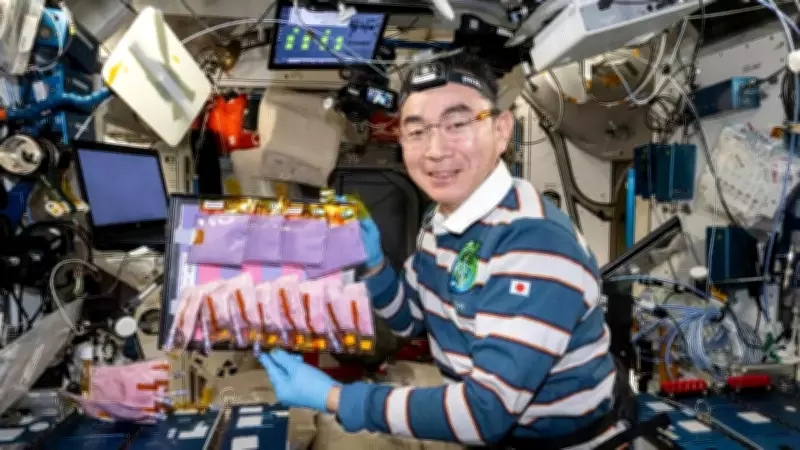
In the current phase, known as BioNutrients-3, ISS crew members are working with specialized production packs containing growth media, engineered yeast, and starter cultures similar to those used in yogurt and kefir production. The process involves adding water, mixing the contents, and using a compact incubator to facilitate microbial growth. The resulting samples are then frozen and returned to Earth for detailed analysis.

The primary objective at this stage is not consumption, but rather to determine the feasibility of safely cultivating and preserving nutrients in microgravity, while assessing how the low Earth orbit environment impacts these biological processes.
Why Fermented Foods Are Crucial for Future Space Exploration
Current astronaut food systems rely heavily on freeze-dried and prepackaged items with limited shelf lives. For ambitious missions to Mars or extended lunar stays, these conventional approaches may prove insufficient. NASA scientists are therefore exploring on-demand food production systems that could generate fresh, nutrient-rich foods during missions.
Fermentation represents a natural, microbial-driven process that preserves and enhances nutrients. By investigating whether similar systems can function effectively in space, researchers aim to develop methods for producing fresh food supplements aboard spacecraft or on planetary surfaces. Additionally, this research provides valuable insights into how space radiation and microgravity alter food chemistry and microbial behavior.
Previous Successes and Ongoing Research
Complementing the BioNutrients project, previous experiments have demonstrated that intentional food fermentation is possible in space. Notably, scientists successfully fermented miso aboard the ISS, with the space-made product returned to Earth after thirty days for analysis. Research published by Phys.org confirmed that the space-fermented miso remained recognizable as traditional miso, though with distinct flavor profiles potentially influenced by microgravity and elevated station temperatures.
These findings reinforce the concept that microbial life can not only survive but thrive in space, supporting the development of future food systems that offer greater variety and nutritional value compared to current prepackaged meals.
Sample Return and Earth-Based Analysis
Spacecraft such as SpaceX's Dragon regularly transport scientific materials, including BioNutrients-3 samples, from the ISS back to Earth. Upon return, NASA researchers at facilities like the Ames Research Center in California conduct comprehensive analyses, examining microbial growth rates, nutrient production levels, and how space-based fermentation compares to Earth-based processes.
This meticulous examination is essential for understanding how microgravity and space radiation affect biological systems and food production, while verifying the safety and reliability of potential life-support and nutrition systems for future missions.

Implications for Sustainable Space Exploration
NASA's fermented food research represents a strategic component of broader efforts to enable sustainable, long-term space exploration. By elucidating how microbes function and produce nutrients in microgravity, scientists aim to develop systems capable of generating critical food components during missions. This work directly supports NASA's Artemis program and future human exploration of Mars by tackling the significant challenge of providing adequate, fresh nutrition over extended periods.
The knowledge gained from the BioNutrients project and related studies expands our understanding of how astronauts might cultivate or prepare diverse foods on other celestial bodies, potentially benefiting both space missions and terrestrial applications. Ultimately, this research could prove instrumental in ensuring mission success and maintaining crew health during ambitious voyages across our solar system.