In a groundbreaking study, NASA has turned to the Moon to unravel a long-standing mystery about the origins of water on Earth. Research analyzing soil samples from the Apollo missions indicates that late meteorite impacts were unlikely to be the primary source of Earth's vast oceans, challenging popular scientific theories.
Reevaluating Meteorite Contributions to Earth's Water
For decades, it has been widely believed that meteorites played a crucial role in delivering water to our planet during the early solar system's formation. However, this new NASA-led study, spearheaded by Tony Gargano, a postdoctoral researcher at NASA's Johnson Space Center and the Lunar and Planetary Institute in Houston, suggests otherwise. By examining lunar regolith—the dusty, rocky layer covering the Moon's surface—scientists have gained a clearer understanding of meteorite impacts and their potential water delivery to Earth.
Innovative Techniques and Lunar Insights
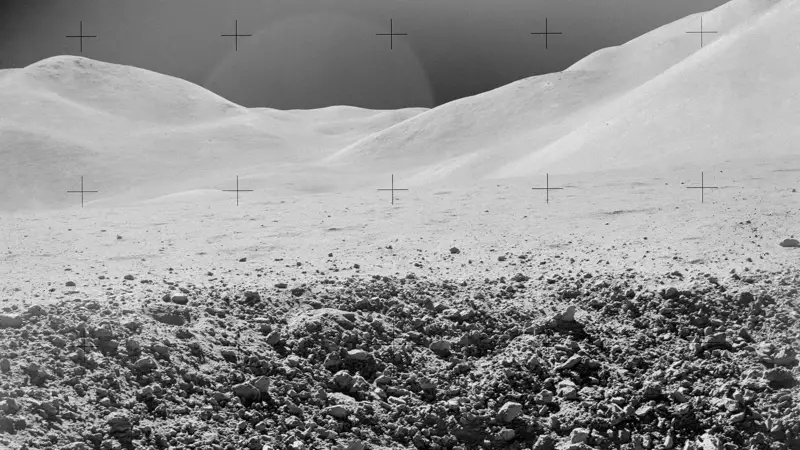
Unlike Earth, where weather, erosion, and geological processes constantly reshape the surface, the Moon has preserved a pristine record of cosmic events over billions of years. This makes it an invaluable resource for studying impacts that affected both the Moon and Earth. Gargano's team employed an innovative method using triple oxygen isotopes, which act as a chemical fingerprint. Oxygen, being the most abundant element in rocks and unaffected by high-energy impacts, provided a much clearer indication of the types of meteorites that struck the Moon.

The data revealed that at least one percent of the lunar regolith contains material from carbon-rich meteorites, known to carry water. Based on this, the team estimated the amount of water these meteorites could have delivered. Even with generous assumptions and scaling to reflect Earth's higher impact rate, the total water contribution was found to be only a small fraction of what fills Earth's oceans today.
Implications for Planetary Science
Justin Simon, a co-author of the study and planetary scientist at NASA Johnson, emphasized, "Our findings don't mean meteorites brought no water at all. They say the Moon's long-term record makes it very hard for late meteorite delivery to be the dominant source of Earth's oceans." This shift in perspective is significant for understanding Earth's hydrological history and the processes that shaped our planet.
While the water delivered to Earth appears minimal, the study holds importance for lunar exploration. Over billions of years, even small water deliveries could impact the Moon, where accessible water is mainly trapped in permanently shadowed regions near the poles. These icy pockets are of great interest as NASA prepares for future human missions under the Artemis programme.
Future Prospects with Artemis Missions
All samples used in this research came from Apollo landing sites near the Moon's equator on the side facing Earth, collected over five decades ago. Scientists remain hopeful that future samples returned by Artemis astronauts will provide a broader view of the Moon's history and deepen our understanding of how water and other essential materials influenced the inner solar system.
This study not only redefines theories about Earth's water origins but also highlights the Moon's role as a cosmic archive, offering clues to planetary evolution that continue to inspire scientific discovery.