

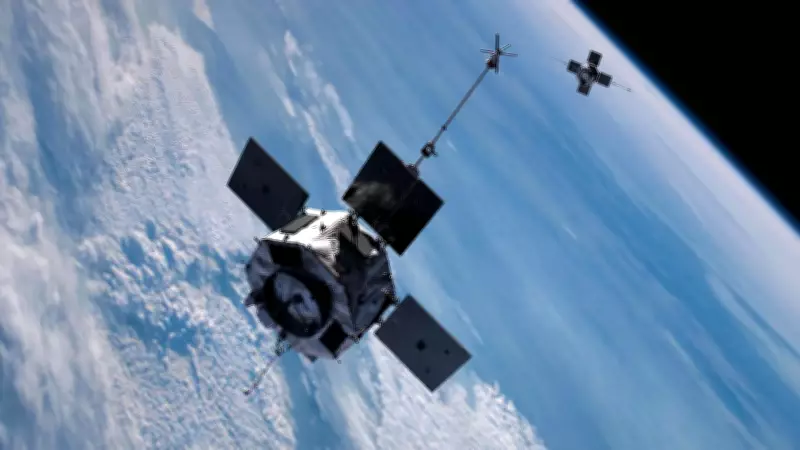
NASA's Van Allen Probe A Satellite to Plunge Back to Earth in 2026 After 14-Year Mission
NASA's Van Allen Probe A, a 600-kilogram satellite launched in 2012, is on a collision course with Earth, slated for an uncontrolled re-entry around March 10, 2026. After 14 years of studying the planet's hazardous radiation belts, the spacecraft is plummeting back due to atmospheric drag accelerated by solar activity. While headlines scream "NASA satellite crash," sparking public fears of destruction, space experts insist the threat to human life is exceedingly low.
Details of the Satellite Re-entry and Minimal Risk Assessment
The re-entry is expected to occur at approximately 7:45 pm EDT on March 10, 2026, with a potential 24-hour delay due to orbital uncertainties tracked by the US Space Force. NASA reports that most of the spacecraft will incinerate in the atmosphere due to intense friction, reaching temperatures over 1,600°C, leaving only scant debris. The space agency pegs the risk of injury to anyone on Earth at a mere one in 4,200, which translates to a 0.02% chance—far safer than everyday hazards like lightning strikes.
Factors contributing to this low risk include:

- Oceans covering about 70% of the Earth's surface, increasing the likelihood of debris landing in water.
- Low population densities in many land areas, reducing the chance of impact on inhabited regions.
- Precedents from past events, such as Skylab's 1979 plunge or China's 2020 rocket re-entry, where debris scattered harmlessly without reported injuries.
Legacy and Mission of the Van Allen Probes
Launched in August 2012 as part of NASA's Radiation Belt Storm Probes mission, later renamed the Van Allen Probes, the twin satellites—Probe A and Probe B—were designed to explore Earth's doughnut-shaped Van Allen radiation belts. These zones are filled with high-energy particles that pose threats to spacecraft and astronauts. Probe A, weighing 600kg (1,323 pounds), significantly outlasted its initial two-year design, operating for over a decade and yielding vital data until fuel depletion in 2019.
The mission's findings have been critical for:
- Designing radiation-resistant electronics for satellites and space missions.
- Improving space weather forecasts that protect electrical grids and communication systems.
- Guiding future endeavors like NASA's Artemis program.
An active solar cycle has thickened the atmosphere, hastening Probe A's descent well before the original 2034 forecast. Pre-deactivation, NASA lowered its orbit to ensure burn-up upon re-entry, adhering to space debris mitigation guidelines. Probe B continues to operate and is expected to remain in orbit until at least 2030.
Broader Context of Space Debris and Safety Measures
The re-entry of Van Allen Probe A highlights ongoing challenges with space debris in an era of booming satellite launches. Currently, over 30,000 objects orbit Earth, with an estimated 100-400 tonnes of material re-entering the atmosphere annually. Despite this, harm to humans remains rare due to probability calculations and tracking efforts.
Key entities monitoring such events include:
- The US Space Force's 18th Squadron, which provides real-time tracking of re-entries.
- NASA's Orbital Debris Program, focused on assessing and mitigating risks.
NASA has issued a safety waiver for Probe A, acknowledging a minor risk elevation but underscoring trust in predictive models. This event reinforces the push for "design for demise" principles in spacecraft construction, ensuring they disintegrate safely upon re-entry. Public advice remains straightforward: if debris is spotted, report it without touching, as most components will burn up or land in uninhabited areas.
The fiery finale of Van Allen Probe A serves as a reminder that space risks are managed through science rather than panic, advancing humanity's understanding while prioritizing safety on Earth.






