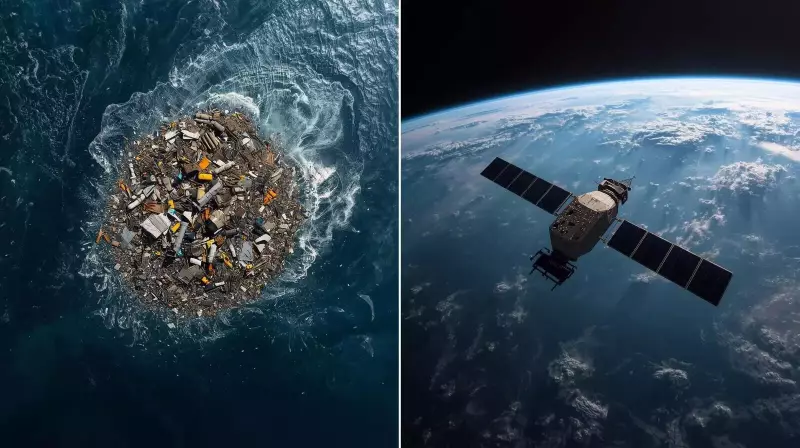
NASA Scientists Explore Ocean Plastic Detection from Space Orbit
Scientists at NASA are embarking on a novel approach to monitor ocean debris, shifting their perspective from traditional ground-based observations to a celestial vantage point. Instead of relying solely on ships or coastal surveys, researchers are now examining whether orbiting satellites can identify plastic pollution in marine environments. This initiative follows a significant breakthrough where space-based sensors successfully detected plastic waste on terrestrial surfaces, quietly reshaping scientific expectations about remote sensing capabilities.
From Land to Sea: A Cautious Transition
Rather than ambitiously promising comprehensive global cleanup maps, NASA's current focus remains deliberately narrow and fundamental. The core question driving this research is whether floating marine waste leaves any consistent, detectable signatures when observed from space. This inquiry sits at the intersection of environmental monitoring and advanced remote sensing technology, acknowledging inherent limitations that are already apparent. Presently, the effort is less about providing immediate solutions to the plastic crisis and more about understanding what satellites can realistically observe under oceanic conditions.
It represents slow, meticulous work shaped by practical constraints and acknowledged uncertainties.The EMIT Sensor's Unexpected Capabilities
Interest in orbital ocean debris monitoring intensified after scientists reported unexpected success with the Earth Surface Mineral Dust Source Investigation (EMIT) instrument aboard the International Space Station. Originally designed to analyze mineral dust over arid desert regions, this sensor demonstrated remarkable versatility by detecting plastic materials in landfills and large agricultural structures. While this discovery didn't offer instant remediation, it revealed that certain spectral signals from plastics were stronger than anticipated, prompting new investigative pathways rather than delivering definitive answers.

Building a Spectral Library of Marine Debris
One of the less visible yet crucial aspects of this research involves creating an extensive reference catalogue of debris materials. Spearheaded in part by NASA intern Ashley Ohall, this project systematically collects spectral data from items commonly found in marine litter. The growing library includes:
- Various types of ropes and fishing nets
- Discarded tires and rubber materials
- Plastic bottle caps and containers
- Fragmented packaging materials
Plastics dominate this collection, encompassing numerous polymer types and different stages of environmental degradation. Each item reflects light in subtly distinct ways, and these minute differences become critical for satellite-based identification.
Oceanic Challenges for Satellite Detection
Detecting debris in marine environments presents unique complications that differ substantially from land-based observation. Ocean water absorbs significant portions of infrared light that typically helps identify materials, thereby weakening the signals researchers depend on. Additional layers of difficulty include:
- Constant movement of floating objects that rarely remain stationary
- Changing light conditions that alter how debris appears from orbit
- Water surface variations that can obscure or mimic debris signatures
These factors mean that techniques successful for terrestrial plastic detection cannot be directly transferred to open water environments without substantial adaptation.
EMIT Demonstrates Sensor Flexibility
Despite its original mineral-focused design, EMIT has revealed how existing NASA instruments can sometimes exceed their planned capabilities. Positioned on the International Space Station, this sensor scans extensive areas while detecting chemical patterns in reflected sunlight. Similar spectroscopic techniques have proven valuable in other space science endeavors, including lunar missions that identified water-related signals. This established history provides researchers with measured confidence, even as expectations remain realistically cautious.

Focusing on Coastal Sources
Since most plastic entering oceans originates from land-based sources—often transported through rivers and coastal runoff—scientists recognize the strategic value of beginning observations near shorelines. Mapping pollution in coastal regions may prove more feasible than tracking dispersed debris in mid-ocean areas. This approach also helps identify specific entry points where waste enters marine systems, information that's crucial for prevention strategies alongside monitoring efforts.
Integrating Artificial Intelligence
Complementing sensor development, research teams are training artificial intelligence systems to scan satellite imagery for potential debris signatures. These AI tools are designed to process massive volumes of orbital data, highlighting regions that warrant closer examination. While not intended to replace direct measurements, they could significantly narrow search areas and improve detection efficiency. Progress in this domain remains uneven, with false positives continuing to present challenges that require refinement.
A Gradual Evolution in Ocean Observation
Researchers involved in this work consistently describe it in modest terms, emphasizing incremental understanding rather than singular breakthroughs. Satellite detection alone cannot solve marine pollution, and no scientist suggests otherwise. What orbital monitoring may eventually provide is a broader, albeit less detailed, perspective that complements traditional field studies. For now, the research advances through careful, deliberate steps, generating results that raise as many questions as they answer, while leaving ample room for future missions to develop these concepts further.