Space represents the ultimate frontier for human adventure, but it also presents harsh challenges that test our physical and mental limits in unpredictable ways. Astronauts spend years preparing for missions, floating high above Earth in a delicate environment while exploring the unknown. This week, that reality became starkly clear during a routine mission that turned historic.
An Unexpected Early Return
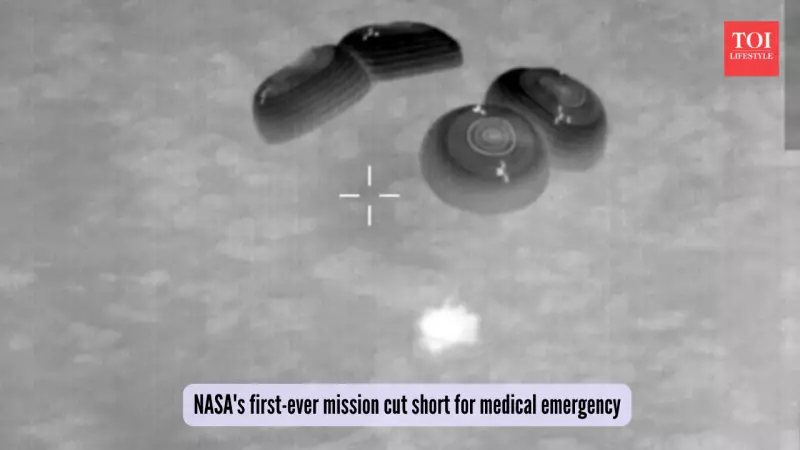
The International Space Station, home to international crews conducting vital research, witnessed an unprecedented event. NASA's SpaceX Crew Dragon capsule Endeavour made an early splashdown in the Pacific Ocean off Southern California at approximately 3:41 a.m. EST on January 15, 2026. The capsule had undocked from the ISS at 5:20 p.m. EST the previous day, January 14.
This early return marked NASA's first-ever mission cut short specifically for medical reasons. The Crew-11 team, which launched in August 2025 for a planned six-month stay, came home weeks ahead of schedule.

The Medical Emergency That Changed Plans
According to detailed reports from Space.com, the crew included NASA astronauts Zena Cardman and Mike Fincke, JAXA astronaut Kimiya Yui, and Roscosmos cosmonaut Oleg Platonov. Their mission was interrupted by what officials described as a serious medical concern affecting one crew member.
The situation developed just hours before a scheduled spacewalk on January 8. Astronauts Mike Fincke and Zena Cardman were preparing to install fittings when one astronaut fell ill. NASA promptly cancelled two planned spacewalks and shifted focus to bringing the entire crew home safely.
Spaceflight Now reported that NASA took advantage of perfect weather conditions for a nighttime splashdown near San Diego. Families waited anxiously as parachutes deployed over the Pacific Ocean, bringing their loved ones home earlier than expected.
Privacy and Precautions
Specific details about the medical condition remain confidential to protect the astronaut's privacy. However, Dr. James Polk, NASA's chief health and medical officer, provided some insight to Reuters. He explained that the agency decided to err on the side of caution for the affected crew member, even though the situation didn't constitute a life-threatening emergency.
Following the splashdown, all crew members exited the capsule for immediate medical evaluations. Reuters confirmed that Mike Fincke was the first to emerge from the spacecraft. NASA held a press conference at 5:45 a.m. EST, led by Administrator Jared Isaacman, to brief the public about the incident.
Ceremonial Departure and ISS Operations
YouTube coverage from Spaceflight Now captured poignant moments before departure. The Crew-11 astronauts suited up and bid farewell to the remaining Expedition 74 crew members: Roscosmos cosmonauts Sergey Kud-Sverchkov and Sergei Mikaev, plus NASA astronaut Chris Williams. They performed the traditional handover of ISS keys in a ceremonial gesture.
With Crew-11's premature departure, the International Space Station now operates with just three crew members. This reduced configuration will continue until the next scheduled crew rotation on February 15. According to an ABC News report, the deorbit burn lasted 13.5 minutes, perfectly setting up the parachute-assisted landing under clear night skies.
This historic medical evacuation demonstrates how space exploration constantly balances ambition with safety. While astronauts push boundaries in orbit, mission controllers on Earth must remain prepared to adapt when human health takes priority over planned activities.