US Congressman Brandon Gill Draws Widespread Criticism for Remarks on Indian 7-Eleven Employees
Republican Representative Brandon Gill from Texas is facing intense backlash across social media platforms following controversial comments about Indian workers at 7-Eleven convenience stores in the United States. The controversy erupted after Gill appeared on The Benny Show, hosted by conservative YouTuber Benny Johnson, where he discussed immigration patterns in Texas communities like Frisco.
Controversial Statements on Immigration and Employment
In a video that has rapidly gained traction on X (formerly Twitter), Gill characterized the notion of America importing 7-Eleven workers from India or other countries as "asinine" and "idiotic". He argued against what he perceives as unnecessary foreign labor importation, stating emphatically, "We don't need to import 7-Eleven workers from India or anywhere across the globe. Hire Americans."
The congressman specifically targeted the H-1B visa program, which allows U.S. employers to temporarily employ foreign workers in specialty occupations. Gill claimed the system enables fraud, suggesting that some immigrants establish fake businesses to initiate chain immigration. "This stuff has to end at some point and I think that point is now," he declared during the interview.

Origins of the Controversy
The remarks were prompted by a video originally posted by controversial YouTuber Tyler Oliveira, filmed inside a Texas 7-Eleven store. The footage featured an Indian employee who identified himself as being in the United States on an H-1B visa and originally from Andhra Pradesh, India. The video was subsequently shared by AF Post on X with commentary questioning the H-1B approval process.
Gill, who represents Texas' 26th Congressional District, responded directly to this content with a call for drastic immigration policy changes. He wrote on social media, "H-1B is a scam and should be abolished," advocating for complete elimination of the visa category that has brought numerous skilled workers to American companies.
Personal Irony and Public Reaction
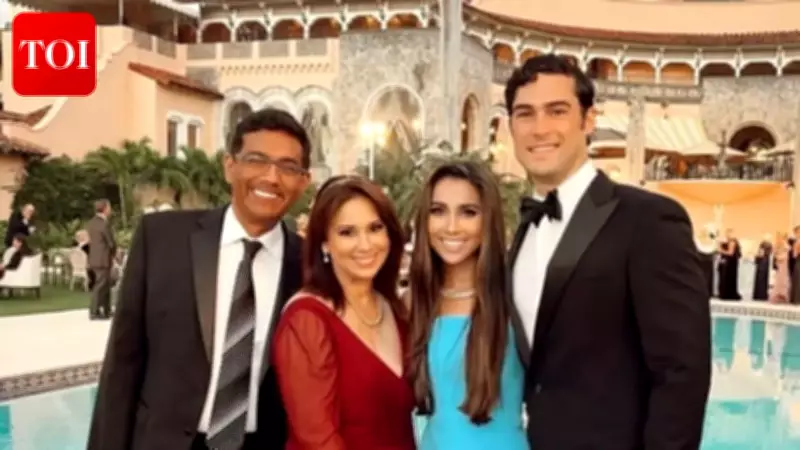
The situation contains significant personal irony that has not escaped public notice. Brandon Gill is married to Danielle D'Souza Gill, the daughter of prominent Trump ally Dinesh D'Souza, who was born in Mumbai and immigrated to the United States in 1978. Danielle D'Souza Gill is an American author, conservative commentator, and activist who has been involved with the Women for Trump coalition and frequently appears on conservative media outlets.
Social media users have been quick to highlight this contradiction, with numerous comments questioning the consistency of Gill's positions:
- "Truly bizarre statement from a man married to an Indian woman, with Indian in-laws. Publicly he preaches white nationalism but in the bedroom, he's a Third Worldist."
- "Gas Stations don't pay well no one wants to work there open racism from a congressman is crazy."
- "Then why marry an Indian bro?"
- "Do you consider your in-laws as imports, Congressman? Have some shame."
Broader Immigration Stance and Historical Context
Despite his personal connection to an immigrant family through marriage, Gill has established himself as a vocal critic of both legal and illegal immigration. He has previously argued on social media that immigration is not inherently beneficial simply because it follows legal pathways. In another notable post, he shared comparative images of California from 1960 and 2025, claiming that mass migration has rendered America "unrecognizable."
Each time Gill addresses immigration issues publicly, commentators consistently remind him of his wife's immigrant background, creating an ongoing tension between his personal life and political rhetoric. The current controversy represents perhaps the most direct confrontation between these two aspects of his public identity.

The backlash against Gill's comments continues to grow, with critics accusing him of hypocrisy and questioning the validity of his arguments against skilled worker immigration programs. The incident highlights ongoing debates about immigration policy, employment practices, and the complex personal dimensions of political positions in contemporary American discourse.