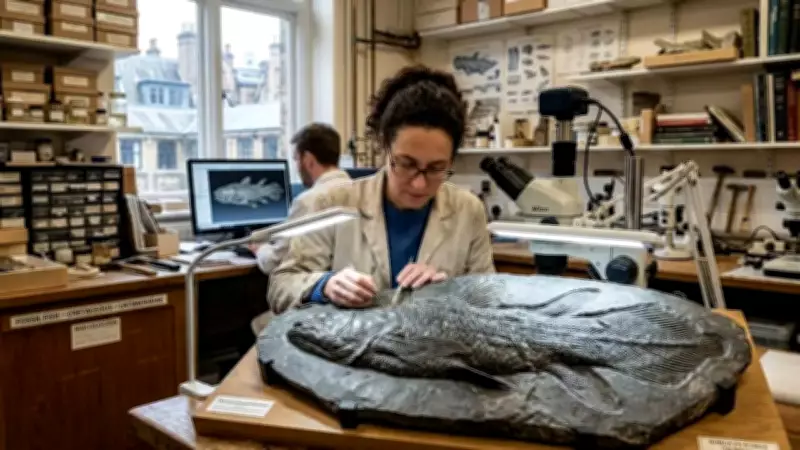
Researchers at the Natural History Museum in London have identified a previously unknown species of coelacanth from fossil remains dating back approximately 150 years. Named Macropoma gombessae, this new species helps fill a significant evolutionary gap of about 50 million years for coelacanths, often referred to as one of the world's most recognized 'living fossils.'
Discovery and Significance
The discovery was made by Jack L. Norton, a former paleontology student at the University of Portsmouth, while examining historical collections he had studied for several years. The fossil specimen, originally from the Gault Formation of southern England, dates back to the Lower Cretaceous period. It had been sitting unnoticed in a museum collection for over a century before being identified as a missing link in the family Latimeriidae, which includes modern-day coelacanths. The species name, gombessae, is derived from 'Gombessa,' the Comorian name for the modern coelacanth used by local fishermen.
Advanced Imaging Technology
To explore the internal anatomy of the ancient coelacanth fossil without causing damage, researchers from the University of Portsmouth and the Natural History Museum employed advanced X-ray computed tomography (XCT) technology. This non-destructive method created high-definition three-dimensional images of the specimen, revealing its internal structures in unprecedented detail. The technique allowed scientists to directly compare the fossil with similar specimens from different genera, identifying distinct anatomical features that justified classifying it as a new species.

Evolutionary Implications
The findings underscore the vast scientific potential housed within museum collections worldwide. By applying modern technological innovations like XCT, researchers are able to reinterpret long-held specimens and uncover complexities of evolutionary processes that have remained hidden for over a century. This discovery provides crucial insights into the evolutionary history of coelacanths, bridging a gap in the fossil record and demonstrating how advanced imaging can revolutionize the study of ancient life.
The study, published by the University of Portsmouth, highlights the importance of re-examining historical collections with new tools. As noted, the fossil's reanalysis not only revealed a new species but also offered a sampling of coelacanth evolutionary history. The research team emphasizes that this discovery is a testament to the untapped knowledge waiting to be uncovered in museums globally.