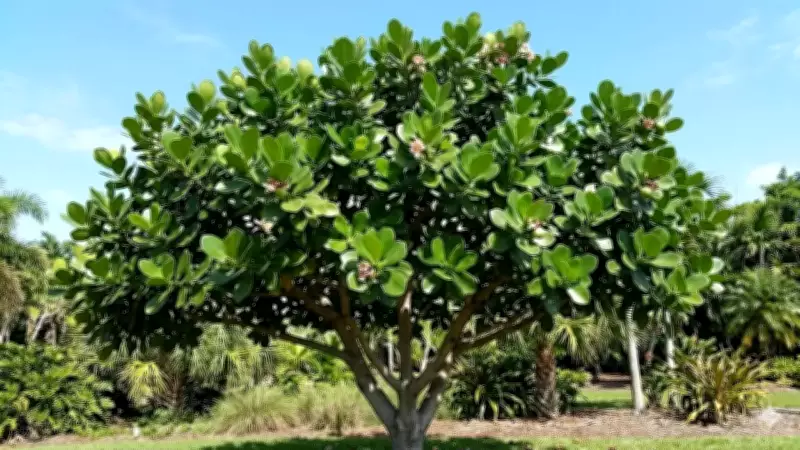
Tropical forests are home to thousands of plant species that endure prolonged dry periods, often overlooked outside specialist circles. Among them is Clusia rosea, a tree recognized for its thick leaves and ornamental appeal, but less known for the unusual chemistry occurring inside them after sunset. While most plants absorb carbon dioxide during daylight, some tropical species reverse this pattern, conducting much of their gas exchange at night. This shift alters water usage. In humid rainforests, the advantage may seem minor, but under hotter and drier conditions, it becomes significantly more important. Interest in this process has grown as agricultural researchers seek ways for crops to cope with rising temperatures and erratic rainfall. Recent studies on Clusia species have added depth to this discussion by tracing the genetic changes associated with this nocturnal form of photosynthesis.
Why Clusia rosea Uses Night-Time Photosynthesis to Conserve Water
Most plants rely on daytime photosynthesis. Their leaf pores, called stomata, open in sunlight to allow carbon dioxide entry, but water escapes simultaneously. In tropical heat, substantial water loss can occur through evaporation over a day. Certain plants mitigate this loss through Crassulacean Acid Metabolism (CAM) photosynthesis. Instead of taking in carbon dioxide during daylight, they open their stomata mainly at night when temperatures are lower and humidity higher. The stored carbon is then used for photosynthesis after sunrise. According to reports published via EurekAlert, titled "Unraveling the evolution of an extraordinary photosynthesis in a tropical tree species," scientists studying several Clusia species found varying levels of dependence on this system. Some rely heavily on nighttime carbon uptake, while others switch between daytime and nocturnal patterns depending on drought conditions. This flexibility makes the genus particularly valuable for plant physiologists. Many CAM plants are cacti or succulents adapted to deserts, but Clusia species are trees growing in tropical forests, cloud forests, and coastal habitats. The variation within a single plant group provides researchers a clearer view of how the mechanism evolves.
How Rainfall and Drought Shaped CAM Photosynthesis in Clusia Species
The genus Clusia has attracted scientific attention for decades because its species do not all follow the same photosynthetic strategy. Some function like ordinary trees, others operate almost entirely through CAM, and a few move between both systems. According to a study published in the Botanical Journal of the Linnean Society, titled "Evolutionary history of CAM photosynthesis in Neotropical Clusia: insights from genomics, anatomy, physiology and climate," this diversity appears linked to changing environmental pressures across tropical America. Researchers examining the evolutionary history of Clusia suggested that shifts in rainfall, elevation, and habitat fragmentation may have influenced how different species adapted their metabolism over time. The group is sometimes described as one of the few tree lineages where CAM occurs on such a broad scale. This matters because it provides living examples of intermediate stages rather than a simple split between CAM and non-CAM plants. In practice, the transition is not always clean. Some species continue using ordinary daytime photosynthesis while partially activating CAM during water stress. Others maintain both systems simultaneously. The boundaries blur.


The Genetic Evolution of CAM Photosynthesis in Tropical Clusia Trees
Recent genomic analysis focused on three related species with differing levels of CAM activity. By comparing their DNA, researchers attempted to understand how the pathway became established and how it continues to change. As per the study published in the Botanical Journal of the Linnean Society, the genomes showed extensive rearrangements over evolutionary time. Some genes had duplicated repeatedly, while mobile DNA sequences known as transposable elements appeared to have reshaped parts of the genome structure. Certain genes linked with stress responses and carbon metabolism also showed altered activity patterns. The findings support the idea that CAM did not emerge through a single genetic switch. Instead, the process seems tied to gradual modifications affecting multiple biological systems at once, including water regulation, circadian timing, and leaf chemistry. Scientists involved in the work also pointed to gene expression patterns that differed between day and night cycles. In CAM plants, timing matters almost as much as the genes themselves because the metabolic pathway depends on separating carbon uptake from daylight photosynthesis.
How CAM Photosynthesis Could Help Crops Survive Extreme Heat and Drought
Agricultural interest in CAM photosynthesis has expanded steadily over the last decade, largely because the mechanism uses water more efficiently than standard photosynthesis. In dry conditions, that difference can become substantial. The idea of transferring CAM-like traits into crops remains experimental and technically difficult. Wheat, rice, and maize evolved under very different metabolic systems, and researchers are not suggesting immediate transformation into fully nocturnal plants. Still, understanding how CAM evolved in species such as Clusia may help identify genetic pathways connected to drought resistance. Part of the challenge lies in coordination. CAM is not controlled by one isolated gene but by networks that interact with environmental cues and internal biological clocks. Altering only one component would likely fail to reproduce the system properly. Even so, the long-term appeal is obvious. Crops capable of reducing water loss during extreme heat could become increasingly important in regions facing prolonged drought or unstable seasonal rainfall.
How Night-Time Breathing Helps Clusia Trees Survive Changing Climates
Much of the scientific work surrounding rainforest plants still focuses on species with economic or medicinal value. Trees such as Clusia rosea tend to receive less public attention despite representing unusual evolutionary experiments already taking place in nature. According to the EurekAlert report, these findings do not provide an immediate blueprint for climate-resistant agriculture, though they widen understanding of how plants adapt to difficult environments over long periods. In the case of Clusia, survival appears linked not to rapid growth or large root systems, but to timing. Simply changing when a tree breathes can alter how much water it loses. For now, researchers are continuing to map how different Clusia species evolved across tropical ecosystems and how flexible their photosynthetic systems remain under environmental stress. The answers may end up being useful far beyond the forests where the trees first developed them.
About the Author: The TOI Science Desk stands as an inquisitive team of journalists, ceaselessly delving into the realms of discovery to curate a captivating collection of news, features, and articles from the vast and ever-evolving world of science for the readers of The Times of India. Consider us your scientific companion, delivering a daily dose of wonder and enlightenment. Whether it's the intricacies of genetic engineering, the marvels of space exploration, or the latest in artificial intelligence, the TOI Science Desk ensures you stay connected to the pulse of the scientific world. At the TOI Science Desk, we are not just reporters; we are storytellers of scientific narratives. We are committed to demystifying the intricacies of science, making it accessible and engaging for readers of all backgrounds. Join us as we craft knowledge with precision and passion, bringing you on a journey where the mysteries of the universe unfold with every word.