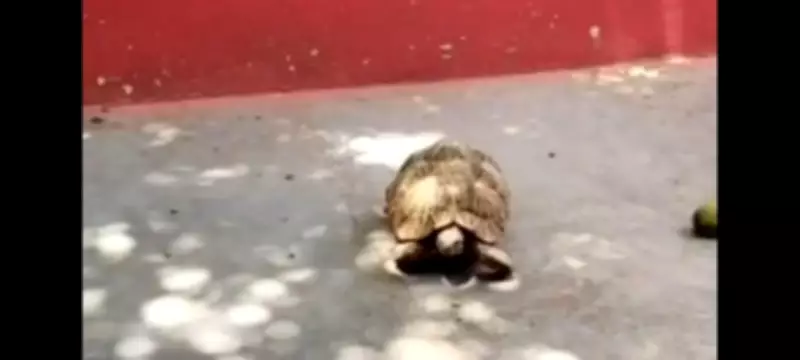
A farmer's quick thinking and vigilance led to the successful rescue of a rare Indian Star Tortoise from a field in the Devendranagar area of Panna district, Madhya Pradesh. The tortoise, known for its distinctive yellow star-shaped markings on its shell, is classified as 'vulnerable' on the International Union for Conservation of Nature (IUCN) Red List and is protected under the Wildlife Protection Act.
Discovery in the Field
While working in his agricultural field in ward number 12 of Devendranagar, farmer Mahendra Prajapati noticed the tortoise lying unusually on the ground. Sensing that something was amiss, he immediately contacted the forest department. A rescue team was quickly dispatched to the location, where they secured the reptile.
Species Identification and Threats
Forest officials confirmed the animal was an Indian Star Tortoise, a species that, while not critically endangered, faces significant threats from illegal wildlife trafficking, habitat degradation, and poaching for the exotic pet trade. District forest officer Dhirendra Singh stated, 'It is seldom sighted in these parts of the state, though the climatic conditions here are congenial to their existence. However, it had never been spotted here earlier. The rescued tortoise was sent to Gandhi Sagar in Mandsaur as there is a conservation facility there.'

Transfer to Conservation Facility
On Tuesday, the tortoise was moved to the conservation facility at Gandhi Sagar Wildlife Sanctuary for further care and monitoring. Officials reported that the reptile appeared healthy and would eventually be rehabilitated into a suitable natural habitat after thorough examination and necessary procedures.
Significance of the Rescue
Sources indicate that sightings of the Indian Star Tortoise are uncommon in central India, making this rescue notable from both biodiversity and conservation perspectives. The species has a lifespan of 30 to 50 years and is globally recognized for its striking shell pattern, which also makes it a prime target for smugglers. This successful operation highlights the importance of community awareness and prompt action in wildlife conservation efforts.