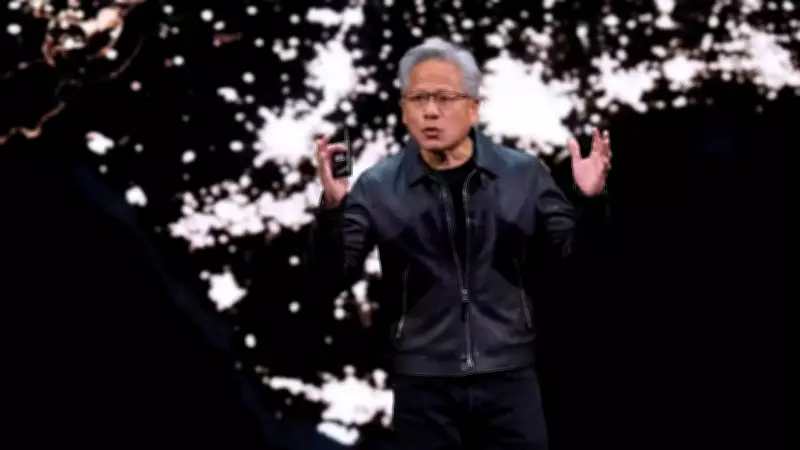
Nvidia CEO Jensen Huang Issues Warning on AI's Impact on Employment
Jensen Huang, the CEO of Nvidia, has delivered a stark warning about the transformative effects of artificial intelligence on the global job market. During a recent appearance on the Lex Fridman podcast, Huang articulated that AI is poised to significantly disrupt roles that are primarily task-based, as machines increasingly excel at handling repetitive and routine functions.
"If Your Job Is the Task, You Will Be Disrupted"
Huang stated unequivocally, "If your job is the task, then you’re very highly going to be disrupted." He elaborated that for professionals whose work involves specific tasks, it is vital to learn how to leverage AI to automate those processes. "If your job’s purpose includes you certain tasks, then it is vital that you go learn how to use AI to automate those tasks," he emphasized.
To illustrate his point, Huang provided practical examples. "If I were a farmer, I would absolutely use AI. If I were a pharmacist, I would use AI. I wanna see how, what it could do to elevate my job so that I could be the innovator to revolutionize this industry myself. And so that would be the first thing that I would do."

Advice for Graduates and Evolving Job Roles
Amid growing concerns about job security due to AI advancements, Huang offered direct counsel to new graduates. He asserted, "Every college student should graduate and be an expert in AI." This recommendation underscores the necessity for the upcoming workforce to integrate AI proficiency into their skill sets to remain competitive and relevant.
During the podcast discussion, Huang clarified a common misconception: people often confuse their job with the tasks they perform. He explained that while the tools and tasks associated with a role may change over time, the core purpose of a job typically endures. Drawing from his extensive experience as CEO of Nvidia for over three decades, Huang noted that the tools he utilizes have continuously evolved, demonstrating how roles adapt with technology rather than vanishing entirely.
AI as a Catalyst for Change, Not Replacement
Huang highlighted the field of radiology as a pertinent case study. Initially, there were predictions that AI would replace radiologists. However, this has not materialized because the role encompasses more than mere image analysis—it involves critical decision-making and human judgment that AI cannot fully replicate.
The overarching message from Huang is that AI is more likely to alter how people work rather than completely eliminate most jobs, particularly those that extend beyond routine tasks. He advocates for a perspective where AI is viewed as a tool to enhance human capabilities, enabling professionals to focus on higher-value aspects of their work.
In summary, Jensen Huang's insights stress the importance of proactive adaptation to AI technologies. By embracing AI and developing expertise in its application, individuals can not only safeguard their careers but also drive innovation within their respective industries.