New York Times Investigation Reignites Debate Over Bitcoin Creator's Identity
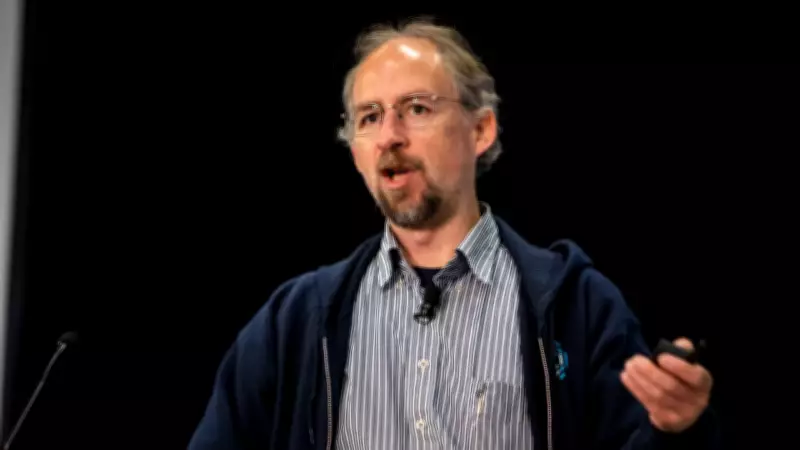
For nearly two decades, the true identity of Satoshi Nakamoto has persisted as one of the most captivating enigmas in the realm of modern technology. On April 8, 2026, an exhaustive investigation conducted by New York Times reporters John Carreyrou and Dylan Freedman has reignited this debate, proposing that the answer might have been concealed in plain sight all along. After dedicating a full year to scrutinizing a database comprising 134,308 posts from three cryptography mailing lists, alongside court records and email archives, and employing multiple advanced writing analysis techniques, the report identifies Adam Back, a 55-year-old British cryptographer, as the foremost candidate.
The Origin of Bitcoin and the Enduring Satoshi Enigma
Bitcoin first emerged in 2008 through a concise nine-page white paper that introduced a decentralized digital currency founded on cryptographic trust rather than central authority. Its elusive creator, Satoshi Nakamoto, communicated primarily via emails and online forums before vanishing completely on April 26, 2011. What renders this mystery so profoundly compelling is the monumental scale of its impact. Bitcoin has evolved into a multi-trillion-dollar ecosystem, yet its originator has never been definitively identified or stepped forward to claim credit. Over the years, more than 100 individuals have been proposed as potential candidates, but none have been conclusively verified.
Following the Trail of Clues in the Investigation
Carreyrou's investigation commenced with two slender leads. The first was Satoshi's distinctive blend of British and American linguistic patterns, coupled with a headline from The Times of London embedded within Bitcoin's inaugural transaction block: "Chancellor on brink of second bailout for banks." This combination strongly indicated that the creator was likely of British origin. The second lead was Satoshi's profound connection to the Cypherpunks, a privacy-centric collective of technologists active since the early 1990s, who had extensively deliberated concepts such as digital cash, encryption, and decentralized systems.

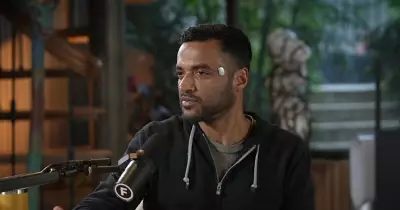
The investigative trail was sparked by a scene in the 2024 HBO documentary "Money Electric: The Bitcoin Mystery," where Adam Back, seated on a park bench in Riga, Latvia, visibly tensed when the filmmaker mentioned his name as a potential Satoshi. Carreyrou, who has cultivated expertise in detecting deception, found Back's body language sufficiently suspicious to warrant a comprehensive inquiry.
Adam Back and the Blueprint for Bitcoin
Back's professional credentials render him a highly compelling candidate. In March 1997, he invented Hashcash, a proof-of-work system initially designed to combat email spam, which later became a foundational component of Bitcoin mining. Notably, Satoshi explicitly referenced Back and Hashcash in the Bitcoin white paper. More strikingly, the investigation uncovered that between 1997 and 1999, a full decade prior to Bitcoin's launch, Back had delineated virtually every core feature of what would eventually become Bitcoin on the Cypherpunks mailing list.
On April 30, 1997, he proposed an electronic cash system "entirely disconnected" from traditional banking that would safeguard the privacy of both payer and payee, operate on a distributed computer network, incorporate built-in scarcity to prevent inflation, and require no trust in any individual or financial institution. Merely two days later, he appended a fifth element: a publicly verifiable protocol. All five of these components became integral to Bitcoin's architecture.
Furthermore, Back suggested utilizing Hashcash as the minting mechanism for Wei Dai's b-money proposal, and Satoshi later characterized Bitcoin as "an implementation of Wei Dai's b-money proposal," precisely amalgamating the Hashcash and b-money concepts that Back had advocated in 1998. Back even anticipated Satoshi's rebuttal to criticisms regarding Bitcoin's energy consumption, arguing in 1998 and 1999 that the energy expended would likely be less than that consumed by the conventional banking system. When an early reader raised similar concerns about Bitcoin a decade later, Satoshi presented an almost identical argument.

Linguistic Fingerprints and Writing Patterns Analysis
One of the most meticulous segments of the investigation concentrated on analyzing Satoshi's writing style. To achieve this, John Carreyrou and Dylan Freedman constructed an extensive database of over 134,000 posts authored by 620 individuals active in early cryptography communities between 1992 and 2008. They then searched for minute, consistent writing habits in Satoshi's texts, including:
- Utilizing double spaces between sentences
- Mixing British and American spellings
- Confusing "it's" and "its"
- Ending sentences with the word "also"
- Employing hyphens in unusual manners
Gradually, they filtered out individuals who did not align with these patterns, narrowing the list from 620 suspects down to a single name: Adam Back. A particularly robust clue emerged from Satoshi's hyphen usage. An AI analysis identified 325 unusual hyphen errors in Satoshi's writing, with Adam Back sharing 67 of these exact same patterns, significantly more than any other individual.
Additionally, several rare phrases stood out. For instance, Satoshi wrote "proof-of-work" in a slightly incorrect manner that only a handful of people had previously used, including Back. Another phrase, "partial pre-image," had been employed by only two individuals before Satoshi, and Back used it in precisely the same way. A third phrase, "burning the money," had been used only once prior to Satoshi, again by Back. The investigation also revealed that Back utilized several uncommon words and expressions that frequently appeared in Satoshi's writing, such as "dang," "abandonware," and "on principle."
To corroborate these findings, language expert Florian Cafiero compared writing samples from 12 potential candidates with the Bitcoin white paper. His analysis determined that Adam Back was the closest match, albeit not by a margin substantial enough to constitute definitive proof. He also noted that if Satoshi were aware of such analytical methods, he could have deliberately altered his writing style to evade identification.
Behavioral Patterns and Timing Overlaps
Beyond writing, the investigation identifies remarkable behavioral congruities. Back was highly active on cryptography mailing lists for over a decade, regularly commenting on every electronic cash proposal that surfaced. Yet, when Bitcoin, the closest realization of ideas he had long championed, appeared in late 2008, Back made no public remarks. His first public statement concerning Bitcoin occurred in June 2011, six weeks after Satoshi's final disappearance on April 26, 2011.
When questioned about this on a podcast in 2013, Back asserted that he had "participated" in the Cryptography list discussion ignited by Satoshi's white paper in late 2008. The New York Times investigation found no evidence of such participation in the list archives. Back also joined Bitcointalk on April 17, 2013, coinciding with the day an Argentine cryptographer published a blog post revealing the magnitude of Satoshi's bitcoin fortune. Within two weeks of joining, he was demanding that Wikipedia restore Satoshi's standalone page. Within 18 months, he had founded Blockstream, which subsequently raised $1 billion in funding and achieved a valuation of $3.2 billion.
The Emails Controversy and Direct Confrontation
Back had produced emails during the 2024 Craig Wright fraud trial in London demonstrating that Satoshi had contacted him in August 2008, before the white paper's release, to verify his Hashcash citation. These emails ostensibly depicted Satoshi and Back as two distinct individuals. However, Carreyrou highlights a significant contradiction: Back's own Hashcash paper explicitly discussed b-money. If Satoshi had read the paper he was citing, he would necessarily have been aware of b-money, yet the emails show Satoshi learning about b-money from Back for the first time. When Carreyrou requested metadata from these emails to ascertain their authenticity, Back did not respond to two separate inquiries.
Carreyrou confronted Back at a Bitcoin conference in El Salvador in late January 2026. Over two hours in Back's hotel room, with two company executives present, Carreyrou presented his evidence systematically. Back denied being Satoshi more than six times, attributing all overlaps to coincidence and shared knowledge within the cryptography community. Nevertheless, Back could not elucidate why he had vanished from the Cryptography list precisely during the period Satoshi was active, nor why he had falsely claimed on a podcast to have participated in that discussion. When confronted with the writing analysis results, he stated, "I don't know. It's not me, but I take what you're saying that this is what the AI said with the data. But it's still not me."
Carreyrou also noted what he interpreted as a significant verbal slip during the interview. When he referenced Satoshi's quote, "I'm better with code than with words," Back responded that he was not saying he was good with words but had done a lot of talking on mailing lists. Carreyrou interpreted this as Back momentarily speaking as though he were Satoshi. Back later denied it was a slip. Back did acknowledge several points: he possessed the appropriate background and skill set to be Satoshi, Satoshi was likely British, older than 50, and a Cypherpunk, and the b-money inconsistency in the Satoshi emails represented a genuine contradiction.
A New Legal Dimension and the Limits of Evidence
The investigation introduces a significant legal dimension previously absent in Satoshi searches. Back is currently CEO of a Bitcoin treasury company merging with a publicly traded shell created by Cantor Fitzgerald. As chief executive of a company undergoing a public listing, Back is subject to US securities law disclosure requirements. If he were Satoshi and controlled the estimated 1.1 million bitcoin, currently valued at approximately $118 billion, this would likely constitute material information necessitating disclosure to investors.
Despite the extensive analysis, the case remains circumstantial. There is no direct proof linking Back to Bitcoin's creation. The only definitive confirmation of Satoshi's identity would require cryptographic verification, specifically utilizing the private keys associated with Satoshi's earliest bitcoin holdings. These coins, believed to number approximately 1.1 million and representing more than 5 percent of Bitcoin's total supply of 21 million, have never been moved.
Why the Mystery Still Endures
After 17 years, the New York Times investigation presents the most detailed and methodologically rigorous case yet constructed in the quest to uncover Bitcoin's creator. By integrating historical mailing list research, forensic linguistics, computational text analysis, and direct confrontation of the primary suspect, it builds a narrative that positions Adam Back at the epicenter of the mystery more convincingly than any prior attempt. Yet, without a cryptographically verified signature from Satoshi's genesis-era private keys, the question remains unresolved, perhaps, as the investigation implies, with the answer having been concealed in plain sight all along.