

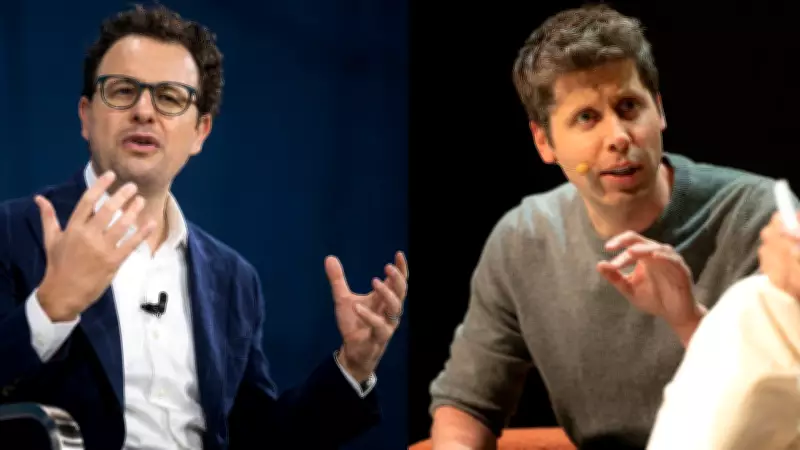
In a heated exchange that underscores the intensifying rivalry in the artificial intelligence sector, OpenAI and Anthropic have traded barbs over the contentious issue of advertising within AI chatbots. This clash comes amid growing scrutiny from investors and market observers regarding the sustainability of AI business models.
Anthropic's Stance on Ad-Free AI
Anthropic, the creator of the Claude AI assistant, has firmly committed to keeping its platform ad-free. In a blog post published on Wednesday, February 4, the company outlined its principles, stating that users will not encounter sponsored links or product placements within the Claude chat window. Anthropic emphasised that advertising would compromise the integrity of Claude as a tool for genuine assistance and deep thinking.
Why Anthropic Opposes Ads in AI Conversations
Anthropic argues that conversations with AI assistants are fundamentally different from traditional search queries. The open-ended nature of these interactions, where users often share personal context, makes them more susceptible to influence. The company expressed concerns that introducing ads could lead to unpredictable model behaviors and violate its recently published 'Constitution' principles.

OpenAI's Response and Advertising Strategy
OpenAI CEO Sam Altman responded sharply to Anthropic's position, labeling it as 'dishonest' and 'doublespeak.' Altman defended OpenAI's approach, noting that the company has clear rules against allowing ads to influence ChatGPT's responses. He highlighted that OpenAI is testing ads in ChatGPT for users in the United States as part of initial trials, with plans for global expansion.
Monetisation Concerns in the AI Industry
The spat between these AI giants occurs against a backdrop of increasing investor anxiety over the lack of viable monetisation paths for many AI companies. Fears of an AI market bubble have been fueled by questions about how firms like OpenAI will fund massive infrastructure projects, including trillion-dollar commitments.
Business Models: A Tale of Two Approaches
Anthropic relies heavily on an enterprise-first model, generating revenue through contracts with companies that integrate its Claude, Sonnet, and Opus models into their workflows. The company also offers paid subscriptions and is considering lower-cost tiers and regional pricing.
In contrast, Altman accused Anthropic of catering primarily to wealthy users, pointing out that more Texans use ChatGPT for free than the total number of Claude users in the US. He criticised Anthropic for restricting access to its coding product, Claude Code, which has gained popularity as a command-line programming tool.
The Broader Context of AI Advertising
Beyond this rivalry, other tech giants like Google are also exploring ads in AI products, such as AI Overviews and AI Mode. However, Anthropic maintains that the implications of ads in chatbot conversations are distinct from those in search results, warranting a cautious approach.
As the debate over AI monetisation heats up, the contrasting strategies of OpenAI and Anthropic highlight the challenges and ethical considerations in commercialising advanced artificial intelligence technologies.

