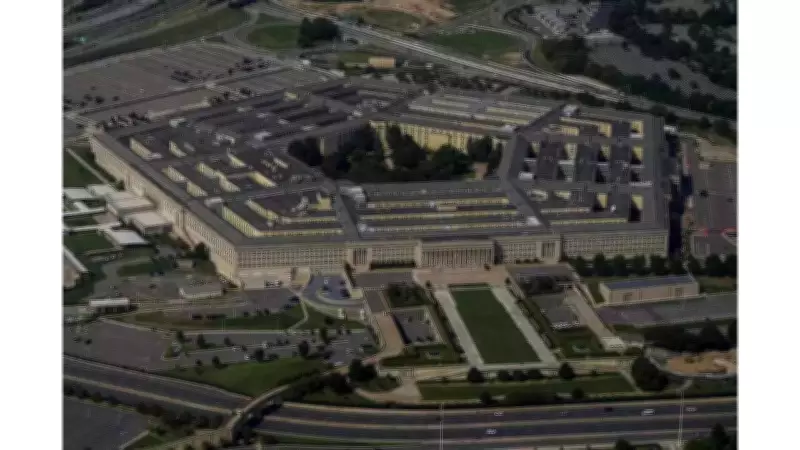
The Pentagon on Friday signed agreements with seven leading artificial intelligence companies to run their technology on classified military networks. The War Department named the companies as SpaceX, OpenAI, Google, Nvidia, Reflection, Microsoft, and Amazon Web Services.
Strategic Partnership for National Security
Together, the War Department and these strategic partners share the conviction that American leadership in AI is indispensable to national security, the Pentagon said in its official statement Friday. The deals authorize the companies to deploy AI on Impact Level 6 and IL7 networks, the government's highest-tier classified environments, used for everything from secret intelligence analysis to sensitive national security data. The Pentagon said the goal is to make the US military an AI-first fighting force.
One name missing from the list is Anthropic, maker of Claude, which had until recently been the only AI model cleared for Pentagon classified networks.

What the Agreements Cover
The agreements cover lawful operational use, including battlefield decision support, data synthesis, situational awareness, and intelligence work. Each company's AI will be integrated into the Pentagon's classified IL6 and IL7 environments. The contracts include language stating AI should not be used for domestic mass surveillance or autonomous weapons without appropriate human oversight. However, none of the companies get a veto over how the Pentagon ultimately deploys the technology. That distinction is exactly what blew up negotiations with Anthropic.
The Pentagon's GenAI.mil platform, running since December with Google's Gemini model, has already seen over 1.3 million department personnel use it, generating tens of millions of prompts and hundreds of thousands of AI agents in just five months.
Google Employee Protest and Company Decision
The timing of the announcement is notable. Just days before the Pentagon's announcement, around 600 Google employees sent an open letter to CEO Sundar Pichai urging him to refuse classified military work entirely. The employees wrote that they want to see AI benefit humanity, not see it being used in inhumane or extremely harmful ways, flagging lethal autonomous weapons and mass surveillance as specific concerns. They warned that making the wrong call right now would cause irreparable damage to Google's reputation, business, and role in the world. Google signed the deal anyway. A company spokesperson said it remains committed to the consensus that AI should not be used for domestic mass surveillance or autonomous weaponry without appropriate human oversight, but that providing API access to its models represents a responsible approach to supporting national security. This situation echoes 2018, when Google pulled out of Project Maven after employee backlash. This time, leadership did not blink.
Anthropic's Exclusion and Legal Battle
Anthropic drew two firm lines: no fully autonomous weapons and no mass domestic surveillance. The Pentagon wanted blanket any lawful use language. Talks collapsed in February. The War Department then declared Anthropic a supply chain risk, a designation historically used for foreign adversaries, never before applied to a US company. Anthropic sued. A federal judge blocked the designation in March, though an appeals court later declined to fully lift it. The legal battle is ongoing.
Defense Department CTO Emil Michael confirmed Friday that Anthropic remains blacklisted, though he separately flagged the company's powerful new cybersecurity model, Mythos, as a separate national security moment that the entire government needs to pay attention to. The NSA is reportedly already using it, designation notwithstanding.
Potential Future Deal with Anthropic
Behind the scenes, the White House appears to be looking for an exit ramp. A draft executive action is reportedly in the works that could give agencies a path to work with Anthropic again, and specifically to access Mythos, which has rattled both government officials and banks with its ability to find vulnerabilities in well-tested software. President Trump told CNBC it is possible a deal could happen, calling Anthropic very smart and potentially of great use. Anthropic CEO Dario Amodei met with senior White House officials earlier this month, with both sides describing the conversation as productive.

The announcement sends a clear message: the Pentagon is not waiting. It is diversifying its AI stack, locking in competitors, and making Anthropic's absence increasingly expensive. With significant federal funding earmarked for AI and offensive cyber operations under the One Big Beautiful Bill Act, the companies now at the table have a significant head start.