Pope Leo XIV Issues Direct Warning Against AI in Catholic Preaching
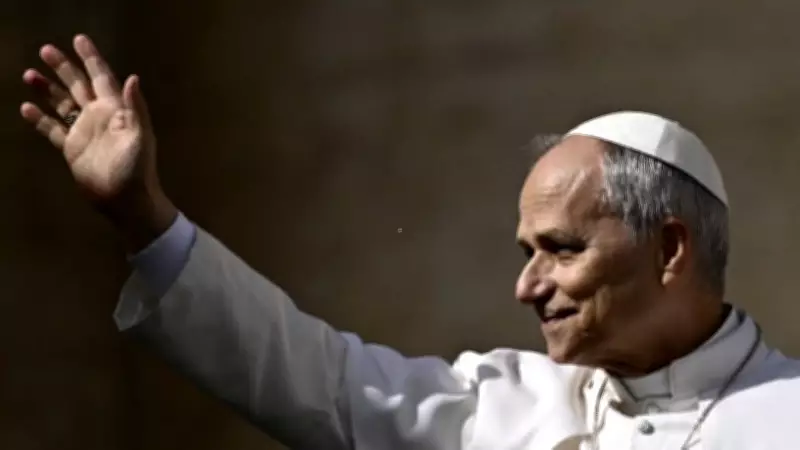
In a significant address that has reverberated through religious circles, Pope Leo XIV has delivered a pointed message to Catholic clergy worldwide: artificial intelligence has absolutely no place in the pulpit. Speaking during a closed-door meeting with priests from the Diocese of Rome on February 19, the Chicago-born pontiff urged them to resist what he explicitly called the "temptation" to use AI tools to write their homilies and sermons.
Details of the Vatican Meeting Revealed
Details of the question-and-answer session were officially released the following day and reported extensively by Vatican News, the official media outlet of the Holy See. During the exchange, Pope Leo XIV told priests that preaching represents far more than a technical exercise—it constitutes an act of faith-sharing that requires genuine human engagement.
"Giving a homily is to share faith," the pontiff declared, before adding with emphasis that artificial intelligence "will never be able to share faith." He warned that neglecting personal reflection and intellectual effort comes at a significant spiritual cost to both priests and their congregations.

The Dangers of Intellectual Laziness
Drawing a vivid biological analogy, Pope Leo XIV explained: "Like all the muscles in the body, if we do not use them, if we do not move them, they die. The brain needs to be used, so our intelligence must also be exercised a little so as not to lose this capacity."
According to Vatican News, he specifically encouraged priests to "rekindle the fire" of their ministry through dedicated prayer and personal reflection rather than outsourcing Sunday sermons to chatbots and AI writing tools. Attendees described the pontiff's tone as remarkably direct, including his straightforward call to clergy to "use your brains more."
Broader Pattern of AI Caution from the Vatican
These remarks fit into a broader pattern of caution regarding technology from the current papacy. Pope Leo XIV has repeatedly addressed the ethical risks of artificial intelligence, warning that unchecked technological development could seriously threaten human dignity, justice, and labor rights.
Explaining his choice of papal name last year, he invoked Pope Leo XIII and the influential encyclical Rerum Novarum, which tackled social upheaval during the first industrial revolution. "There were many reasons, but mainly Pope Leo XIII, who, in his historic encyclical Rerum Novarum, addressed the social question in the context of the first great industrial revolution," Leo said, according to Vatican News.
He continued: "In our own day, the Church offers to everyone the treasury of her social teaching in response to another industrial revolution, and to developments in the field of artificial intelligence that pose new challenges for the defence of human dignity, of justice and of labor."
Rejecting the "AI Pope" Concept
The pontiff has even dismissed the speculative idea of an "AI Pope" that could theoretically answer believers' questions, describing such a concept as no substitute whatsoever for a real, living spiritual leader. He emphasized that genuine pastoral care requires human connection that technology cannot replicate.
Digital Popularity Versus Pastoral Impact
Pope Leo XIV also used the Rome meeting to caution priests about confusing digital popularity with authentic pastoral impact. He specifically warned against chasing "likes" and "followers" through what he called an "illusion on the internet, on TikTok," urging clergy to remain firmly grounded in parish life and direct community engagement.
This warning comes at a time when Catholic engagement online has actually grown significantly. After years of decline, Catholic identification in the United States has reportedly stabilized, with some observers attributing part of that shift to so-called "celebrity priests" on social media platforms.

One prominent example is Father David Michael, who has amassed more than 1.2 million Instagram followers, where he shares light-hearted videos about priestly life and answers questions about Church teachings.
The Pope's Own Digital Presence
Interestingly, Pope Leo XIV himself maintains an active social media presence, using platforms like Twitter and Instagram to circulate pastoral reflections and spiritual messages. Most recently, he issued a Lenten appeal encouraging followers to "fast" from hurtful words online.
However, he has drawn a firm and clear distinction between digital tools as communication channels and their potential misuse as replacements for genuine spiritual work. For the pontiff, technology should enhance rather than substitute for authentic religious practice.
Political Commentary and Broader Engagement
Beyond church life, Pope Leo XIV has not shied away from political commentary, particularly regarding his native United States. He has criticized certain aspects of immigration enforcement and called for calmer diplomacy amid international tensions.
In February 2025, before becoming pope, he stated that Vice President JD Vance was "wrong" to suggest that Christian teachings underpinned restrictive immigration priorities. Vance had told Fox News that people should "love your family and, then, to love your neighbor," adding that governments should "prioritize the rest of the world" only after that.
Leo responded directly: "Jesus doesn't ask us to rank our love for others." He has also met with political figures across party lines, including Senator Marco Rubio, framing those engagements as part of maintaining essential dialogue even amid substantive disagreement.
The pope's latest warnings about artificial intelligence in religious practice thus represent both a specific directive to clergy and part of his broader vision for navigating technological change while preserving core human values and spiritual authenticity.