Prasoon Joshi Highlights Fundamental Gap Between AI and Human Creativity at DNPA Conclave
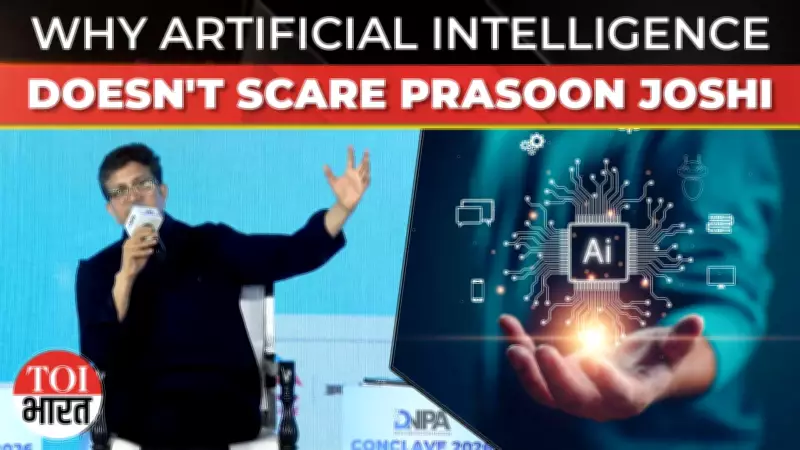
In a thought-provoking address at the Fourth Annual Digital News Publishers Association (DNPA) Conclave 2026 held in New Delhi, Central Board of Film Certification (CBFC) Chairman and acclaimed lyricist Prasoon Joshi delivered a compelling critique of artificial intelligence's creative capabilities. Joshi emphasized that while AI continues to advance rapidly, it remains fundamentally limited by its reliance on pre-existing data, whereas human imagination operates from a realm of the "unexpressed."
The Core Distinction: Expressed vs. Unexpressed Creativity
Joshi articulated a clear distinction between how AI and humans generate creative output. He explained that artificial intelligence systems function by processing vast amounts of data that have already been expressed—whether through text, images, music, or other forms of human creation. These systems then rearrange this information into new permutations and combinations, but they cannot originate content from nothingness.
"AI only works with what has been expressed so far," Joshi stated unequivocally. "It cannot access or create from the unexpressed thoughts, emotions, and experiences that reside within human consciousness. This is where true creativity begins—from that silent, internal space that precedes expression."

Questioning the "Artificial" in Artificial Intelligence
The CBFC chairman also raised philosophical questions about the terminology itself, suggesting that the label "artificial" might be misleading. He pointed out that AI is built upon real human experiences, emotions, and data—elements that are anything but artificial in their origin.
"We call it artificial intelligence, but what feeds it is profoundly real," Joshi observed. "The data comes from human lives, human expressions, and human contexts. The intelligence emerges from processing this real-world information, yet it remains constrained by its source material."
The Enduring Superiority of Human Imagination
Joshi's central argument maintained that human creativity will always maintain an edge over machine-generated content because of this fundamental difference in origin. While AI can mimic patterns, replicate styles, and even produce convincing simulations of human creativity, it cannot initiate the creative process from a blank slate of pure potential.
The renowned lyricist, who has penned numerous award-winning songs and poems, drew from his own creative experience to illustrate his point. He described how true artistic creation often begins with feelings, intuitions, and ideas that have never been articulated before—precisely the territory where AI cannot venture.
Implications for Creative Industries and Beyond
Joshi's remarks carry significant implications for various sectors increasingly incorporating AI:
- Content Creation: While AI can assist with generating drafts or variations, the most original and impactful work will continue to come from human creators.
- Artistic Expression: The emotional depth and personal resonance that characterize great art remain uniquely human attributes.
- Innovation: Breakthrough ideas often emerge from connecting seemingly unrelated concepts in ways that transcend existing data patterns.
The DNPA Conclave 2026, which brought together leaders from India's digital news publishing industry, provided an ideal platform for this discussion about the intersection of technology and creativity. Joshi's perspective adds to an ongoing global conversation about how society should understand and utilize artificial intelligence while preserving what makes human creativity special.
As AI continues to evolve and permeate more aspects of creative work, Joshi's insistence on recognizing its limitations serves as an important reminder that technology should augment rather than replace the human creative spirit. The challenge moving forward will be to harness AI's capabilities while nurturing and protecting the uniquely human capacity for imagination that springs from the unexpressed.