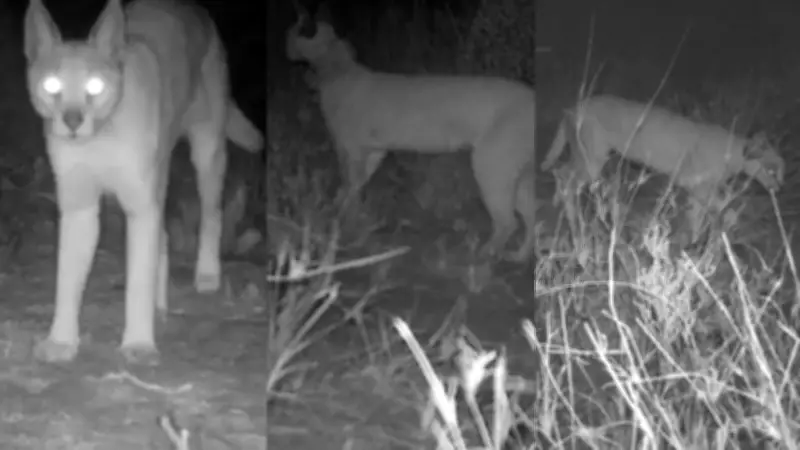
JAISALMER: Rajasthan Forest and Environment Minister Sanjay Sharma has announced that the Forest Department will soon launch a dedicated campaign for the conservation and protection of the endangered Caracal, a Schedule-I wild animal. Currently, efforts are focused on ensuring the safety and monitoring of a Caracal in Jaisalmer through a radio collar ID tracking system.
Minister's Remarks During Visit
Sharma made these remarks while interacting with journalists during his visit to the breeding centre at Ramdevra in Jaisalmer. He stated that the Caracal is on the verge of extinction globally, with only a few sightings reported in Rajasthan, including one in Jaisalmer and another in Kota. “We have fitted a collar ID on the Caracal found in Jaisalmer and are continuously monitoring its movement, behaviour, and activities. Its movement has been observed in the border areas of Jaisalmer, and we are maintaining constant vigilance to ensure its protection and safety,” he said.
Future Conservation Plans
The minister added that once the species is fully secured and protected, the Forest Department will launch a dedicated conservation campaign focused on the Caracal. Regarding the Caracal reportedly sighted in Kota, Sharma noted that no fresh information has emerged after the initial sighting.

Use of Camera Traps
Considering the possible presence of more Caracals in the border areas of Jaisalmer, the Forest Department has started using motion-sensing camera traps to track their activities. Currently, a limited number of camera traps have been installed, and these have confirmed the movement of two additional Caracals — one male and one female. With this, the confirmed number of Caracals recorded in the Shahgarh region has risen to three.
Previous Incident of Killing
Officials also confirmed that one Caracal had earlier been brutally killed and burnt alive by villagers in an attempt to destroy evidence after hunting it. This highlights the urgent need for conservation measures.
Monitoring and Research
Jodhpur CCF stated that the Forest Department is closely monitoring the movement of Caracals through sensing camera traps. In addition, a team is conducting studies in the Thar Desert on Caracal behaviour, movement patterns, and habitat use. So far, three Caracal movements have been successfully captured in camera traps. Motion-sensing cameras have been installed in the Ghotaru region of the Thar Desert in Jaisalmer district, where the presence of Caracals has been observed.
Future Plans
According to officials, extensive surveys across the Caracal’s habitat range, particularly in the Thar Desert, will require a much larger network of camera traps. A comprehensive conservation and monitoring plan will be prepared and implemented after the completion of the current study. Officials also confirmed that the movements and behaviour patterns of the radio-collared Caracal are being continuously monitored and recorded to better understand the species and strengthen future conservation efforts.