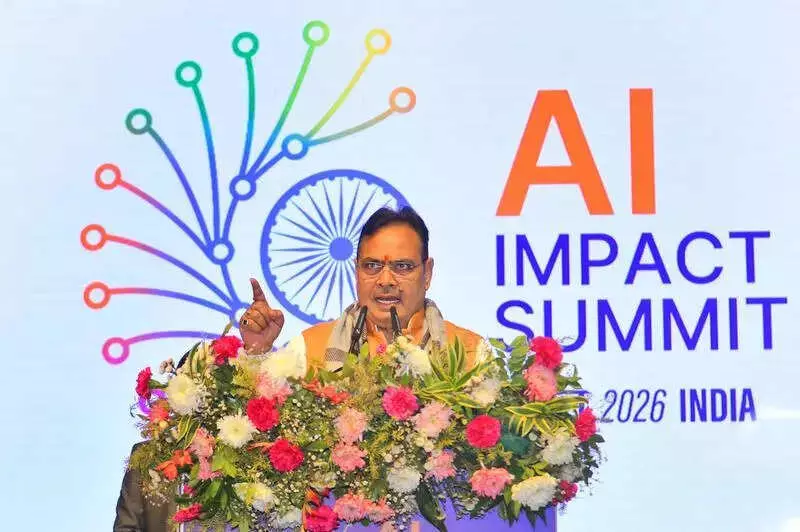
In a significant move to position Rajasthan at the forefront of technological governance, Chief Minister Bhajan Lal Sharma unveiled two pivotal initiatives on Tuesday. The launch of the Rajasthan Artificial Intelligence–Machine Learning (AI–ML) Policy 2026 and the National AI Literacy Programme marks a strategic push to integrate artificial intelligence into the core of state administration and public skill development.
A Dual-Pronged Strategy for an AI-Driven Future
The announcements were made during the Rajasthan Regional AI Impact Conference held in Jaipur. CM Sharma emphasized that this proactive step is designed to make Rajasthan an early adopter in AI-led public administration. The comprehensive plan involves deploying AI tools across various government departments to enhance service delivery, improve operational transparency, and boost overall efficiency.
Core Objectives of the AI-ML Policy 2026
The newly introduced Rajasthan AI-ML Policy 2026 outlines a clear roadmap for the next few years. Its primary goal is to systematically embed AI and machine learning solutions within the state's governance framework. This integration is expected to streamline bureaucratic processes, enable data-driven decision-making, and ultimately provide faster and more reliable services to citizens.

Parallelly, the National AI Literacy Programme aims to build a foundational understanding of artificial intelligence among the populace. By improving AI literacy, the state government seeks to prepare its workforce for future job markets and empower citizens to engage confidently with an increasingly digital public ecosystem.
Implications for Governance and Public Skill Development
The dual launch signals a transformative shift in how Rajasthan plans to govern and upskill its residents. For governance, the move promises:
- Enhanced Service Delivery: Automated and intelligent systems to reduce processing times.
- Greater Transparency: AI-driven tracking and reporting mechanisms for government schemes.
- Improved Efficiency: Optimized resource allocation and reduced manual intervention in routine tasks.
On the skills front, the literacy programme is a critical step toward creating a future-ready workforce, ensuring that the benefits of the AI policy are sustained by a knowledgeable public that can both use and innovate with new technologies.
With these initiatives, Rajasthan under CM Bhajan Lal Sharma's leadership is charting a course to become a model state for technology-powered governance in India, setting a benchmark for others to follow.