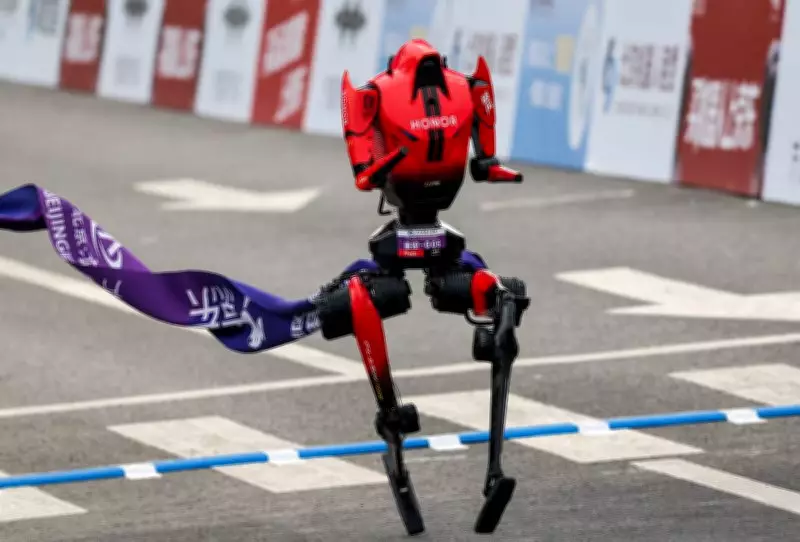
Humanoid Robot Flash Makes History at 2026 Beijing Half Marathon
In a groundbreaking event that has captured global attention, a humanoid robot named Flash has shattered the human world record at the 2026 Beijing Half Marathon. The robot completed the 21.1-kilometer race in an astonishing time of 1 hour, 2 minutes, and 34 seconds, surpassing the previous human record by over three minutes. This achievement marks a significant milestone in the integration of artificial intelligence and robotics into competitive sports, raising both excitement and ethical questions.
Unprecedented Performance and Technological Marvel
Flash, developed by a consortium of leading tech companies and research institutions, showcased advanced capabilities during the marathon. The robot utilized state-of-the-art sensors, machine learning algorithms, and lightweight materials to optimize its performance. Its design allowed for efficient energy consumption and precise navigation through the crowded course, demonstrating remarkable endurance and speed that rival top human athletes.
Key features of Flash's technology include:

- Advanced AI for real-time pace adjustment and route optimization.
- High-durability materials to withstand physical stress over long distances.
- Integrated cooling systems to prevent overheating during the race.
Implications for Sports and Society
The record-breaking run has ignited widespread debate among sports enthusiasts, ethicists, and technologists. Proponents argue that Flash's achievement highlights the potential for robotics to push the boundaries of human performance and inspire innovation in athletic training. However, critics raise concerns about fairness, questioning whether robots should compete alongside humans in traditional sporting events.
Experts suggest that this event could lead to new categories in marathons, such as separate divisions for AI-powered participants, to maintain competitive integrity. Additionally, the success of Flash may accelerate research in prosthetics and assistive technologies for athletes with disabilities, offering new opportunities for inclusion in sports.
Future Prospects and Global Reactions
Following the marathon, organizers have announced plans to review regulations to address the growing presence of AI in athletics. The International Association of Athletics Federations (IAAF) is expected to convene a special committee to discuss guidelines for robotic participation in future events. Meanwhile, Flash's developers are exploring applications beyond sports, including disaster response and healthcare, where similar technologies could enhance human capabilities.
Public reaction has been mixed, with many celebrating the technological triumph while others express apprehension about job displacement and ethical dilemmas. As AI continues to evolve, events like the 2026 Beijing Half Marathon serve as a pivotal moment in redefining the relationship between humans and machines.