

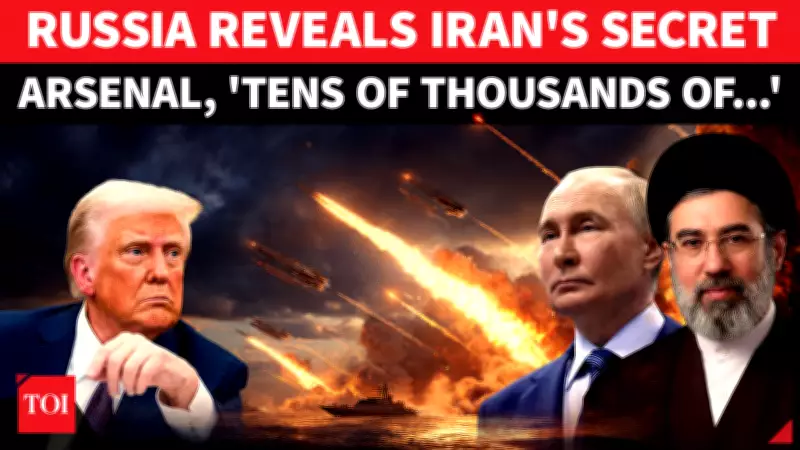
A senior Russian lawmaker has made a striking claim that Iran may possess tens of thousands of drones and missiles, potentially reshaping the balance of power in the region. According to Alexey Pushkov, a senior member of Russia’s upper house of parliament, Iran has spent years preparing for a large-scale conflict, not just militarily, but economically and strategically. Speaking to Russian state media TASS, Pushkov said Tehran has fortified its military infrastructure, moving key missile systems underground and dispersing them across the country.
Pushkov made the bold claims as Iranian Foreign Minister Abbas Araghchi arrived in Russia on Monday, where he is expected to meet with President Vladimir Putin and seek his support amid the war with the US. The visit underscores the deepening ties between Moscow and Tehran, both facing Western sanctions and opposition.
Implications for Regional Security
If true, the existence of such a large arsenal of drones and missiles would give Iran significant offensive and defensive capabilities. Drones have become a key weapon in modern warfare, as seen in conflicts in Ukraine and the Middle East. Iran has invested heavily in drone technology, including kamikaze drones and long-range strike capabilities.

Strategic Underground Facilities
Pushkov emphasized that Iran has moved key missile systems underground and dispersed them across the country, making them harder to target in a preemptive strike. This strategy is similar to that employed by other nations facing aerial threats, aiming to ensure a second-strike capability and deterrence.
International Reactions
The claims come amid heightened tensions between Iran and the United States. The US has accused Iran of supplying drones to Russia for use in Ukraine, which Tehran denies. The potential for Iran to have tens of thousands of drones and missiles could escalate the arms race in the Middle East and prompt further sanctions.
Russia-Iran Alliance
The visit of Iranian Foreign Minister Abbas Araghchi to Moscow signals a strengthening of the Russia-Iran axis. Both countries are seeking to counter US influence and have cooperated on energy, military, and diplomatic fronts. Pushkov's statements may be part of a broader information campaign to project strength and deter US actions.
While no independent verification of the claim exists, the assertion by a senior Russian official adds to the narrative of Iran as a formidable military power. The situation remains fluid, with global powers closely monitoring developments.






