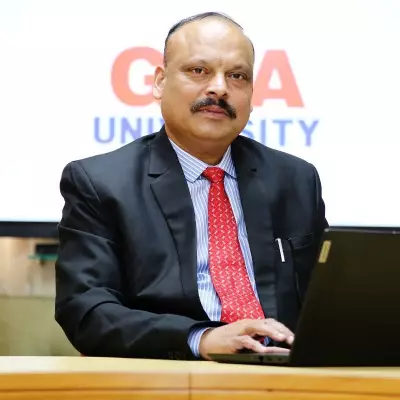
South Korean President Lee Jae Myung has hailed Samsung Electronics Chairman Lee Jae-yong and SK Group Chairman Chey Tae-won as "national heroes" during a push for a massive 900 trillion won (USD 583 billion) semiconductor investment project aimed at capitalizing on the global artificial intelligence boom.
Government-Backed Semiconductor Expansion Plan
According to a news report by The Korea Herald, the South Korean government is backing an extensive initiative to build a new semiconductor production belt outside the Seoul metropolitan area. The plan aims to double the nation's DRAM production capacity within five years by establishing a "3S+1F" strategy focused on speed, stronghold, and spearhead.
At a presidential public briefing on the government's three megaprojects, Samsung Electronics and SK Group unveiled domestic investment plans totaling 881 trillion won (approximately USD 660.8 billion). This includes the construction of four memory fabs in the southwest region and advanced high-bandwidth memory packaging facilities in North and South Chungcheong provinces.

Addressing Resource Constraints
The initiative seeks to expand the country's manufacturing footprint beyond the capital region as existing production sites face severe resource limitations. "Korea can no longer rely on a single capital-region chip belt," the news report quoted Industry Minister Kim Jung-kwan. He described semiconductors as the backbone of the AI era and Korea's last chance to escape low growth.
Kim noted that while projects in Yongin and Pyeongtaek will be accelerated, new growth bases are needed as semiconductor sites face mounting constraints in power, water, and land. To mitigate these bottlenecks, the central government promised fast-track approvals and one-stop infrastructure support, alongside the creation of a dedicated presidential team to oversee the regional projects.
Industry Leaders' Commitment
"Samsung will work to help the Korean semiconductor industry maintain its technological edge," the news report quoted Lee Jae-yong. Chey Tae-won pointed out that SK hynix's Yongin cluster took nine years to prepare, highlighting the critical importance of infrastructure and regulatory support for new fabs. "Demand visible today remains strong. Even with continued investment, it will be difficult to fully resolve supply shortages," Chey said.
SK Group plans to allocate about 1,100 trillion won for semiconductor expansion projects, which encompasses existing capital-region hubs and an additional 400 trillion won (approximately USD 300 billion) commitment in the southwest.
Market Projections and National Strategy
Citing market projections, the news report supported this aggressive expansion, with expectations that the global memory market will quadruple to USD 800 billion by 2030 from USD 200 billion in 2025. "For Korea, the memory race is no longer just a contest between chipmakers, but a national competition over infrastructure, supply chains and speed," the Industry Ministry said.
The government also announced that the Daegu-North Gyeongsang region will be developed into an innovation hub for materials, parts, and equipment. Furthermore, Seoul plans to invest more than 30 trillion won over the next 15 years to support the entire semiconductor cycle from research to manufacturing.
Execution Challenges Ahead
Despite the ambitious roadmap, the news report cautioned that execution remains critical, citing prior delays with SK hynix's Yongin cluster due to water supply and land compensation issues, alongside impending challenges in securing water and engineering talent for the southwest expansion.