

How Sam Altman's Simple Advice Shaped a Billion-Dollar AI Founder
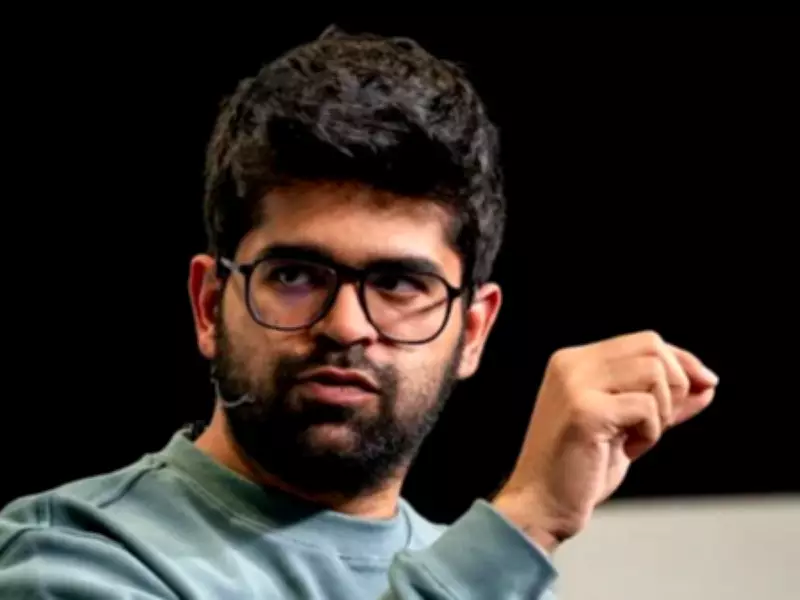
In a revealing podcast conversation that recently went viral on social media platform X, Perplexity AI CEO Aravind Srinivas disclosed the pivotal career guidance he received years ago from OpenAI CEO Sam Altman—advice that fundamentally shaped his confidence in machine learning and ultimately paved his path to building a multi-billion dollar artificial intelligence company.
The Counterintuitive Career Heuristic
Srinivas recalled asking Altman a direct question during their conversation: "How do you figure out what you're naturally good at?" Altman's response was surprisingly straightforward yet profoundly impactful: "Pursue whatever comes easy to you but seems hard to other people."
This heuristic effectively flips conventional "follow your passion" wisdom on its head, focusing instead on identifying innate strengths that others might struggle with. Srinivas emphasized that this advice perfectly articulated something he had already experienced firsthand in his own career trajectory.

The Undergraduate Breakthrough Moment
Srinivas illustrated why Altman's advice resonated so deeply by sharing a formative story from his undergraduate days at IIT Madras. A friend informed him about a data science competition—similar to contemporary platforms like Kaggle—where the winner would secure a valuable internship opportunity.
At that time, Srinivas possessed no formal training in machine learning concepts. He admitted, "I didn't know what Random Forests or Decision Trees meant." Rather than attempting to master complex theoretical frameworks, he adopted a practical, brute-force approach using the scikit-learn library.
Through persistent experimentation with different methodologies until something worked effectively, his model ultimately succeeded on the hidden test data, securing him victory in the competition. This breakthrough moment provided him with the crucial confidence that machine learning represented something he was naturally wired for—even before the field was widely recognized as artificial intelligence.
"It was not even called AI at that time, it was called OCR or something," Srinivas recalled, highlighting how his intuitive understanding preceded mainstream terminology.
From Academic Foundations to Industry Leadership
Srinivas's journey progressed significantly from that undergraduate revelation. He completed a PhD at UC Berkeley, gained valuable experience working at prestigious organizations including DeepMind, Google Brain, and OpenAI, before co-founding Perplexity AI in 2022.
The company—an innovative AI-powered answer engine competing directly with established search platforms—has reportedly achieved a staggering $9 billion valuation. This remarkable success has positioned Srinivas as one of India's youngest billionaires at just 31 years old.
The Core Takeaway for Aspiring Innovators
Srinivas's interpretation of Altman's advice remains refreshingly simple: what feels intuitive or effortless to an individual often signals a genuine, distinctive strength. In the rapidly evolving field of artificial intelligence, where technological advancements occur at breathtaking speed, this instinctual capability frequently proves more valuable than formal credentials or traditional qualifications.
The Perplexity AI CEO's story serves as a compelling testament to how identifying and leveraging one's unique cognitive advantages—particularly those that others find challenging—can catalyze extraordinary professional achievements in cutting-edge technological domains.






