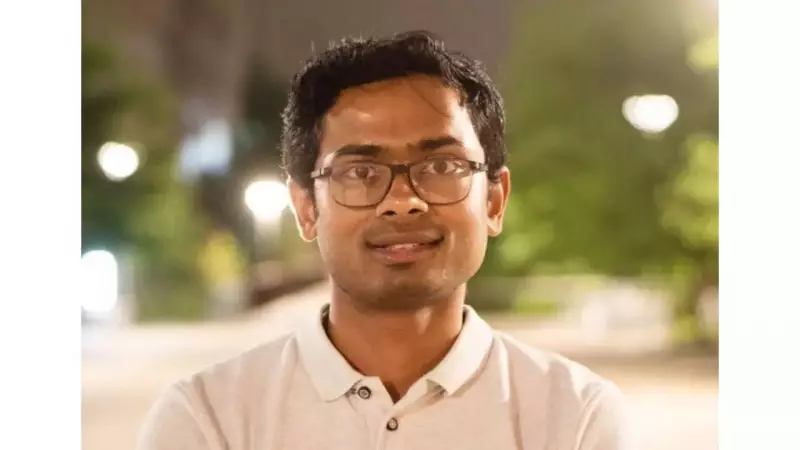
From Bihar Village to Global AI Research: Satyam Kumar's Academic Odyssey
Satyam Kumar's remarkable journey from rural Bihar to prestigious research laboratories in the United States stands as one of India's most inspiring academic stories. His path combines early academic excellence with years of dedicated research in cutting-edge fields.
Early Brilliance in Bihar
Born on July 20, 1999, in Bakhorapur village within Bihar's Buxar district, Kumar grew up in a farming family. He first captured national attention by cracking the notoriously difficult IIT-JEE examination at the astonishing age of thirteen. This achievement made him one of the youngest students ever associated with India's most challenging engineering pathway.
Kumar joined IIT Kanpur while still a teenager, pursuing a B.Tech–M.Tech Dual Degree in Electrical Engineering from 2013 to 2018. During his campus years, he developed a strong foundation in core engineering principles and research-oriented problem-solving approaches.

Building Research Foundations at IIT Kanpur
Beyond regular academics, Kumar actively participated in various research initiatives and student groups. He worked with the Intelligent System and Sleep Laboratory at IIT Kanpur and joined the campus Robotics Club. These experiences reflected his early passion for hands-on research and practical engineering applications.
His technical skills earned recognition through several achievements:
- His team secured second runner-up position at Techkriti 2014 in the ROBOPIRATES competition for amphibian robotics
- He received the Charpak Scholarship for a research internship in France during 2016
- The Government of India awarded him a Teaching Assistant Fellowship in 2017
These opportunities marked his steady transition from examination success to structured research exposure.
Advanced Research in the United States
In 2019, Kumar moved to the United States to pursue doctoral studies. He enrolled in a PhD program in Electrical and Computer Engineering at The University of Texas at Austin. His doctoral work continued until September 2024, when he successfully defended his PhD thesis on September 24.
Kumar's research focused on the intersection of machine learning and brain-computer interfaces. This specialized field explores how brain signals can be decoded to control external devices, with significant applications in rehabilitation medicine and assistive technology development.
Addressing Practical Challenges in Brain-Computer Interfaces
Kumar's work tackled real-world limitations that often hinder brain-computer interface systems. His research addressed several critical areas:
- Transfer learning techniques for EEG-based systems
- Motor imagery decoding methods
- Advanced signal processing and classification approaches
- Reducing calibration requirements to make BCIs more practical outside laboratory settings
These efforts aimed to make brain-computer interface technology more accessible and functional for everyday applications.
Industry Experience and Professional Transition
Kumar gained valuable industry exposure through a Machine Learning Intern position at Apple in Switzerland. This experience contributed to viral social media posts describing him as an "Apple AI researcher," bringing additional attention to his profile.
As of October 2024, Kumar's professional role has evolved further. He currently works as a Machine Learning Systems Research Engineer at Texas Instruments in the United States. This position represents a shift from academic research toward developing real-world machine learning systems at industrial scale.
Broader Significance of the Journey
Beyond individual achievement, Kumar's story connects to larger discussions about talent migration from India. Social media conversations often highlight both celebration of his global success and questions about why similar opportunities remain challenging within Indian research institutions.

At its core, this narrative remains powerfully simple: A student from a small Bihar village navigated India's most demanding academic system, pursued advanced research training in America, and now contributes professionally to machine learning development. His journey continues to inspire students across India who dream of combining academic excellence with meaningful research contributions.