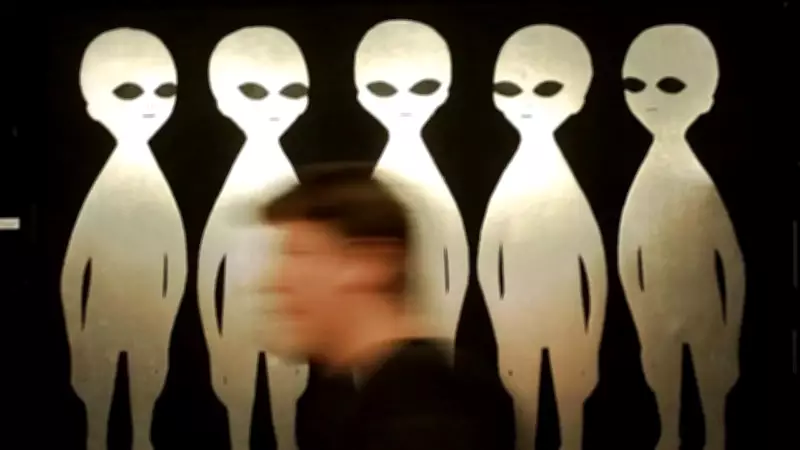
As US Returns to Moon, Scientists Debate What Aliens Would Think of Humanity
As the United States prepares to head back to the moon with the upcoming Artemis II mission, public curiosity over UFOs and extraterrestrial life has surged once again. This resurgence has reignited a timeless question: if intelligent life exists elsewhere in the universe, what would it make of humans? The debate has gained fresh momentum following recent comments from high-profile figures and scientific experts, sparking discussions about humanity's place in the cosmos.
Political Figures Fuel UFO Speculation
In February, former President Barack Obama made headlines by stating that aliens are "real," though he clarified that he "hasn't seen them" and that "they're not being kept at Area 51." This statement added to the growing intrigue surrounding unidentified aerial phenomena. Shortly after, former President Donald Trump announced he would direct the release of government files on UFOs, citing "tremendous interest" from the public. The timing of these remarks has amplified the buzz, coinciding with NASA's preparations for the Artemis II mission, scheduled to send four astronauts on a fly-around of the moon before returning to Earth.
Public Belief in Extraterrestrial Life Remains Strong
Public belief in the existence of intelligent life beyond Earth remains robust. A 2021 Pew Research Center survey, cited by the Associated Press, found that approximately two-thirds of Americans believe intelligent life likely exists on other planets. Additionally, around half of U.S. adults stated that UFOs reported by military personnel are "definitely" or "probably" evidence of intelligent life from beyond Earth. Bill Diamond, president and chief executive of the SETI Institute in California, emphasized that this belief is deeply human. "We don't want to think this is the only place in this extraordinarily and incomprehensibly large universe where life and intelligence and even technology have emerged," he said. "It sort of says about humans, 'We don't want to be alone.'"

What Aliens Might Think of Earth: A Bleak Assessment
For some scientists, the more uncomfortable question is not whether aliens exist, but how they would judge humanity. Theoretical physicist Avi Loeb, director of Harvard's Institute for Theory & Computation and head of the Galileo Project, offered a bleak perspective. "If I were looking at Earth from a distance, I would be pretty disappointed," Loeb commented. "Most of our investing is dealing with conflicts to prevent other people from killing us or us killing others. Look at the Ukraine war over a little bit of territory. That is not a sign of intelligence." Loeb went further, suggesting that extraterrestrial beings might view humans with disdain. "They might be laughing at us. They might be watching us ... to make sure we will not become predators, that we will not become dangerous to them."
University of Michigan astronomy professor Edwin Bergin echoed this view, stating that any advanced beings would likely perceive humanity as chaotic. "I would think that they would look at us like we were crazy ... but they would come out," he said. "I mean, why come here otherwise unless you're going to sit and observe."
Roswell, Pop Culture, and Fear of Invasion
America's fascination with alien life spans decades, with public obsession intensifying after debris was recovered near Roswell, New Mexico, in 1947. The military initially claimed it had found a flying disc, but later retracted the statement, saying it was a weather balloon. This reversal fueled decades of conspiracy theories, while Hollywood has played a significant role in shaping the modern image of aliens—from flying saucers and little green men to the familiar "grey" humanoids. April 5 is celebrated across the Star Trek franchise as "First Contact Day," tied to the fictional 2063 date when humans first meet Vulcans.

Priscilla Wald, a Duke University professor who teaches science fiction, noted that pop culture's tendency to depict hostile aliens reflects more about humans than extraterrestrials. "It seems to me it's a reflection on who we are, that we're projecting onto aliens the way we treat each other," Wald said. "So the aliens are coming down, they want to conquer us, they're violent. Who does that sound like? It sounds like us."
UAPs, Sightings, and the Push for Proof
The term UFO is increasingly being replaced by UAP—unidentified aerial phenomena or unidentified anomalous phenomena. In 2024, the Pentagon released hundreds of reports involving unexplained aerial incidents, but its review found no evidence that these were extraterrestrial in origin. However, Bill Diamond emphasized that this does not mean the objects are imaginary. "Absolutely, there are such things" as UAPs and UFOs, he told the Associated Press. "People observe things in the sky that they can't immediately identify or recognize as either human engineering such as planes or drones or helicopters, or animals, such as birds, and therefore they don't know what they are."
Debbie Dmytro, a 56-year-old medical professional from Michigan's southern Oakland County, described recent sightings. She reported seeing a greenish object over Royal Oak on March 1 that did not resemble a plane or helicopter, though she acknowledged it could have been a drone. However, a 2023 sighting in the same area was more perplexing. "Four yellow lights, yellowish golden lights and they were all flying very, very low," Dmytro said. "I've never seen anything so low without any noise and flying in complete uniformity. Is it something man-made? Is it something that's not manmade? Who knows?"
Retired Admiral Claims 'Nonhuman Intelligence' Is Real
Some of the strongest claims have come from retired Rear Adm. Timothy Gallaudet, who asserts that the government possesses more information than it has disclosed. "The nonhuman intelligence that operates them or controls them are absolutely real," Gallaudet told the Associated Press. "We've recovered crashed craft. We don't know if they're extraterrestrial in origin." Gallaudet, who served as acting administrator of the National Oceanic and Atmospheric Administration and participated in a 2024 congressional hearing on UAP disclosure, stressed that Trump's promised release of files is significant only if it materializes. He also argued that classified material should be shared with scientists, noting that the Navy holds a "trove" of UAP videos, and he personally viewed classified footage during his 32-year military career.
"When you look at these things in our airspace having near collisions with our aircraft, that's a real valid concern," he said. "We are just not sure of what they are and what they intend to do with their interaction with humanity. That could be a national security threat, or not. When has ignorance ever been a good national strategy? Whether it be scary, harmful or not, or a mix, I think seeking the truth is in our best interest."
Why Secrecy Remains Tied to National Security
Much of the secrecy surrounding UAPs is linked to defense concerns rather than proof of extraterrestrial life. Bill Diamond explained that sensitive military and surveillance technology often detects objects that cannot be immediately identified, but the systems themselves are classified. "We have pretty advanced technologies, satellite, ground-based that are for various purposes mostly national security and defense that are pointing at the sky or things on board aircraft," Diamond said. "Sometimes these pick up objects. The technology behind it is sensitive and protected."
Despite this, Diamond argued that a genuine extraterrestrial encounter would be nearly impossible to conceal. "If any civilization has mastered interstellar travel, they have technology and capabilities beyond our wildest comprehension," he said. "If they want to interact, they will; if they don't, they won't. If they want to be seen, they will be, and if not, they won't be!"