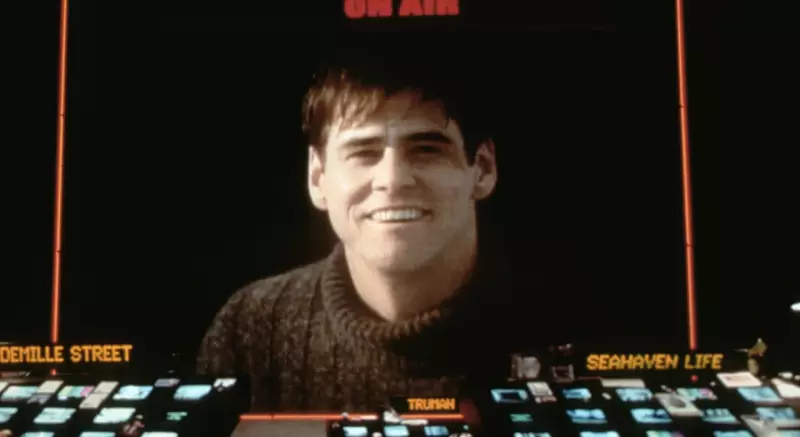
For years, a captivating idea has captured the public imagination: what if our entire existence, with all its mundanity and complexity, is nothing more than an elaborate computer simulation run by a higher civilisation? This modern existential spiral, reminiscent of a cosmic Truman Show, has been fuelled by everything from hyper-realistic video games to the musings of prominent thinkers like Neil deGrasse Tyson. The logic seemed compelling: if advanced civilisations can create simulated universes, and those simulations can create their own, then simulated realities would vastly outnumber the single "base" reality, making our own likely to be artificial.
The Mathematical Rebuttal from UBC
However, a team of physicists from the University of British Columbia (UBC) Okanagan has now published research aiming to shut this philosophical door for good. Their argument, presented in the Journal of Holography Applications in Physics, is not based on probability or speculation but on hard mathematical logic. Led by Dr. Mir Faizal, the team contends that the universe cannot be a simulation because computation itself is fundamentally incapable of producing the kind of reality we experience.
The core of their case rests on a powerful concept: certain features of our universe are non-algorithmic, meaning they cannot be generated or fully described by any finite set of rules or algorithm. Since a computer simulation is, by definition, a complex algorithm, it cannot replicate these non-algorithmic aspects of physical reality. "We have demonstrated that it is impossible to describe all aspects of physical reality using a computational theory of quantum gravity," states Dr. Faizal.

Gödel's Theorem and the Limits of Computation
To understand this, the study invokes Gödel's incompleteness theorems, a landmark discovery in mathematical logic. Gödel proved that within any consistent, rule-based system, there exist true statements that the system itself can never prove. These truths exist outside the boundaries of the system's own logic.
The UBC team argues that physics shares this property. They propose that reality contains fundamental elements or truths that cannot be derived or fully represented by any closed, rule-based computational system. Dr. Lawrence M. Krauss, a collaborator on the study, adds a crucial layer: "The fundamental laws of physics cannot be contained within space and time, because they generate them." This implies that if space and time themselves emerge from a deeper, non-algorithmic source, no computer operating within the confines of space and time could possibly simulate that source.
Dr. Faizal summarises the conclusion succinctly: "It requires non-algorithmic understanding, which by definition is beyond algorithmic computation and therefore cannot be simulated." This shifts the debate entirely away from questions of processing power or technological advancement. The issue is not whether a future civilisation could build a big enough computer, but whether computation is the right kind of tool to build a universe like ours at all.
Implications and the End of the Simulation Argument?
The study represents a significant leap from previous critiques of the simulation hypothesis. It moves beyond debates about energy requirements or computational limits and instead establishes a logical and mathematical barrier. If the universe contains truths that no algorithm can ever reach, then no computer—no matter how advanced, alien, or godlike—can create a self-consistent simulation of our world.
"Hence, this universe cannot be a simulation," the researchers conclude. This does not dismiss all philosophical wonder about the nature of reality, higher intelligences, or layered existences. However, if we strictly define a "simulation" as a computable, rule-generated virtual world, this research offers a direct and robust rebuttal based on the inherent limitations of computation itself.
The work firmly places the simulation hypothesis in the realm of intriguing fiction rather than plausible science, arguing that the reality we inhabit is fundamentally richer and more complex than any program could ever be.