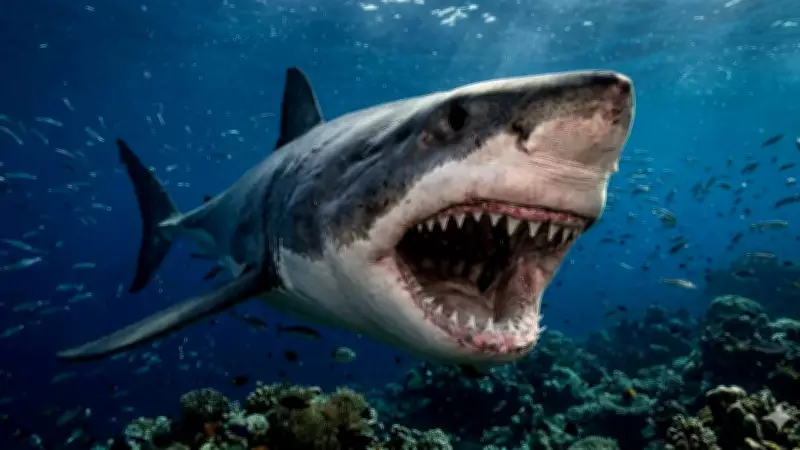
Shark teeth are everywhere once people start noticing them. They turn up in fossil shops, wash up along beaches, become buried inside ancient rock layers, and occasionally get lodged in fishing nets. Yet the teeth themselves only tell part of the story. What matters more is the system behind them: a jaw built around constant replacement rather than permanence.
Shark Teeth Regeneration: A Continuous Process
Most vertebrates get limited chances with teeth. Sharks work differently. A tooth can snap during feeding and be replaced almost immediately by another moving forward from behind it. The process never really stops. Some sharks may lose thousands of teeth during a lifetime without suffering much consequence, which helps explain how they have remained effective marine predators for such a long stretch of evolutionary history.
The Science Behind Shark Teeth Regeneration
The replacement system has become useful far beyond marine biology. Researchers interested in regeneration increasingly study sharks because the animals never fully lose the ability to produce new teeth. A paper published in the National Library of Medicine, titled "Shark tooth regeneration reveals common stem cell characters in both human rested lamina and ameloblastoma," examined stem cell regulators linked to shark tooth regeneration and found developmental pathways that closely resemble mechanisms associated with vertebrate tooth formation more broadly. What makes sharks unusual is not necessarily the existence of those pathways, but the fact that they remain active for life. Humans carry only two sets of teeth under normal development. Sharks continue generating replacements indefinitely through persistent dental tissue known as the dental lamina. Scientists studying regenerative medicine have been interested in why that structure remains functional in sharks while becoming inactive in mammals after adulthood.

Another study published by ScienceDirect, titled "An ancient dental gene set governs development and continuous regeneration of teeth in sharks," traced what researchers described as an ancient dental gene network shared across vertebrates. The work suggested that the biological instructions behind tooth formation are evolutionarily old, predating many modern animal groups. The research is still largely foundational rather than clinical. It is less about creating replacement teeth tomorrow and more about understanding why some animals retained regenerative abilities that others gradually lost.
How Shark Teeth Fall Out and Grow Back Constantly
Inside a shark's jaw sits a series of developing rows waiting to rotate into place. The visible teeth at the front are only the working layer. Beneath them, replacements continue forming throughout the animal's life in what researchers often compare to a conveyor belt system. The Florida Museum of Natural History describes this process as a nearly endless cycle of production and replacement. Teeth damaged during hunting are simply shed and replaced by newer ones. Since shark teeth are attached through softer connective tissue rather than deeply rooted in bone, they come loose relatively easily.
Different species have adapted this system for different diets. Great white sharks carry broad triangular teeth with serrated edges suited to tearing flesh. Sand tiger sharks rely on thinner, pointed teeth designed for gripping fish. Species feeding near the seabed may develop flatter crushing surfaces capable of breaking shells and crustaceans. The variation says as much about feeding behaviour as it does about anatomy.
How Fossil Shark Teeth Help Scientists Study Extinct Sharks
Sharks present a strange problem for palaeontologists because their skeletons are made mostly of cartilage rather than dense bone. Cartilage breaks down relatively quickly after death, which leaves fewer complete skeletons behind in the fossil record. Teeth survive much more easily. That durability explains why fossil shark teeth are so common across ancient marine sediments. In many cases, teeth are the primary evidence researchers use to identify extinct species. Serration patterns, enamel structure and root shape all help distinguish one species from another.

Megalodon remains the most famous example. Despite its enormous size, much of what scientists understand about the prehistoric shark comes from fossil teeth scattered across coastal deposits worldwide. Some exceed 15 centimetres in length and remain among the clearest clues to the animal's feeding habits and estimated body size. Because teeth fossilise so readily, sharks often leave behind a better dental record than a skeletal one.
The Biology Behind the Strength and Renewal of Shark Teeth
Shark teeth are not meant to remain pristine forever. Their strength comes partly from the fact that they can be replaced repeatedly. According to reports, the structure of shark teeth has been found to have a hard outer enameloid layer supported by internal tissue arranged to resist fracture during feeding. Serrated species distribute force differently from crushing species, depending on prey type and feeding style. There is also less evolutionary pressure for long-term durability compared with mammals. A human tooth may need to survive decades of wear. A shark tooth only needs to remain effective until the next replacement arrives. That changes the design priorities completely. Rather than preserving a permanent set, sharks operate through constant renewal.