

Siemens CEO Issues Stark Warning on Europe's AI Strategy
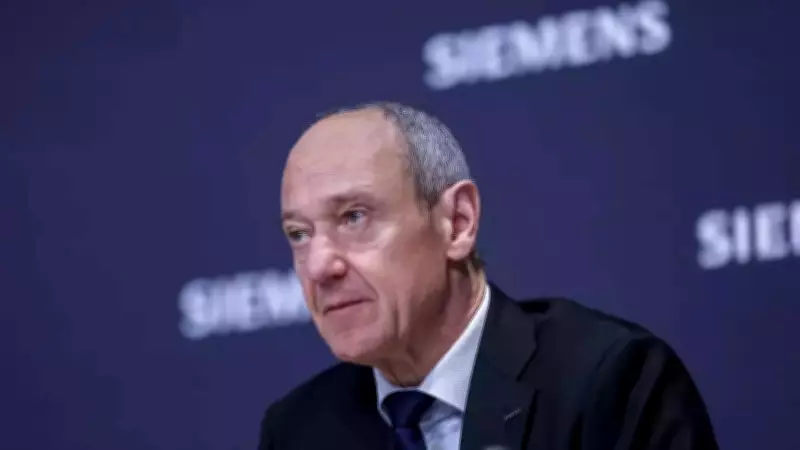
Siemens CEO Roland Busch has delivered a critical warning to Europe regarding its approach to artificial intelligence (AI). As the head of Europe's largest engineering firm, Busch expressed concerns that efforts by the European Commission to slow down the adoption of AI tools from American companies, in pursuit of building sovereign infrastructure, could severely hinder innovation.
Risk of Delaying Progress and Falling Behind
Speaking to the Financial Times amid ongoing EU discussions aimed at reducing reliance on American technology providers, Busch emphasized that prioritizing local AI systems over deploying existing tools might delay technological advancement. "It would be a disaster if Europe holds back innovation while waiting to build its own infrastructure," he stated. He further added, "You should not throttle your innovation speed for the sake of creating sovereignty."
Busch also highlighted that Europe risks falling further behind in AI development if regulations are not simplified. This warning comes as the region continues efforts to reduce dependence on foreign technologies, including cloud services and AI platforms. Concerns are mounting that US President Donald Trump's foreign policy could lead to a "tech decoupling," exacerbating these challenges.

Balancing Sovereignty with Innovation
While acknowledging that developing its own AI infrastructure could make Europe "more resilient" over time, Busch argued against waiting. "The conclusion is not that we should wait for AI factories to be built in Germany or Europe before we start tuning our models," he said. His views resonate with some European businesses that fear reducing reliance on US technology too quickly could increase costs and slow investment.
The European Commission is expected to present a "tech sovereignty package" in May to strengthen cloud infrastructure and support the domestic AI sector. However, the EU faces challenges in implementing its AI regulation, which came into force last year. These rules have drawn criticism from major technology companies, the US government, and some European firms, who argue they could complicate AI adoption.
Critique of Europe's Regulatory Approach
Busch pointed out that delays in AI deployment due to security concerns or regulation could negatively impact economic growth. He described Europe's approach to AI control as "completely miscalibrated" compared to the US. To illustrate, he said the US economy resembles a "fast-flowing river where all these companies are embracing this technology," while Europe's ecosystem is like "standing water."
He also criticized European rules for not clearly separating private and business uses of AI. "If you have two companies and they make a contract on how to share data, why would I need to regulate the way companies are sharing that data?" he questioned, suggesting that overregulation might stifle collaboration.
Siemens' Investment Strategy and Competitive Edge
Busch revealed that Siemens is investing €1 billion in developing its own AI tools, such as a virtual shop floor manager. However, the company is prioritizing investments in the US and China. "We do invest also in Germany, but in a second wave," he noted, referring to efforts supported by Chancellor Friedrich Merz to attract investment.
He identified industrial AI as an area where Europe could remain competitive, thanks to access to large datasets. Yet, he observed that many companies hesitate to utilize this data or feel discouraged by regulatory requirements, potentially limiting growth opportunities.
In summary, Busch's warning underscores a critical tension between achieving technological sovereignty and maintaining innovation momentum in Europe's AI landscape.






