

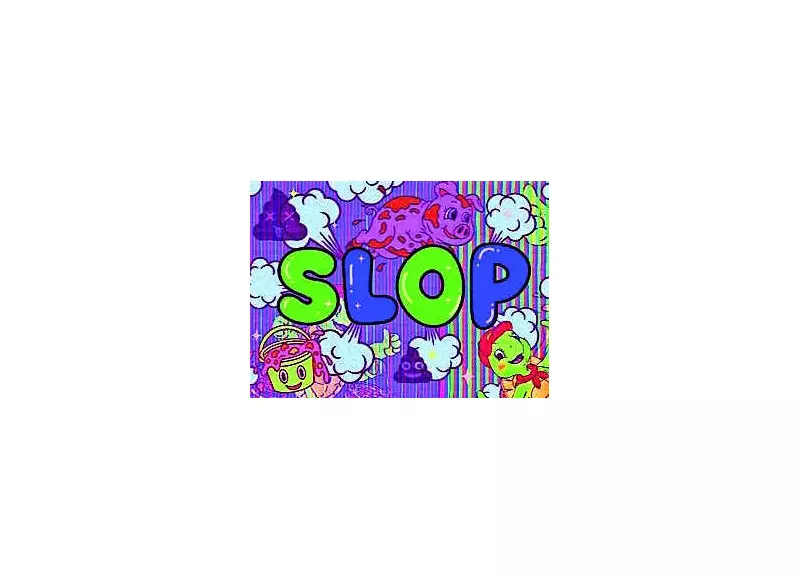
In a move that perfectly encapsulates the state of the modern internet, Merriam-Webster has officially declared "slop" as its 2025 Word of the Year. This choice highlights a widespread cultural frustration with the deluge of synthetic, often nonsensical content generated by artificial intelligence that has come to dominate online spaces.
What Exactly is 'Slop' in the Digital Age?
The dictionary giant provides a precise and timely definition: slop is "digital content of low quality that is produced usually in quantity by means of artificial intelligence." This single term now encompasses the bizarre AI videos, glitchy advertisements, fabricated news articles, and poorly written AI junk that clogged social media feeds and search results throughout the year.
The word's surge in popularity on Merriam-Webster's search platform reflects a significant cultural reckoning. Internet users globally, and notably in tech-savvy India, have grown acutely aware that they are being force-fed a diet of content that ranges from merely annoying to dangerously misleading. This includes everything from AI-generated talking animals to sophisticated deepfakes of celebrities and completely fabricated news stories.

"It's such an illustrative word," Merriam-Webster president Greg Barlow told the Associated Press. He noted that slop is intrinsically linked to the transformative technology of AI, and is something people have found "fascinating, annoying, and a little bit ridiculous."
Platforms Scramble to Control the AI Deluge
The slop crisis reached a critical point in 2025, forcing major tech platforms into action. Meta launched its dedicated AI video feed called Vibes, while OpenAI released its Sora video generation app. Both tools contributed to a massive wave of synthetic content that garnered millions of views, further blurring the lines between real and artificial.
The response was swift and significant:
- Spotify took a drastic step by purging over 75 million AI-generated spam tracks from its platform.
- Companies like YouTube, Wikipedia, and Pinterest deployed new policies and detection tools in an attempt to stem the tide of low-quality AI material.
- Even luxury fashion house Valentino experimented with AI-generated advertisements, showing the trend's reach beyond typical tech circles.
- In a major corporate endorsement, Disney invested $1 billion in OpenAI to integrate Sora-generated videos into its streaming platform, signaling a high-stakes embrace of the technology despite public backlash.
Why 'Slop' Sticks: A Word Rooted in Disgust
The power of "slop" as the chosen word lies in its visceral, sensory impact. As Merriam-Webster's experts noted, "Like slime, sludge, and muck, slop has the wet sound of something you don't want to touch." The term dates back to the 1700s, originally referring to soft mud, before evolving to mean pig feed and general rubbish. Its latest digital iteration feels both inevitable and perfectly descriptive.
Unlike the often fearful or apocalyptic discourse surrounding artificial intelligence, "slop" is deliberately mocking and dismissive. It serves as a collective rebuke, suggesting that for all its hype and promise, a great deal of AI output falls painfully short of genuine, intelligent creativity. It names the problem not as a Skynet-style takeover, but as a mundane, irritating, and low-quality flood of digital garbage.
The designation of "slop" as the Word of the Year 2025 is more than a linguistic curiosity; it is a mirror held up to our current digital ecosystem. It captures the fatigue of users navigating an online world increasingly saturated with synthetic content, and marks a pivotal moment in the public's relationship with generative AI technologies.






