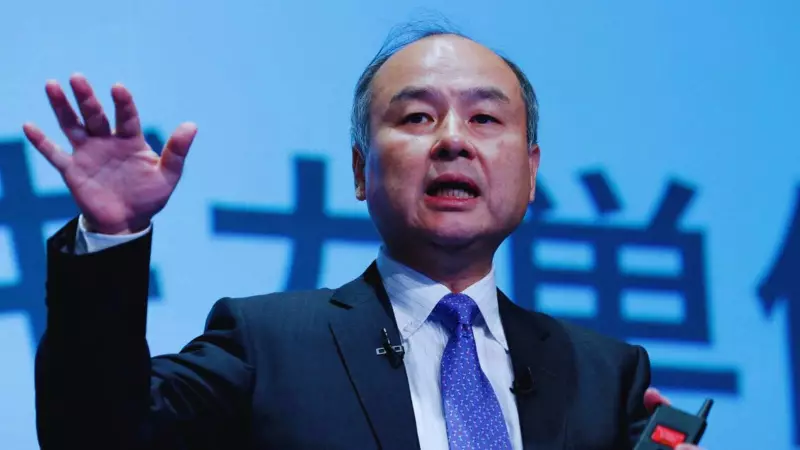
In a rare emotional disclosure, SoftBank Group's founder and CEO Masayoshi Son has admitted he was brought to tears while executing a monumental financial decision. The Japanese investment titan was compelled to sell its entire stake in chipmaker Nvidia, valued at a staggering $5.8 billion, to secure capital for its ambitious bets on OpenAI and other artificial intelligence ventures.
The Heart-Wrenching Exit from a Golden Goose
Speaking at the FII Priority Asia forum in Tokyo earlier this week, Son revealed the internal conflict behind the move that sent shockwaves through financial markets. "I don't want to sell a single share. I just had more need for money to invest in OpenAI and other projects […] I was crying to sell Nvidia shares," Son confessed. This marked the first time the billionaire addressed the rationale behind offloading the conglomerate's position in the AI chip leader.
The sale was executed at approximately $181.58 per share, a mere 14% below Nvidia's all-time high of $212.19. This strategic divestment represents SoftBank's second complete exit from Nvidia. In a costly earlier move, the group sold a $4 billion stake in 2019 for $3.6 billion—shares that would have ballooned to over $150 billion in value just a few years later.

Doubling Down on the AI Future
This time, however, the capital is being redirected towards what Son believes is the next frontier. The liquidation was a necessary step to bankroll SoftBank's massive commitment to OpenAI, reported to be around $30 billion, and to fund other AI data centre projects. The firm's vision extends to a potential $1 trillion AI manufacturing hub in Arizona, showcasing the scale of its ambition.
Son's strategy involves deep collaboration with industry giants and governments. He has actively sought partnerships with chip manufacturers TSMC and Samsung, as well as with the Trump administration in the US. In February 2025, Son stood alongside US President Donald Trump, OpenAI CEO Sam Altman, and Oracle's Larry Ellison to announce the 'Stargate' project—an AI development initiative with investments potentially reaching $500 billion.
Market Ripples and a Defence Against Bubble Talk
Despite analysts framing the Nvidia sale as a strategic reallocation rather than a retreat from AI, the market reacted nervously. Following the disclosure of SoftBank's exit, Nvidia's stock price dipped by 3%. This reaction fueled ongoing speculation about a potential bubble in AI-related valuations.
Son offered a blunt rebuttal to such concerns. He suggested that commentators warning of an AI bubble are "not smart enough" to grasp the technology's transformative potential. According to his forecast, artificial superintelligence and AI-powered robots will eventually contribute at least 10% of global GDP, justifying the trillions of dollars flowing into the sector.
The bet on OpenAI is already showing promise for SoftBank's balance sheet. Last month, the Tokyo-based conglomerate reported that its second-quarter net profit more than doubled to 2.5 trillion yen ($16.6 billion), driven significantly by valuation gains in its OpenAI holdings. Son indicated that SoftBank is prepared to increase its investment in the ChatGPT maker further, contingent on its performance and future valuation rounds.