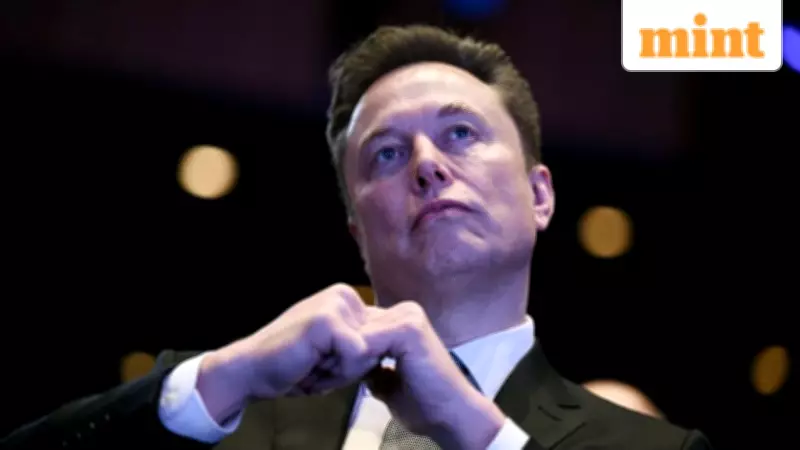
Elon Musk's Bold Merger: SpaceX and xAI Combine in a $1.25 Trillion Deal
In a move that has sent shockwaves through the tech and business worlds, Elon Musk announced on February 2nd the merger of SpaceX, his rocket and satellite broadband company, with xAI, his artificial intelligence chatbot maker. This mega-merger creates a new entity valued at a staggering $1.25 trillion, with SpaceX investors receiving 80% ownership and the remaining 20% going to xAI's owners. Musk, who holds majority stakes in both firms, is reviving the concept of sprawling conglomerates in America, where they had long fallen out of favor.
The Vision: Space-Based Data Centers for AI Supremacy
The stated rationale behind this unprecedented deal is ambitious: the combined companies plan to launch a fleet of data centers into space. This strategy aims to give xAI a significant edge in the competitive race to develop cutting-edge AI models, while simultaneously opening a new revenue stream for SpaceX. Some experts find the idea plausible, as orbiting data centers could harness uninterrupted solar power and bypass complex land-based planning processes. SpaceX's Starlink satellite constellation would then transmit the processed data back to Earth.
However, this vision remains firmly in the realm of science fiction for now. Engineering challenges abound, including whether current hardware can withstand repeated exposure to cosmic rays. Cost is another major hurdle; despite SpaceX's relatively low launch costs compared to competitors, space missions are still prohibitively expensive. The company's "Starship" launch system, intended to further reduce costs, is delayed and has yet to achieve orbit.

Financial Pressures and Shaky Commercial Logic
Like many conglomerates, the commercial justification for merging SpaceX and xAI appears shaky. xAI, similar to its rivals Anthropic and OpenAI, is burning through cash at an alarming rate—reportedly nearly $1 billion monthly. Its chatbot Grok generates minimal revenue, and X (formerly Twitter), which xAI acquired last year, earns insufficient funds from subscriptions and ads to support the AI lab. Additionally, X carries about $12 billion in debt from Musk's 2022 acquisition.
This financial strain suggests Musk may be leveraging SpaceX's profitability to subsidize xAI. SpaceX reportedly generated an $8 billion operating profit last year, and proceeds from a potential public listing later this year could further fund xAI. However, this risks diverting capital from SpaceX's critical projects, such as making Starship operational.
Regulatory Risks and Complex Deal Web
The merger introduces significant financial risks for SpaceX. X is under investigation in the European Union and Britain for potential data regulation breaches and its image generator, which was misused to create nude deepfakes, including of children. French authorities raided X's Paris offices on February 3rd. If found liable, the EU could impose fines up to 6% of global revenue, and Britain up to 10%. It remains unclear if SpaceX's revenue would be included in these calculations post-merger.
This deal adds complexity to the intricate web of AI investments. Google owns 7% of SpaceX, giving it a stake in competitor xAI, while also holding 14% of Anthropic. Nvidia has invested $2 billion in xAI for AI processor purchases, and Tesla recently declared a $2 billion investment in xAI. As long as investors believe an AI revolution is imminent, such creative dealmaking is likely to persist.
In summary, Elon Musk's SpaceX-xAI merger represents a high-stakes gamble with uncertain business sense. While it promises innovation in space-based AI, it faces daunting engineering, financial, and regulatory challenges that could undermine its viability.