

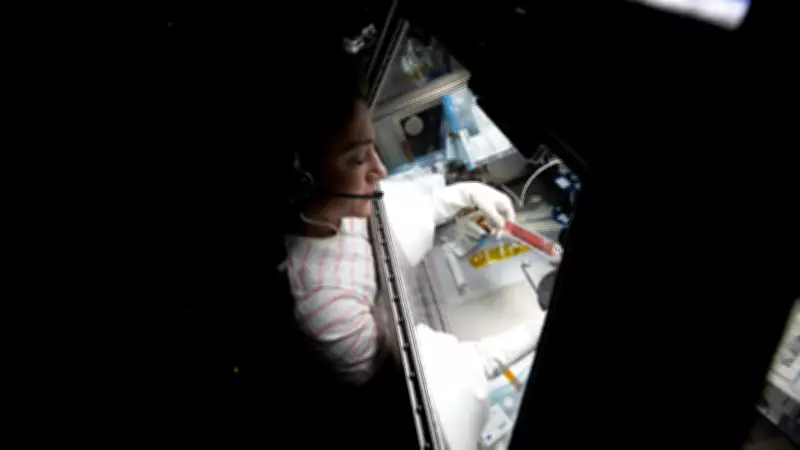
One of the most significant areas of scientific exploration in recent years involves the study of stem cell research in space. Scientists are investigating how the human body responds to microgravity, and the ability to cultivate stem cells aboard the International Space Station (ISS) provides a unique opportunity to observe cellular reactions beyond Earth's gravitational influence. This research could enhance our understanding of cancer evolution, tissue regeneration, and disease treatment. NASA studies have demonstrated that stem cells grown in microgravity can develop into structures resembling those found within the human body, enabling medical experiments in space and the advancement of cancer treatment techniques.
Microgravity and Stem Cell Behavior in Space
The forces of gravity influence the growth, division, and organization of cells on Earth. However, in the microgravity environment of space, researchers can study cellular behavior without the confounding effects of gravity. According to NASA, the International Space Station serves as a laboratory for observing biological processes under conditions distinct from those on Earth. The Hematopoietic Stem Cell Expansion in Space (InSPA-StemCellEX-H2) investigation aims to demonstrate large-scale production of blood stem cells for pharmaceutical and clinical applications. In microgravity, scientists gain an unobstructed view of how cells behave, free from the constraints of Earth's gravity. Cells have the ability to differentiate into various tissue types, such as muscles, nerves, and blood cells, due to their developmental plasticity.
Stem Cell Research on the International Space Station (ISS)
The International Space Station is a critical facility for biomedical research in space. Scientists send stem cell samples to the ISS to study their behavior, growth, differentiation, and stress response under microgravity conditions. NASA-funded studies have revealed that stem cells cultured in space aggregate into three-dimensional structures more readily than those grown under normal Earth conditions. According to NASA research abstracts, experiments conducted in space provide insights into human cell function in the absence of gravity.

How Space Stem Cell Research Aids Cancer Treatment
One of the most promising avenues of research involves cancer treatments. Studying the behavior of cancer cells in microgravity and utilizing stem cells developed in space offers deeper understanding of cancer cell development. Research from the School of Cellular and Molecular Medicine at the University of Bristol indicates that cancer cells form more complex structures in space, mimicking tumor growth within the human body. This facilitates drug testing and the creation of novel therapies. NASA researchers also note that the microgravity environment helps model disease progression in ways not possible on Earth.
Regenerative Medicine and Disease Treatment Applications
Stem cells hold immense potential in regenerative medicine due to their ability to repair and replace damaged tissues. Researching these cells in space could lead to more effective treatments for heart diseases, neurodegenerative disorders, and immune deficiencies. NASA-funded studies suggest that microgravity influences stem cell specialization. Scientists may leverage these findings to develop therapies for regenerating damaged organs and treating chronic diseases. For instance, the study 'The Effects of Microgravity on Stem Cell-Based Tissue Regeneration: Keratinocyte Differentiation in Wound Healing (STL)' indicates that spaceflight inhibits the migratory ability of microgravity-differentiated cultures, supporting the hypothesis that stem cell regenerative potential may decrease during spaceflight. Such experiments advance regenerative medicine and improve human health outcomes on Earth.
The primary advantage of conducting research in space lies in the environmental differences from Earth. Without gravity pulling cells downward, biologists can investigate biological processes in all directions. This approach overcomes certain limitations in biological sciences and provides opportunities for long-term experimentation. As stated by NASA, the ISS serves as a unique laboratory for scientific discoveries in biology, physics, and medicine.

Future of Stem Cell Research in Space
The future of stem cell research in space is promising. With each mission becoming more complex and advanced, scientists will gather more data on how human cells operate in microgravity. Dr. Tobias Niederwieser, assistant research professor at BioServe Space Technologies at the University of Colorado Boulder, notes that microgravity in space is a far better environment to maintain stem cells in a high-quality state during growth. Research in this field can yield important advances in cancer treatment, tissue regeneration, and personalized medicine, and may offer clues for treating age-related diseases and injuries. Although still in its infancy, space stem cell research represents a significant milestone in integrating space science and medical advancement. It allows scientists to answer questions about human biology that cannot be addressed on Earth. By using the International Space Station as a laboratory, doctors can study human biology in a different environment and make discoveries in cancer growth, regenerative medicine, and treatments.





