

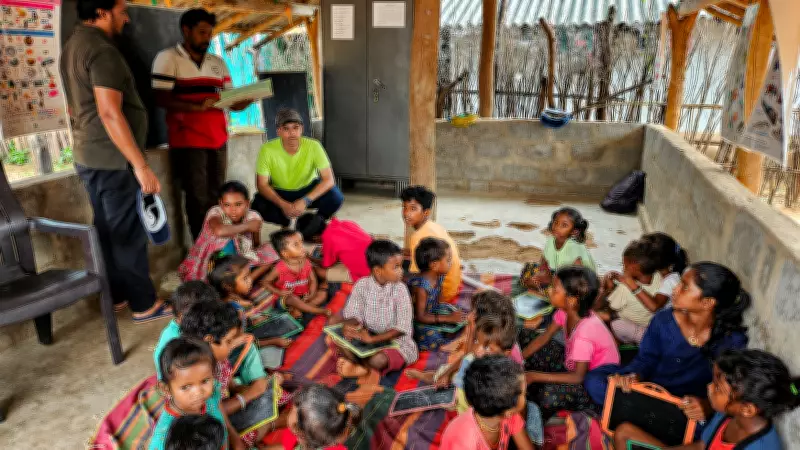
Student-led innovation is steadily expanding beyond academic settings, with young changemakers engaging directly with real-world challenges. By applying research and creative thinking, students are responding to issues such as climate stress, limited healthcare access, and barriers to inclusion, demonstrating a growing ability to connect learning with societal needs.
This approach is reflected in three student-driven projects from India that stood out in a recent global selection process for their innovation and relevance. Terracool addresses extreme heat through an energy-efficient cooling solution designed for vulnerable communities. Uthaan Sankalp Bharat focuses on strengthening healthcare infrastructure in underserved regions, while Project Hearthstone explores assistive technology to improve communication for individuals with hearing and speech impairments.
Beyond their individual focus areas, these initiatives stand out for their depth of execution. Each project is grounded in research, informed by on-ground assessments, and developed with a clear intention for real-world application, highlighting a generation of students who are not only identifying challenges, but actively working toward solutions with long-term impact.

These initiatives were recognised under the Nord Anglia Education Social Impact and Research & Development Grants, a global programme that supports student-led solutions aligned with sustainability, equity, and inclusion goals. We spoke with Inderjit Dehal, Regional Education Director, and Fiona Chettiar, Regional Social Impact Representative, India, to understand the programme and the student-led projects recognised this year. Here is what they shared.
What is the Nord Anglia Education Social Impact Grant, and how does it work?
Inderjit Dehal explained that the grant supports student-led projects addressing real-world social, environmental, and equity challenges. The idea is to give students the resources and mentorship needed to take their ideas beyond the classroom and into real-world contexts. Most selected projects align with global frameworks such as the United Nations Sustainable Development Goals (SDGs) and child-rights principles promoted by UNICEF. Each year, only a limited number of projects are selected from across an international network, making the process highly competitive.
Key focus areas for this year's grants
Fiona Chettiar noted that this year saw a strong focus on climate resilience and sustainability, healthcare access and community well-being, and inclusion through innovation. There was also a clear emphasis on research-backed ideas and solutions that can demonstrate measurable impact over time. Within this context, three student-led projects from Oakridge International Schools were selected for their execution and relevance.
Terracool: Addressing climate challenges
Terracool is a low-energy cooling system developed by Shrihan Reddy Pakala, Raghav Palla, and Sanjith Chellamuthu from Oakridge International School, Gachibowli. The project received a Research & Development Grant of USD 3,000. The system uses terracotta as its primary cooling medium and works through a combination of evaporative cooling, heat exchange, and accelerated airflow. It requires minimal electricity, uses no refrigerants, and can be produced locally using accessible materials. The team has built a working prototype, conducted field testing, and gathered performance data, with the goal of making this solution scalable for schools and community spaces, especially in regions facing extreme heat.
Uthaan Sankalp Bharat: Improving healthcare access
Uthaan Sankalp Bharat, supported by students from Oakridge International School, Gachibowli, received a Social Impact Grant of USD 10,000 to improve healthcare infrastructure for tribal communities. The initiative focuses on upgrading facilities at an NGO-supported hospital, including operation theatre equipment, diagnostic tools, and other essential medical devices identified through on-ground assessments. It builds on earlier grassroots efforts, including fundraising that enabled the donation of an ECG machine. These interventions highlighted how access to basic infrastructure can significantly improve patient outcomes, leading to the expansion of the project.

Project Hearthstone: Bridging communication gaps
Project Hearthstone, led by Aryan Krishnan and Sresht Thyiyagashankar from Oakridge International School, Bengaluru, received a Social Impact Research & Development Grant of USD 2,619.20 and was selected among a limited number of projects globally. The project focuses on developing wearable gloves that can translate sign language into spoken words by tracking hand and finger movements, helping bridge communication gaps. With millions of individuals worldwide facing communication barriers, the initiative aims to improve accessibility and inclusion. The work is currently progressing through research, prototyping, and testing, along with awareness efforts within the community.
What stood out about these student-led projects?
Inderjit Dehal emphasised that what stands out is the level of thought and intent behind these projects. Students are not just identifying problems, but also investing time in understanding them deeply and building solutions that can be implemented in real-world settings. Their global recognition reflects a broader shift towards more purpose-driven learning, where students are encouraged to think beyond academics and engage with real challenges. It also shows that with the right support, young people are capable of contributing meaningfully to conversations around sustainability, healthcare, and inclusion.
Indications for student-led innovation today
Fiona Chettiar highlighted that these projects show how student-led initiatives are increasingly moving from ideas to tangible, real-world impact. With the right guidance and support systems, students are able to take on complex challenges and work towards solutions that are both practical and scalable. It reflects a growing confidence among young innovators to engage with global issues and contribute in meaningful ways.
By aligning student voices with the SDGs, UNICEF's child-rights framework, and Nord Anglia's global vision, Oakridge International Schools continue to nurture responsible, globally minded changemakers who believe that meaningful change begins with action.
Disclaimer: This article has been produced on behalf of Nord Anglia by Times Internet's Spotlight team.





