

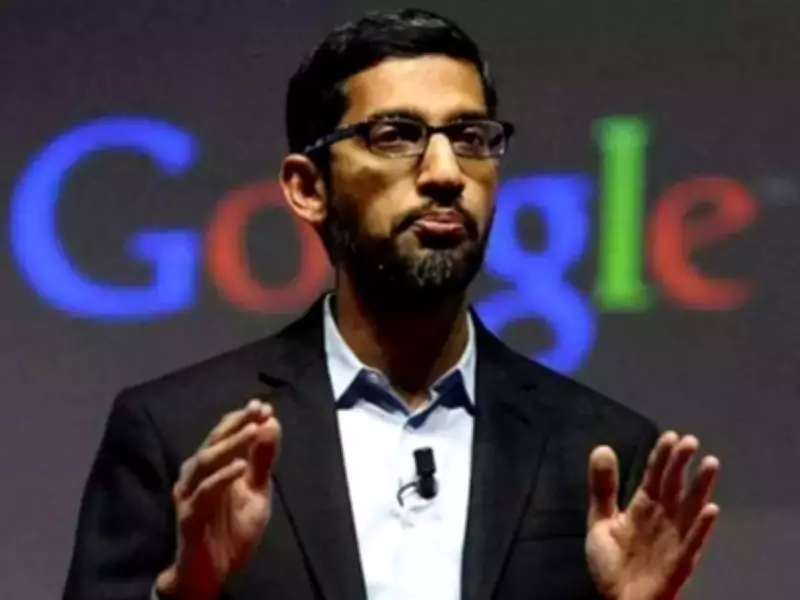
Google CEO Sundar Pichai Calls for American Leadership in Global AI Development
In a compelling appeal to the technology sector, Google CEO Sundar Pichai has urged American technology companies to take the lead in global artificial intelligence development. During a recent interview with CBS 60 Minutes, Pichai framed AI as the defining technology of our era and called for the United States to develop it "boldly and responsibly so every American benefits."
AI as the Most Profound Technology of Our Time
Pichai described artificial intelligence as "the most profound technology yet," drawing parallels to past technological revolutions that were spearheaded by the United States. He emphasized that America's rich history of innovation should guide its approach to AI, ensuring the technology is harnessed for broad social benefit rather than limited applications.
"I'm optimistic. Not because I believe in technology, but because I believe in people and the sheer power of American ingenuity," Pichai stated during the interview, expressing confidence in the nation's ability to navigate the AI revolution.

Real-World Applications Transforming Industries
Sundar Pichai highlighted several areas where AI is already making significant impacts:
- Medical Research: Accelerating progress toward life-saving cures and treatments through advanced data analysis and pattern recognition.
- Education: Enabling teachers to personalize lessons for students, adapting to individual learning styles and needs.
- Emergency Response: Improving wildfire tracking and disaster management through predictive analytics and real-time monitoring systems.
Pichai also pointed to consumer-facing innovations, particularly mentioning self-driving cars. He recalled his father's first ride in a driverless vehicle in San Francisco as a "magical" experience that demonstrated the technology's potential to transform daily life.
Acknowledging Challenges and Infrastructure Strains
While expressing optimism about AI's potential, Pichai acknowledged significant challenges that accompany this technological revolution. These include potential workforce disruption and the critical need for comprehensive retraining programs to help workers adapt to changing job markets.
He identified regulation and investment in workforce training as essential steps for responsible AI development. "We need to approach this with both ambition and caution," Pichai suggested, emphasizing the balance between innovation and social responsibility.
The AI boom is also placing considerable strain on infrastructure. Major US tech giants including Amazon, Microsoft, and Alphabet (Google's parent company) are facing pushback over their expanding data center requirements. Concerns have been raised about water usage, land requirements, and energy consumption, with some projects being delayed or canceled due to these environmental considerations.
Global Competition and Alternative Approaches
Meanwhile, China is experimenting with alternative approaches to AI infrastructure. The country is developing underwater data centers cooled by seawater off the coast of Shanghai, representing innovative solutions to the cooling challenges that accompany massive computing operations.
This international competition underscores Pichai's call for American leadership in the field. He believes that with proper guidance and responsible development, AI can become a transformative force that benefits society broadly while maintaining America's technological edge.
The Google CEO's remarks come at a critical juncture in AI development, as governments, corporations, and civil society organizations worldwide grapple with how to harness this powerful technology while mitigating its potential risks and negative consequences.






