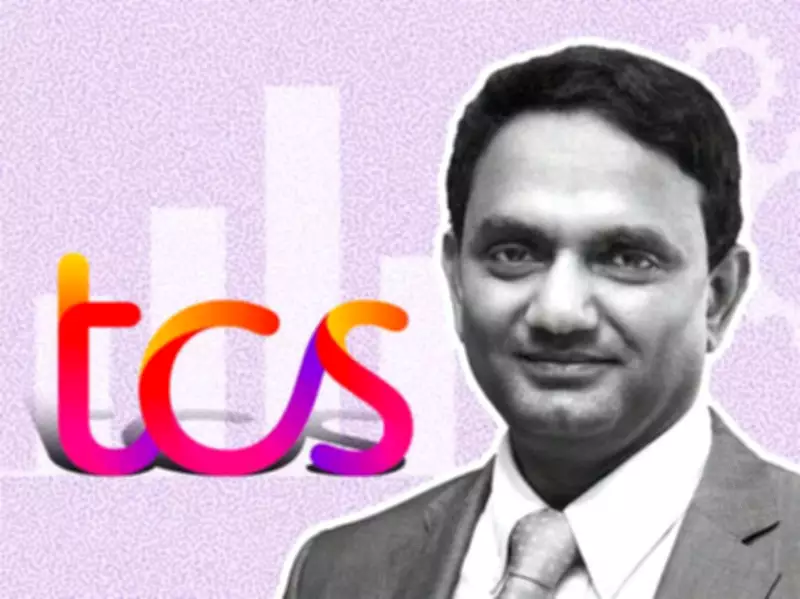
TCS CEO Krithivasan Dismisses AI Panic, Calls Software Replacement 'Far-Fetched'
Tata Consultancy Services CEO K Krithivasan has strongly pushed back against the AI-fueled panic currently sweeping through global software stocks, labeling the notion that large language models will simply replace enterprise software as "a far-fetched thing." In a direct conversation with Bloomberg, Krithivasan emphasized that the entire value chain of enterprise software will not be replaced by LLMs, stating bluntly, "It's not that you can just go drop Anthropic in there."
Complex Legacy Systems Defy Simple AI Replacement
Krithivasan's central argument focuses on the reality that banks, retailers, and telecommunications companies operate on complex, decades-old systems that cannot be easily undone by a simple chatbot upgrade. These intricate legacy infrastructures represent significant investments and operational frameworks that AI tools cannot simply displace overnight. The TCS leader's perspective highlights the fundamental difference between AI augmentation versus complete replacement in enterprise environments.
Tech Leaders Echo Skepticism Amid Market Turmoil
Krithivasan is far from alone in his skepticism regarding AI's supposed threat to software companies. Several prominent technology executives have voiced similar concerns:

- Nvidia CEO Jensen Huang called the software selloff "the most illogical thing in the world"
- Arm CEO Rene Haas dismissed the panic as "micro-hysteria"
- Former Microsoft executive Steven Sinofsky, who led development of Windows 7 and 8, was even blunter, calling narratives about software's death "nonsense"
The 'SaaSpocalypse' Wipes $830 Billion from Software Stocks
Despite this pushback from industry leaders, the selloff has continued unabated. What traders have dubbed the 'SaaSpocalypse'—triggered largely by Anthropic's launch of industry-specific plugins for its Claude Cowork tool in late January—has erased approximately $830 billion from the S&P 500 software and services index in just six trading sessions. The damage has been widespread and severe:
- Thomson Reuters plummeted nearly 16% in a single session
- DocuSign dropped 11%
- Salesforce, Adobe, and ServiceNow all lost around 7%
- A Goldman Sachs basket tracking US software stocks slid to its lowest since April, about 25% off its September peak
Collateral Damage Spreads Beyond SaaS Sector
The market turmoil has extended well beyond traditional software-as-a-service companies. Cybersecurity stocks buckled after Anthropic unveiled a separate code security scanning tool, with CrowdStrike falling 8% and Okta sinking over 9%. The Global X Cybersecurity ETF closed at levels not seen since November 2023.
Perhaps most dramatically, IBM suffered its steepest single-day fall in 25 years, plunging 13.2% after Anthropic claimed its Claude Code could automate COBOL modernization. This single announcement wiped approximately $40 billion from IBM's market capitalization, demonstrating how sensitive markets have become to AI-related announcements.
Wall Street Reprices Entire Software Sector
The underlying fear driving this market correction isn't about any single plugin or tool, but rather a wholesale repricing of the entire software sector based on the assumption that AI will shrink its addressable market. Even Anthropic's legal plugin—essentially a set of structured prompts—was enough to send investors fleeing from Thomson Reuters, RELX, and LegalZoom in a single afternoon.
The iShares Expanded Tech-Software Sector ETF is now down over 23% for the year, tracking toward its worst quarterly drop since the 2008 financial crisis. Indian IT companies haven't been spared either, with Infosys ADRs slipping 5.5% and Wipro falling nearly 5%.

The Fundamental Question: Does AI Hollow Out or Enhance Software Companies?
A credible counter-argument is emerging among some analysts and executives. JPMorgan's Mark Murphy called it "an illogical leap" to assume one LLM plugin could displace layers of mission-critical enterprise software. SAP CEO Christian Klein insists his company is actively winning deals because of AI integration rather than losing them.
Zoho founder Sridhar Vembu offered perhaps the sharpest perspective, arguing that SaaS was already "ripe for consolidation" long before AI arrived, bloated by an industry that spent more on sales and marketing than on actual engineering.
Despite these nuanced views, Wall Street appears uninterested in subtlety. As Blue Whale Growth Fund CIO Stephen Yiu summarized: "This year is the defining year whether companies are AI winners or victims, and the key skill will be in avoiding the losers." The market's verdict on how AI will ultimately transform the software industry remains very much in flux, with billions in market capitalization hanging in the balance.