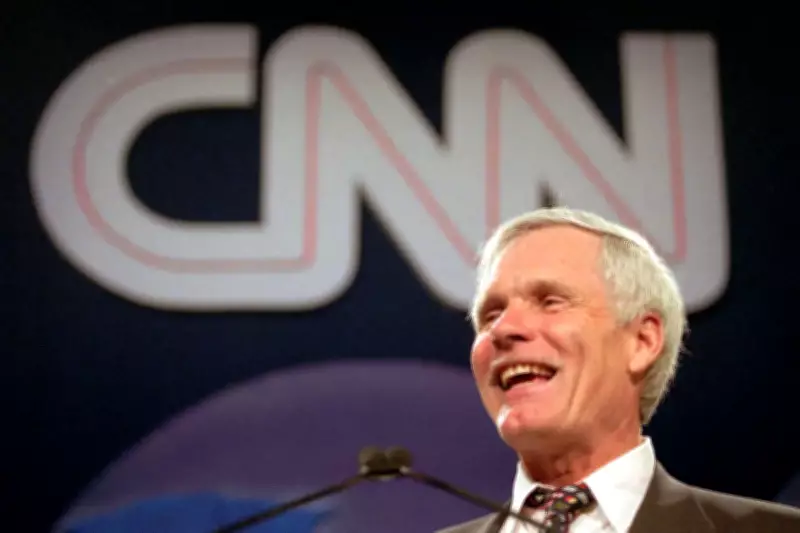
Ted Turner, the billionaire media executive who transformed professional wrestling by turning WCW into the first true national rival to Vince McMahon's WWF, has died at the age of 87. Turner Enterprises announced his death on Wednesday, confirming that Turner died peacefully surrounded by family.
He had been living with Lewy body dementia, a progressive brain disorder he publicly disclosed in 2018, and had also been hospitalised earlier in 2025 with a mild case of pneumonia before recovering at a rehabilitation facility. Although Turner's wider legacy stretches across television, news and sport through CNN, TNT, TBS and the Atlanta Braves, his role in wrestling permanently changed the direction of the industry during the 1990s. Under Turner's ownership, WCW became the only company in the modern era to consistently beat Vince McMahon's WWF in the television ratings, defeating Raw for 83 consecutive weeks during the peak of the Monday Night Wars.
The Decision That Changed Wrestling
Turner entered wrestling in 1988 when he acquired Jim Crockett Promotions and turned it into World Championship Wrestling under Turner Broadcasting. At the time, Vince McMahon's WWF had already established itself as wrestling's dominant national company, but Turner had both the television infrastructure and financial backing to seriously challenge that position.

The defining moment came in 1995 during a corporate meeting that Eric Bischoff has repeatedly recalled in later interviews. "Ted Turner asked me, 'Eric, what have we got to do to compete with WWE?'" Bischoff said. "I wasn't prepared for that. 'Give me prime time.' I thought it was safe that he wouldn't do it. And Ted looks at me, looks at Scott Sasser, and goes, 'Scott, give Eric two hours, Monday night, on TNT.'" That conversation directly led to the launch of WCW Monday Nitro on September 4, 1995, airing head-to-head against WWF Monday Night Raw.
The competition between the two companies quickly escalated into the Monday Night Wars, a period that reshaped wrestling television, talent movement, production and storytelling. WCW aggressively signed major WWF stars including Hulk Hogan, Randy Savage, Kevin Nash, Scott Hall and Roddy Piper, while also building a cruiserweight division that helped introduce a faster and more athletic style to mainstream American audiences. Hogan's arrival in WCW in 1994 became one of the most important moments in wrestling business history because the biggest star of wrestling's previous boom period had left Vince McMahon's company for its main competitor.
The Rise of Nitro and the nWo
WCW's biggest breakthrough arrived in 1996 when Hogan turned heel and formed the New World Order alongside Nash and Hall. The nWo storyline became one of wrestling's most commercially successful angles and helped WCW overtake WWF Raw in the ratings for 83 straight weeks. That run remains the closest the wrestling industry has come in the modern era to two major national promotions operating at competitive parity.
WWF responded with the famous "Billionaire Ted's Wrasslin' Warroom" parody segments in 1996, mocking Turner as a Southern caricature alongside parody versions of Hogan called "The Huckster," Savage as "The Nacho Man," and Gene Okerlund as "Scheme Gene." According to Bischoff, Turner genuinely enjoyed the sketches and laughed at the parody of himself even while the real-life rivalry between WCW and McMahon intensified.
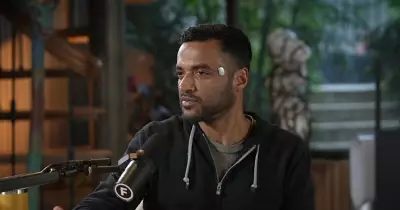
Bischoff reflected on Turner's influence during an appearance on The Ariel Helwani Show following news of his death. "He changed my life. He changed the lives of my children," Bischoff said. "None of us would be where we are today. I would not be involved with Real American Freestyle were it not for the opportunities that Ted Turner provided to me." Bischoff also described Turner as "absolutely hands-off" creatively with WCW, explaining that Turner rarely interfered with wrestling operations but always called to discuss television ratings, especially when WCW was outperforming WWF. "He was the media version of Elon Musk in his time," Bischoff added.

Turner's Relationship with Wrestling and Television
Bischoff also spoke about Turner's connection to middle-American audiences and Southern television culture, explaining that Turner understood wrestling's popularity long before many television executives took it seriously. "It fit into that middle America mentality and relationship that Ted had," Bischoff explained. "He grew up in the South. He knew that there were a lot of people that just culturally loved pro wrestling. Just like they loved Andy in Mayberry and they loved the Atlanta Braves." According to Bischoff, WCW, Atlanta Braves baseball and The Andy Griffith Show became central pillars of the Turner Superstation identity that eventually expanded into a national media empire.
Outside wrestling, Turner built one of television's most influential modern empires. CNN launched in 1980 as the first 24-hour cable news network and gained enormous international attention during the 1990-91 Gulf War because of its live satellite coverage. Turner later expanded his television footprint through TNT, TBS, Cartoon Network and Turner Classic Movies, while also making a failed attempt to acquire CBS and briefly purchasing MGM/UA Entertainment before retaining parts of the MGM film catalogue. His corporate influence grew even larger in 1996 when Turner Broadcasting merged with Time Warner, making him vice chairman of the company. The later AOL-Time Warner merger in 2001, once considered the largest corporate merger in history at $165 billion, eventually became disastrous financially and pushed Turner further away from day-to-day influence.
The Collapse of WCW
Turner's influence over WCW gradually weakened after the Time Warner merger and collapsed entirely following the AOL-Time Warner deal. In March 2001, new Turner Broadcasting executive Jamie Kellner cancelled all WCW programming, a move that destroyed Eric Bischoff's Fusient Media attempt to purchase the company. Without television, WCW immediately lost most of its value and Vince McMahon acquired the company's assets shortly afterwards. The purchase officially ended the Monday Night Wars and closed the chapter on Turner's wrestling era.
Even after WCW disappeared, Turner's impact on wrestling never really left. Nitro permanently changed wrestling television structure, the nWo reshaped wrestling storytelling, and the competition between WCW and WWF forced both companies into the most commercially successful creative period the industry had ever seen. Turner is survived by his five children, 14 grandchildren and two great-grandchildren.